
Empires fell, but poets endured: how Nasimi became symbol of Azerbaijan

AzerNEWS Staff
Read moreIf we go back several centuries and look at the history of the ancient East, what we encounter is not only empires, wars and battles for territory. There is another, more enduring history of this geography, which is a history created by language, words and literature.
Until just a century ago, there were three lingua francas across the vast geography of the Muslim East: Arabic, Persian and Azerbaijani. While Arabic was an important medium of the religious and scholarly world, and Persian was one of the principal means of communication in the broader literary and administrative-cultural space, the Azerbaijani language also gained significant literary and cultural influence, particularly in the South Caucasus, Azerbaijan, Anatolia, Iraq and various regions of Iran.
There is a striking feature in the history of the Azerbaijani language. The influence of this language cannot be explained solely by the campaigns of rulers and the movements of armies. One of the greatest weapons of Azerbaijani was its poets.
Nasimi, Fuzuli, Khatai and other great masters of the word transformed the Azerbaijani language from merely a means of everyday communication into a literary language capable of expressing profound philosophical and poetic ideas. Their works carried the language across borders and into the literary memory of different peoples and geographies.
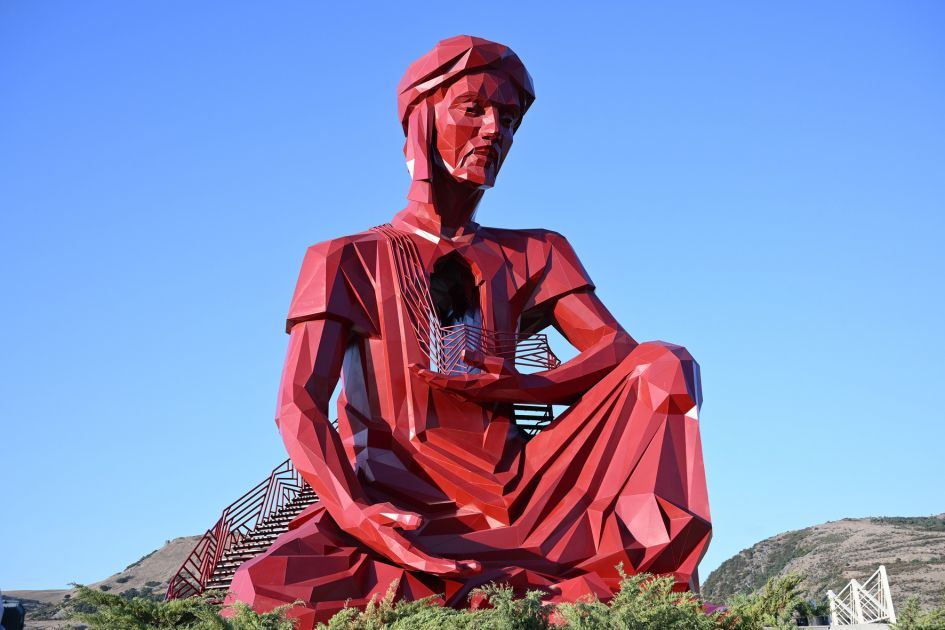
In this regard, Nasimi's place is particularly significant. He is one of the most prominent 14th- and 15th-century masters of Sufi poetry and a major early figure in Azerbaijani literature. A recent example of how Nasimi's name is being kept alive in Azerbaijan today is President Ilham Aliyev's recent visit to the “Nasimi Gardens” complex in Shamakhi. The complex features a 21-meter-high monument installation of Nasimi created in a modern style. Visible from various points of Shamakhi, this work makes Nasimi's name part of the city's modern landscape.
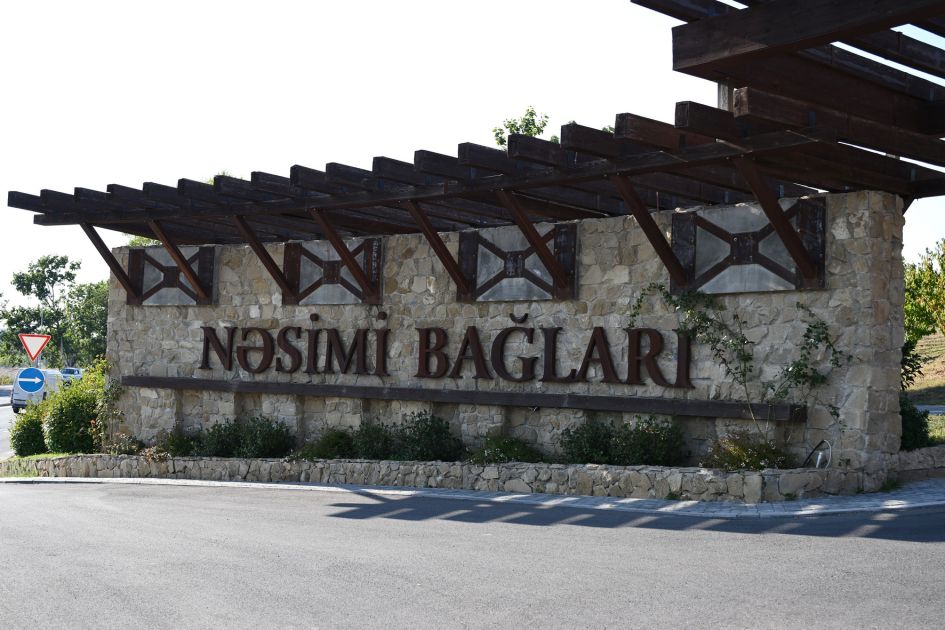
This is not simply a matter of a statue. Here, a physical and symbolic connection is being created between the great poet of the Middle Ages and modern Azerbaijan.
Azerbaijan did not begin remembering Nasimi today. The preservation and promotion of his legacy have been continuing at the state and societal levels for decades. In 1973, the 600th anniversary of Nasimi was widely commemorated. Research into his work was intensified, and scholarly and artistic works about him were created. In 1979, a monument to Nasimi was erected in Baku.
 Photo credit:
dremtime.com
Photo credit:
dremtime.com
Later, Nasimi's name was also brought to the international stage. In 2017, the 600th anniversary of his death was commemorated at UNESCO headquarters in Paris. Since 2018, the Nasimi – Poetry, Art and Morality Festival has been held in Azerbaijan. In 2019, the year was declared the “Year of Nasimi” in Azerbaijan.
That year, various events were held across the country to mark the 650th anniversary of Nasimi, while his work was researched anew, promoted and brought to new generations.
All of this demonstrates one fact: Azerbaijan does not preserve its classical figures simply as memories of the past, but it seeks to make them part of contemporary cultural life.
Nasimi's position in today's Azerbaijan is explained precisely by this. He is not only a poet of the 14th–15th centuries. His name lives on today in a scholarly institution, on a street, in a monument, in books, at a festival and now in the large tourism and cultural complex in Shamakhi.
In fact, keeping Nasimi's legacy alive is part of a much larger story of Azerbaijani literature. In this story, Nizami, Fuzuli, Nasimi, Khatai and other great poets are not only individual figures, but also representatives of the great cultural line shaped by the Azerbaijani word over the centuries.
Empires have risen and fallen throughout history. Borders have changed. Rulers have replaced one another. Swords have rusted. But the words created by poets have survived and passed from generation to generation.
That is where the strength of Azerbaijan's classical literature lies.
If the Azerbaijani language occupied an important place in the literary and cultural life of a vast geography during certain periods of its history, this can be attributed more to the power of the word than to military force. Poets carried the language with them to different courts, cities and cultural centers. Their works demonstrated the capabilities of Azerbaijani and increased the influence of the language.
In this sense, Nasimi is not merely part of Azerbaijan's past. He is a living symbol of the Azerbaijani language and culture, having survived the test of time and reached the present day.
This is also where the significance of the complex created in his name in Shamakhi lies. The name of a poet who lived more than six centuries ago appears once again today in the cultural landscape of modern Azerbaijan. This is not simply the preservation of historical memory, but its transfer into a new era.
Some peoples remember their history through fortresses and swords. Azerbaijan, however, has written one of the strongest pages of its history through the words of its poets. And Nasimi is one of the greatest figures of that word.
Here we are to serve you with news right now. It does not cost much, but worth your attention.
Choose to support open, independent, quality journalism and subscribe on a monthly basis.
By subscribing to our online newspaper, you can have full digital access to all news, analysis, and much more.
You can also follow AzerNEWS on Twitter @AzerNewsAz or Facebook @AzerNewsNewspaper
Thank you!