
Azerbaijan’s sovereignty and long shadow of Armenian revanchism [ANALYSIS]
![Azerbaijan’s sovereignty and long shadow of Armenian revanchism [ANALYSIS]](https://www.azernews.az/media/2026/09/20/4375473457234572457.jpg)
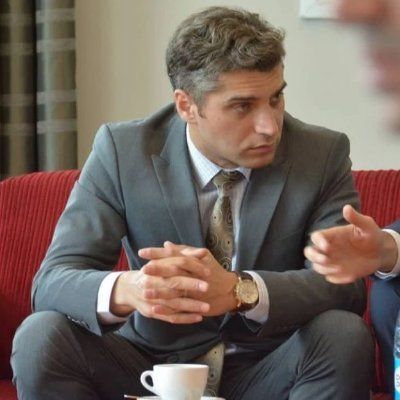
Elnur Enveroglu
Read moreToday, Azerbaijan marks the restoration of its sovereignty and territorial integrity. Such a landmark development became possible following the neutralisation of the Armenian separatist elements in the Qarabagh territories liberated from occupation as a result of the Azerbaijani Army’s military capability, courage and tactical skill during the events of 19–20 September 2023. The event represents a major turning point in the history of the South Caucasus and, at the same time, one of the most consequential victories in recent history, generating considerable geopolitical repercussions.
However, history is not always written in black and white. Its pages can contain different interpretations, competing narratives and divergent analyses. This brings us to the toxic legacy left between Azerbaijan and Armenia from the Soviet period to the present day.
That legacy has not been confined to historical manuscripts and monuments. On the contrary, it has left behind the spark of another war. The issue is that disputes of this nature have emerged elsewhere in history as a result of the intervention of major powers, including in European and Middle Eastern states. The Iraq-Kuwait war, which ultimately led to the Gulf War, and the territorial disputes that emerged following the break-up of Yugoslavia are two examples with extensive historical and political dimensions.
However, when these cases are examined in depth, they cannot simply be equated with Armenia’s claims against Azerbaijan. The reason, from the perspective presented here, is clear.
For many years, Armenian groups grew under the protection and influence of Russia and were subsequently settled in historical territories of Azerbaijan. Over time, Armenian groups were settled in the western parts of Azerbaijan, including areas bordering Turkiye. This policy was taken further and eventually resulted in an ethnic policy being pursued in a number of Azerbaijan’s strategically important locations.
A national minority long known as the Caucasian Albanians was subsequently, in this interpretation of history, appropriated by Armenians, who began to claim and absorb aspects of its historical legacy. They then carried out extensive changes to a number of Christian religious monuments, contributing to what can be described as an effort to obscure and transform the historical record.
Naturally, a number of Armenian politicians and intellectuals who looked towards the future understood that the Soviet empire would eventually collapse and that, after its collapse, history itself would become a battlefield. There was therefore a perceived need to write a new history while distorting and erasing elements of the past.
The concept of revanchism itself emerged after the Franco-Prussian War. The term refers to a vengeful and resentful approach by one nation towards another, rooted in what it regards as historical grounds for retaliation. The argument presented here is that Armenians, drawing negative lessons from history and convincing themselves of a distorted historical narrative, adopted revanchist traditions as a political roadmap.
The events of 19 September should, in this reading, never have taken place.
Wars sometimes end through negotiations, agreements or international consensus. The Second Qarabagh War of 2020, however, ended under a different scenario. Although Armenia signed the November 2020 trilateral statement, the argument here is that the terms arising from its defeat were not fully implemented. The armed groups and formations remaining in the territory decided to refuse to withdraw from the territories that had been de facto liberated.
This, in turn, represented a serious violation of the provisions that were supposed to underpin the ceasefire and the peace agreement that would subsequently be established between Azerbaijan and Armenia. The clandestine armed forces deployed in Qarabagh were being infiltrated into Azerbaijani territory through the presence of the former peacekeeping contingent. In other words, preparations for another war were once again under way.
The 10 November 2020 trilateral statement explicitly provided for the withdrawal of Armenian armed forces in parallel with the deployment of Russian peacekeepers. Azerbaijan subsequently argued that Armenian armed forces had not withdrawn from its territory, and this was among the issues cited by President Ilham Aliyev before the September 2023 operation.
Let us, for a moment, imagine that none of this had happened and that the Armenian side had unequivocally withdrawn its armed formations from Qarabagh. What would have happened?
First and foremost, it would have given the ethnic Armenian population that had once lived in Qarabagh a serious opportunity to continue their lives peacefully and, most importantly, would have provided a stronger basis for a secure life in Qarabagh.
After the withdrawal of Armenian armed formations from Qarabagh, however, the territory became a more dangerous zone. The Armenian side, according to the authentic facts advanced here, sought to demonstrate openly that peace and stability were impossible. One example was the extensive mining of the territories.
One of the cruellest and most unlawful legacies of war in human history is that wars themselves can end while leaving behind the means for further death. Even six years after the war, the territories of Qarabagh cannot be regarded as completely safe.
At the same time, whenever a peace agenda is placed on the negotiating table, revanchist and separatist forces in Armenia and beyond it emerge, issue unfounded statements and, as if that were not enough, attempt to undermine the peace process.
There is little doubt that a peace agreement will eventually be signed, and there is no alternative to peace. Yet those who make the wrong choices will either pay the price themselves or leave future generations to pay it.
The central issue, therefore, once again comes back to the legacy left by a distorted and poisonous ideology: a false history that has been carried from one generation to another by those who continue to embrace that ideology.
This is why 20 September should be understood not just as a date marking a military and political outcome, but as a moment in which Azerbaijan’s sovereignty was fully restored, and the consequences of a long and deeply contested historical legacy came to the fore. Azerbaijan formally established 20 September as State Sovereignty Day in 2024, defining the restoration of sovereignty across its territory as the outcome of the September 2023 operation.
The wider question now is whether the region can move from a history shaped by competing territorial narratives, armed confrontation and revanchist thinking towards a political order in which sovereignty, territorial integrity and peaceful coexistence are accepted as the basis of lasting stability. The initialling of the Azerbaijan-Armenia peace agreement in Washington in August 2025 marked an important step in that direction, although the text still required further steps towards signing and ratification.
Here we are to serve you with news right now. It does not cost much, but worth your attention.
Choose to support open, independent, quality journalism and subscribe on a monthly basis.
By subscribing to our online newspaper, you can have full digital access to all news, analysis, and much more.
You can also follow AzerNEWS on Twitter @AzerNewsAz or Facebook @AzerNewsNewspaper
Thank you!