
Azerbaijan-Georgia tighten grip on key trade and energy corridors

Elnur Enveroglu
Read moreThe state visit of the President of Azerbaijan, Ilham Aliyev, to Georgia yesterday was remembered as an important event not only for the two countries, but for the South Caucasus as a whole. At first glance, the visit to Tbilisi could be described as largely symbolic; however, its substance conveys far more.
Yes, diplomacy and formal protocol have their place, but the economic interdependence between the two states reveals an entirely different set of dynamics. It was a calculated move to reinforce one of Eurasia’s most consequential economic partnerships at a time when global trade routes, energy security and geopolitical alignments are all in flux.
The Azerbaijan–Georgia relationship has long been defined by pragmatism. Today, it is increasingly defined by necessity.
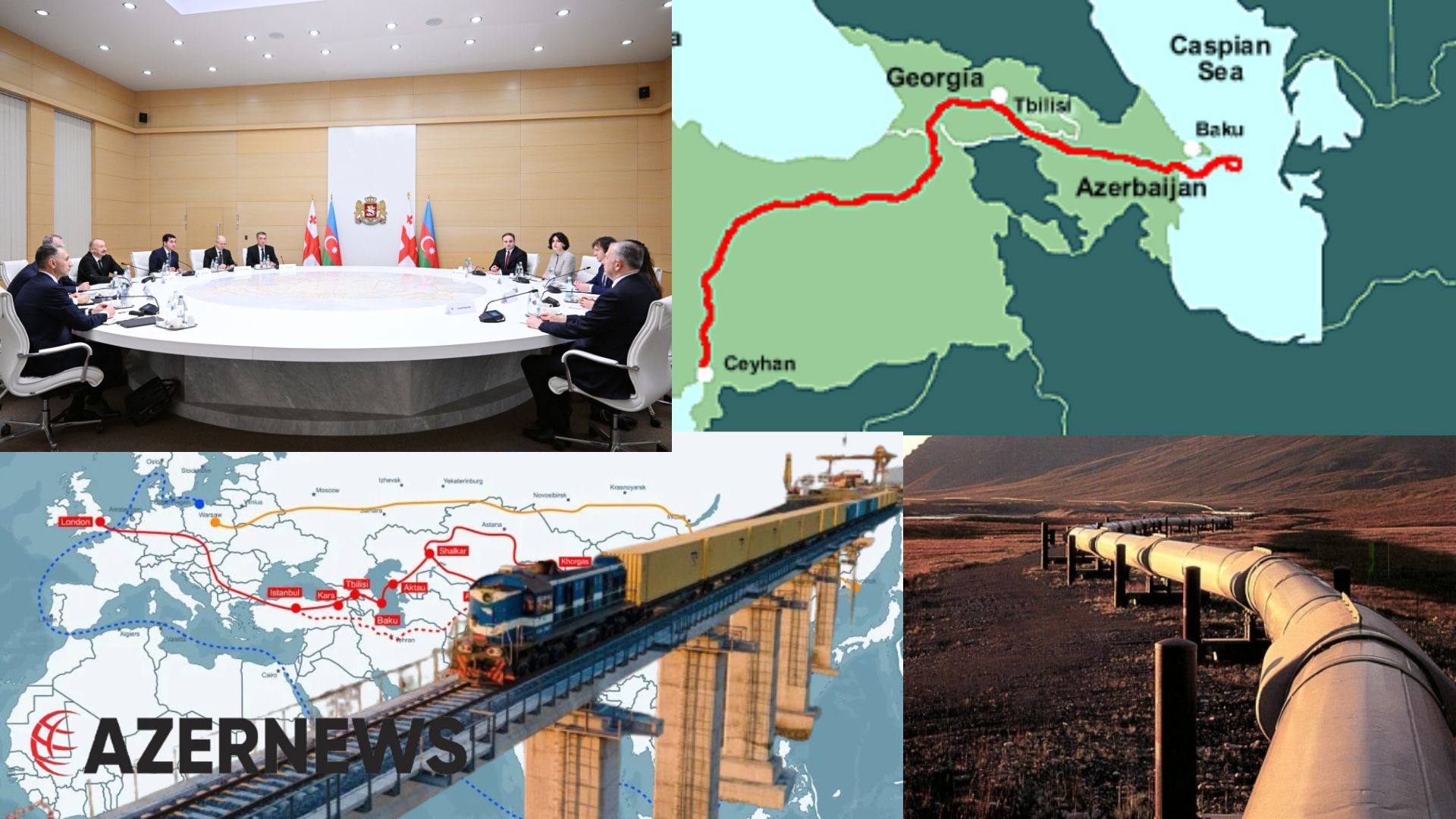
At the centre of this partnership lies energy. Georgia’s geographic position has turned it into a vital transit state for Azerbaijani hydrocarbons bound for European markets. The Baku–Tbilisi–Ceyhan pipeline and the Southern Gas Corridor appear to be more than infrastructure projects. Indeed, they are strategic lifelines that underpin Europe’s efforts to diversify energy supplies away from traditional sources.
In this context, President Aliyev’s visit can be read as a reaffirmation of reliability. For Baku, ensuring uninterrupted transit through Georgia is essential not only for maintaining export revenues but also for preserving its role as a credible energy partner to Europe. For Tbilisi, the stakes are equally high: transit fees, energy security and geopolitical relevance all depend on the smooth functioning of these corridors.
Nevertheless energy is only part of the story. The next phase of Azerbaijan–Georgia cooperation is increasingly shaped by transport and logistics, specifically, the development of the Middle Corridor linking China to Europe via Central Asia and the South Caucasus.
This corridor is no longer a theoretical alternative; it is becoming a competitive route. Rising volumes of container traffic, improved rail connectivity and digitalisation efforts are gradually transforming the corridor into a viable artery of global trade. Here again, coordination between Baku and Tbilisi is indispensable. Efficiency gains on one side of the border mean little without synchronisation on the other.
Aliyev’s visit, therefore, also signals a shared commitment to accelerate this transformation, particularly, reducing transit times, harmonising customs procedures and scaling infrastructure to meet growing demand.
However, the expansion of connectivity brings with it new complexities. Emerging transport initiatives in the region, including alternative east-west routes, introduce an element of competition that cannot be ignored. For Georgia, the prospect of routes that bypass its territory presents both a strategic and economic dilemma.
Azerbaijan appears acutely aware of this dynamic. Its continued investment in Georgian infrastructure, logistics and energy integration suggests a deliberate effort to keep Tbilisi structurally embedded within its broader regional vision. This is about preserving the status quo, as well as about managing competition through interdependence.
Overlaying these economic considerations is a shifting geopolitical landscape. From instability in the Middle East to evolving power dynamics between major global actors, external pressures on both Azerbaijan and Georgia have intensified. In different ways, both countries have faced scrutiny and demands from Western institutions, particularly on governance and political issues.
The response from Baku and Tbilisi has been notably aligned: a renewed emphasis on sovereignty, non-interference and regional decision-making. In this sense, Aliyev’s visit carries a message that extends beyond bilateral relations. It signals a broader aspiration for regional autonomy. It is the idea that South Caucasus states can shape their own economic and political trajectories without excessive external mediation.
This does not imply isolation. On the contrary, Azerbaijan and Georgia remain deeply integrated into global markets, certainly, based on mutual economic interests.
Crucially, this model appears to be working. Trade between the two countries has expanded steadily, investment flows remain robust, and joint infrastructure projects continue to deliver tangible benefits. More importantly, their cooperation has elevated both countries from peripheral transit zones to strategic connectors in the global economy.
For Europe, the implications are significant. Much of the continent’s energy diversification strategy and a growing share of its east-west trade depend, often quietly, on the stability of the Azerbaijan–Georgia axis. However, this dependence is rarely acknowledged with the same urgency as other geopolitical priorities.
President Ilham Aliyev’s visit to Georgia is a reminder that in an era of fragmentation, resilience is built not only through grand alliances but also through durable regional partnerships. The Baku–Tbilisi relationship, grounded in infrastructure, energy and shared strategic logic, is one such partnership.
And as global uncertainty deepens, its importance is likely to grow, whether Europe chooses to notice it or not.
Here we are to serve you with news right now. It does not cost much, but worth your attention.
Choose to support open, independent, quality journalism and subscribe on a monthly basis.
By subscribing to our online newspaper, you can have full digital access to all news, analysis, and much more.
You can also follow AzerNEWS on Twitter @AzerNewsAz or Facebook @AzerNewsNewspaper
Thank you!