
President Aliyev marks sovereignty and remembrance in visit to liberated Khojaly

AzerNEWS Staff
Read moreFaith in the future was the only force strong enough to sustain the Azerbaijani people through decades of displacement and suffering. That faith carried the conviction that the painful days would eventually end, and justice would be restored. Thirty-four years after the Khojaly massacre, remembrance is marked by both grief and the joy of return. The Azerbaijani people have reclaimed their homeland, transforming sorrow into resilience and victory.
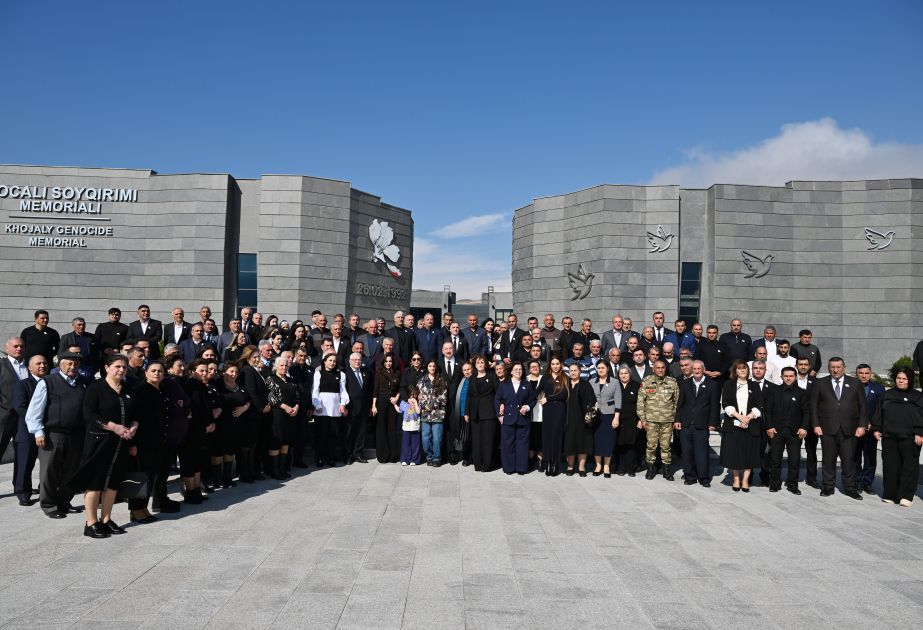
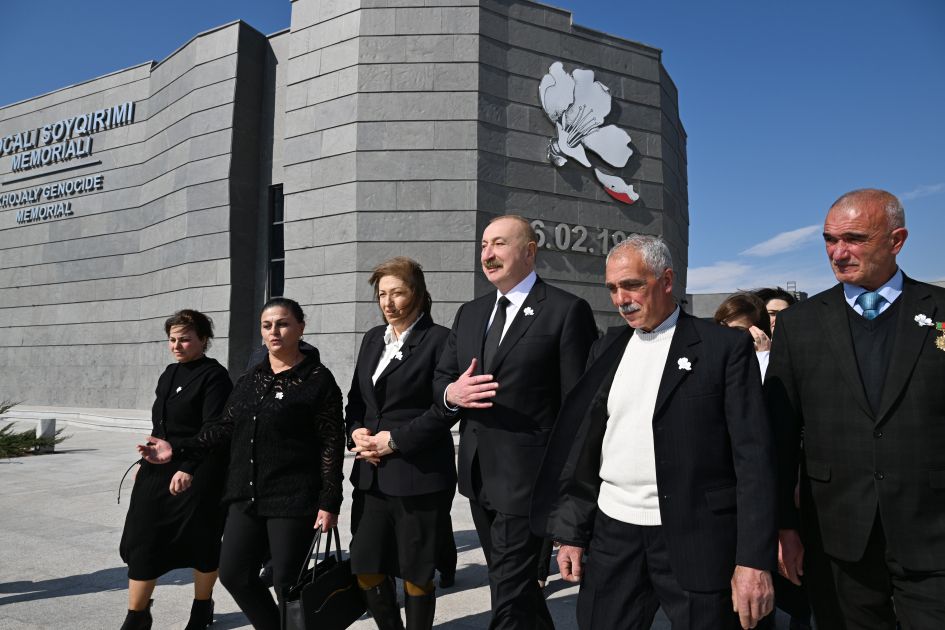
In the lands liberated at great cost, life is being reborn. Today, the leadership of Azerbaijan meets with residents who have returned to their homes. As President Ilham Aliyev emphasized, the hardships of displacement were endured with dignity, and the unwavering belief in liberation has finally been fulfilled. Remembrance is accompanied by sorrow and grief, as well as a sense of justice restored. Experiencing these two emotions simultaneously is not easy, yet the day has finally arrived when the Azerbaijani people have returned to the lands from which they were displaced.
Looking back on those tragic days, it becomes evident that the Azerbaijani people were profoundly defenseless that night. The horrific events began on February 26, 1992, when Armenian armed forces, supported by the 366th Motor Rifle Regiment, carried out a genocide against the civilian population of Khojaly.
The massacre claimed the lives of 613 people in a single night, including 63 children, 106 women, and 70 elderly individuals. Another 487 were seriously injured, 1,275 were taken prisoner and tortured, and the fate of 150 remains unknown to this day. Eight families were completely annihilated, and 56 individuals were killed under special torture. These figures reveal the sheer scale of the atrocity and underscore its violation of international humanitarian law, including the Geneva Conventions.
Justice, however, was eventually reclaimed. On September 19–20, 2023, Azerbaijani forces conducted anti-terrorist measures that cleared Khojaly of Armenian armed formations and illegal separatist groups. On October 15, 2023, President Ilham Aliyev raised the National Flag of Azerbaijan in Khojaly, a symbolic act marking the restoration of sovereignty and dignity.
After decades of displacement, families are returning to their ancestral homeland. Modern housing has been provided, and reconstruction is underway. What was once a land soaked in blood is now being revived step by step with state support. By January 19, 2026, a total of 881 families, 3,602 people had resettled in Khojaly and its surrounding villages, including Ballıca, Khanyurdu, Tazabina, Shuşakend, Badara, Seyidbeyli, and Dashbulag.
The state policy, designed to make these lands even more beautiful than before, is now bearing fruit. The revival of Khojaly is part of a broader strategy of investment in the Karabakh and East Zangazur economic regions. In January alone, 2.27 billion manats were invested in fixed capital in the Karabakh economic region, with 2.2 billion manats allocated to construction and installation works. Of this, 183 million manats were directed specifically to the Khojaly region.
This economic commitment demonstrates that the liberation of
Khojaly is not only a matter of historical justice but also a
cornerstone of Azerbaijan’s future development. The reconstruction
of infrastructure, housing, and cultural heritage sites reflects a
vision of sustainable peace and prosperity.
The Khojaly genocide remains one of the most tragic chapters in
Azerbaijan’s history, symbolizing the vulnerability of civilians in
armed conflict and the devastating consequences of ethnic hatred.
Yet, the return of displaced families and the reconstruction of
Khojaly highlight a powerful narrative: resilience, justice, and
renewal.
This duality, tragedy and triumph, positions Khojaly as both a site of mourning and a beacon of national revival. The liberation and resettlement of Khojaly serve as a moral victory that transcends military achievement, reaffirming the principle that justice, though delayed, can ultimately prevail.
Moreover, Azerbaijan’s investments in Karabakh and East Zangazur illustrate how post-conflict reconstruction can transform regions of suffering into engines of growth. The revival of Khojaly is about restoring homes, as well as rebuilding identity, dignity, and collective memory.
Here we are to serve you with news right now. It does not cost much, but worth your attention.
Choose to support open, independent, quality journalism and subscribe on a monthly basis.
By subscribing to our online newspaper, you can have full digital access to all news, analysis, and much more.
You can also follow AzerNEWS on Twitter @AzerNewsAz or Facebook @AzerNewsNewspaper
Thank you!