
Turkey says Patriot missiles are for defense, not attacks
By Sara Rajabova
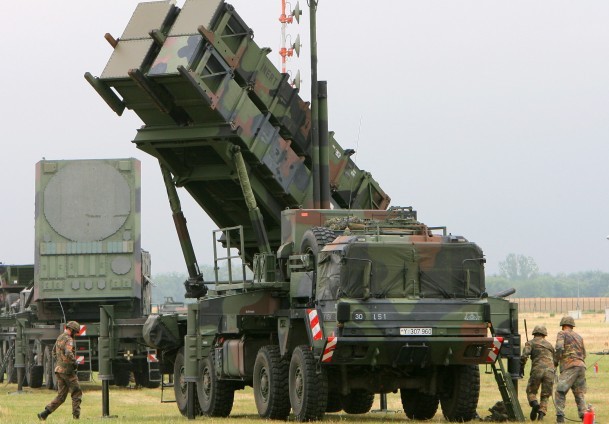
Turkey's armed forces have repeatedly underlined statements from Turkish officials that NATO's Patriot missile system to be deployed on the country's territory is not for offensive operations, but for defensive purposes.
A delegation made up of Turkish and NATO officials will begin conducting a site survey on Tuesday for the deployment of Patriot air and missile defense systems, a written statement issued by the Turkish General Staff on Monday said, Hurriyet Daily News reported.
The system was not for a "no-fly zone or offensive operations", but just for use "against an air or missile threat from Syria", the statement said.
NATO had been carrying out work for command and control, rules of engagement and integration of Patriot systems with Turkey's air defense system, the statement also said.
Foreign soldiers assigned to operate the system in Turkey would serve under a memorandum of understanding in accordance with Turkey's status of forces agreement (SOFA) with NATO, the General Staff said.
Regions the Patriot systems would be deployed to and the number of foreign personnel assigned to come to Turkey with it would be determined in conclusion of the NATO delegation's site-survey, the statement said.
Turkey asked NATO for the Patriot system, designed to intercept aircraft or missiles, last week after talks about how to shore up security on its 900-kilometer border with Syria.
NATO responded positively to Turkey's request for a Patriot system, made in a bid to gain support for the country's air defense system.
However, by requesting the NATO surface-to-air Patriot system, Turkey riled Syria, Russia and Iran.
Syria has called Turkey's request "provocative" and Russia said the move could increase risks in the conflict.
Also, Iran said Turkey's plans to deploy Patriot defensive missiles near its border with Syria would add to the region's problems, as fears grow of the Syrian civil war spilling across frontiers.
"The installation of such systems in the region has negative effects and will intensify problems in the region," Iranian Parliament Speaker Ali Larijani said upon returning from a trip to Syria, Lebanon and Turkey on Saturday evening, according to the Iranian state news agency IRNA.
Iran's Foreign Ministry spokesman Ramin Mehmanparast said on Sunday that deploying the Patriot system "will not only not help solve the situation in Syria, it will actually make the situation more difficult and complicated as well".
Turkish Foreign Minister Ahmet Davutoglu dismissed on Sunday Russian and Iranian concerns that possible deployment of NATO missiles along Turkey's southern border with Syria would make the crisis more complicated, Anadolu news agency reported.
"We cannot see any point that would justify these concerns," Davutoglu told a televised interview on private news channel CNN Turk. "The missile system has a defensive purpose only. This system will not be operational unless there is a risk to our security. And it is our government's obligation to take any measure when there is even the slightest chance of risk."
The United States, Germany and the Netherlands are the only NATO members to have Patriot missiles in their arsenals.
"When the risk against our borders is alleviated Patriots will leave our country," Davutoglu said.
During the Iraq wars of 1991 and 2003, NATO deployed Patriot missiles in Turkey but they were never used.
Besides, Syrian opposition fighters have been requesting a no-fly zone to help them hold territory against a government with overwhelming firepower from the air, but most foreign governments are reluctant to get embroiled into the conflict.
Turkey fears security on its border may crumble as the Syrian army fights harder against the rebels, some of whom have reportedly enjoyed sanctuary in Turkey.
Heavy fighting has often erupted along Syria's border with Turkey. Ankara has scrambled fighter jets and returned fire after stray Syrian shells and mortar bombs landed in its territory.
Syria has been wracked by violence, with at least 20,000 people, mostly civilians, killed since the uprising against President Bashar al-Assad began over 20 months ago. Activists claim 38,000 people have been killed since protests began in March 2011. The violence has spawned more than 440,000 refugees, while more than 4 million people are in need of humanitarian assistance, according to UN estimates.
Here we are to serve you with news right now. It does not cost much, but worth your attention.
Choose to support open, independent, quality journalism and subscribe on a monthly basis.
By subscribing to our online newspaper, you can have full digital access to all news, analysis, and much more.
You can also follow AzerNEWS on Twitter @AzerNewsAz or Facebook @AzerNewsNewspaper
Thank you!