
Baku's CICA summit links Asian diplomacy with race for trade routes

Elnur Enveroglu
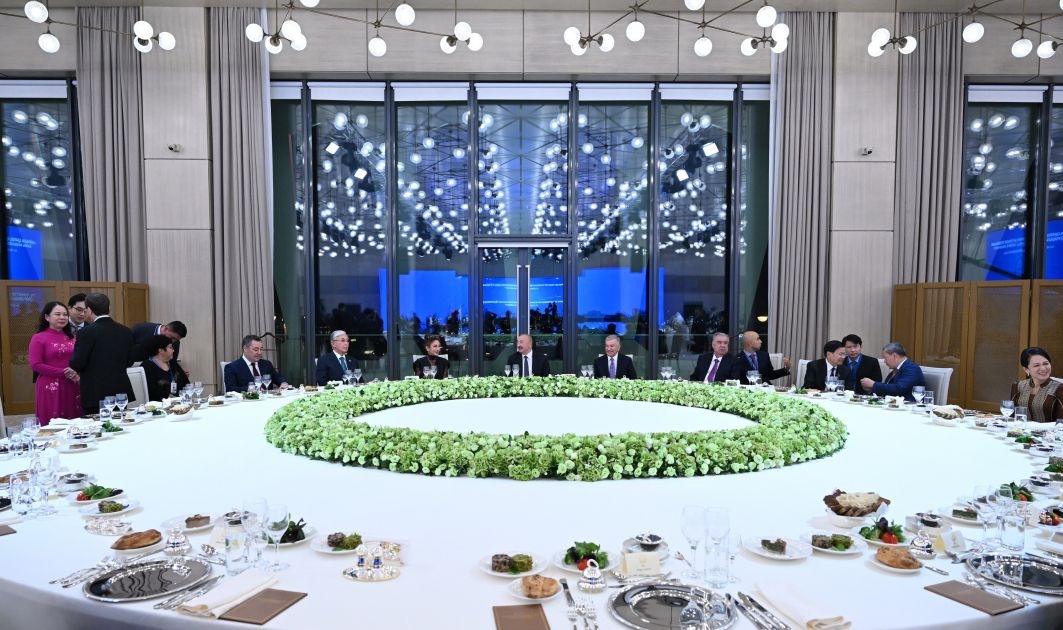
Read moreAs leaders and senior officials from across Asia gather in Baku for the seventh summit of the Conference on Interaction and Confidence Building Measures in Asia (CICA), Azerbaijan is using the occasion to demonstrate the growing importance of its diplomacy. The meetings surrounding the summit reflect Baku’s efforts to deepen partnerships, strengthen its position in Central Asia and establish itself as a platform for dialogue in a region shaped by competing geopolitical interests.
President Ilham Aliyev’s meetings with visiting leaders have provided a particularly clear illustration of this approach. His discussions with Israeli President Isaac Herzog, Chinese Foreign Minister Wang Yi, Tajik President Emomali Rahmon and Vietnamese Vice-President Vo Thi Anh Xuan, alongside engagement with other visiting delegations, underline the breadth of Azerbaijan’s diplomatic relationships. Uzbek President Shavkat Mirziyoyev and other senior representatives have also travelled to Baku for the summit.
The significance lies not simply in the number of dignitaries attending, but in the different interests they represent. Israel, China, Russia, India, Iran, Türkiye and the Central Asian states occupy distinct positions in the international system. So, a question may be put forward: what brings it to Azerbaijan? Bringing representatives of such countries together allows Azerbaijan to encourage dialogue and pursue cooperation without requiring its partners to abandon their separate foreign policy priorities.
Aliyev’s meeting with Herzog highlighted bilateral relations and wider regional and international developments. His discussions with Wang Yi carried particular economic significance. Both sides emphasised the development of the strategic partnership between Azerbaijan and China, while the Chinese foreign minister recognised Azerbaijan’s important role along the Middle Corridor. Aliyev also highlighted the opportunities for cooperation in transport and renewable energy.
These conversations point to a broader strategic calculation. Azerbaijan’s importance is not limited to its position between the Caspian Sea and the Black Sea. It lies in the country’s ability to connect political relationships with transport infrastructure, energy cooperation and access to international markets.
The Middle Corridor, linking China and Central Asia across the Caspian Sea and through the South Caucasus towards Türkiye and Europe, has become increasingly relevant as governments seek to diversify trade routes. Azerbaijan’s ports, railways and connections with Georgia and Türkiye place it at a critical junction in this network. Its role is particularly important for Central Asian countries seeking more direct access to markets further west.
And there is much to be said about the relations between Azerbaijan and Uzbekistan. Closer cooperation between Baku and Tashkent can strengthen transport links, expand trade and create opportunities for joint investment. Azerbaijan’s engagement with Tajikistan and other Central Asian partners similarly reinforces its position within a wider regional network. These relationships are becoming more significant as Central Asian states seek to broaden their international partnerships and develop alternative routes for exports.
Furthermore, Azerbaijan is a key energy supplier to European markets, a transit country between Central Asia and Europe and an important participant in discussions about regional connectivity. The development of transport links through the region could create economic incentives for cooperation, although political disagreements and unresolved security questions remain obstacles, and this is also where Azerbaijan’s peacebuilding agenda matters. The normalisation of relations with Armenia remains essential to a more stable South Caucasus. Sustainable peace would create opportunities to reopen transport connections, expand regional trade and reduce the strategic costs of confrontation. Azerbaijan’s ability to bring international partners together can support this wider objective, although progress ultimately depends on political agreements and their implementation.
CICA provides a suitable setting for connecting these ambitions. Its agenda includes confidence-building, transport connectivity, digitalisation and sustainable development. Azerbaijan’s chairmanship has sought to advance practical cooperation while strengthening the organisation’s institutional foundations.
However, the summit’s value will be measured by what follows the meetings. Diplomatic visibility does not automatically produce investment, functioning transport corridors or lasting peace. These require sustained negotiations, coordinated infrastructure development and reliable commitments.
Besides, the CICA summit brings these roles into focus. Its lasting significance will depend on whether the conversations held in Baku help build stronger partnerships and whether Azerbaijan can translate its strategic position into greater connectivity and stability across the South Caucasus and Central Asia.
Here we are to serve you with news right now. It does not cost much, but worth your attention.
Choose to support open, independent, quality journalism and subscribe on a monthly basis.
By subscribing to our online newspaper, you can have full digital access to all news, analysis, and much more.
You can also follow AzerNEWS on Twitter @AzerNewsAz or Facebook @AzerNewsNewspaper
Thank you!