
NATO official praises Türkiye’s defence industry, citing long-running industrial revolution
By News Centre
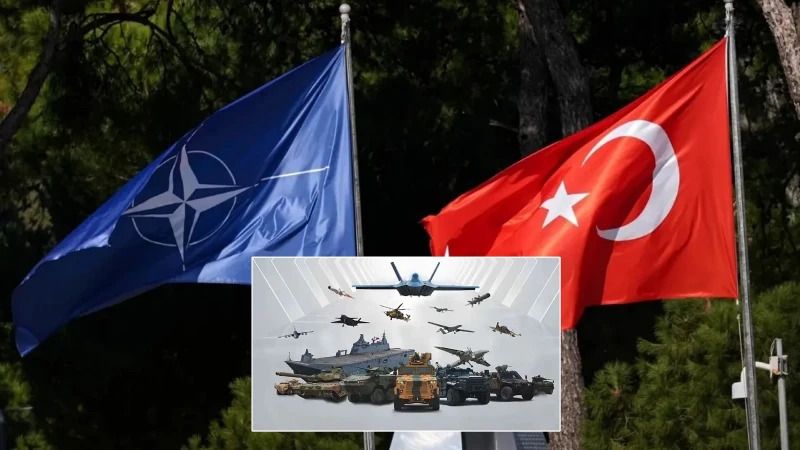
NATO Deputy Secretary General Radmila Shekerinska has praised the level achieved by Türkiye’s defence industry, emphasizing that the country has been experiencing what amounts to a de facto industrial revolution in the sector for a long time and has developed outstanding examples of defence innovation.
Shekerinska spoke alongside Türkiye’s Permanent Representative to NATO, Ambassador Basat Öztürk, during a session titled “NATO and Europe: Security Architecture Following the Ankara Summit” at the Türkiye-EU Business Summit in Brussels. The event was organized in cooperation with the Foreign Economic Relations Board of Türkiye (DEİK) and the European Business Summit (EBS).
Shekerinska said discussions at the NATO Summit held in Ankara on July 7–8 focused on translating the commitments on defence spending made at the Hague Summit into concrete capabilities. She noted that European allies and Canada were assuming greater responsibility for the Alliance’s security.
European allies and Canada allocated more than an additional $250 billion to defence in 2025 and 2026, Shekerinska said, describing the increase as “a rational response to a security environment that has changed significantly in recent years.”
She noted that burden-sharing had been a subject of discussion within NATO since the Alliance’s establishment. At the Ankara Summit, however, progress was made in increasing defence spending, expanding procurement contracts and strengthening cooperation in the defence sector. Shekerinska said contracts worth approximately $50 billion had been announced and signed.
She emphasized that the primary objective was to go beyond increasing expenditure and ensure that the additional resources translated into the capabilities NATO needed.
One of the key messages emerging from the Ankara Summit, Shekerinska said, was the vision of “a stronger Europe within a stronger Alliance.” She added that European allies and Canada would assume greater responsibility, particularly in the area of conventional deterrence.
Shekerinska also warned that hybrid threats and attacks could be as dangerous as other forms of aggression, highlighting what she described as Russia’s increasingly reckless and dangerous actions.
According to Shekerinska, Russia has failed to achieve a significant advantage on the battlefield in recent months and has been losing more than 40,000 troops every month. Despite these losses, she said, Moscow has continued to pursue hybrid activities aimed at undermining allied support for Ukraine. These activities include attacks on critical infrastructure in Ukraine, airspace violations, sabotage, arson and threats of assassination.
“That is why we say that NATO will continue to remain calm, because we know that we are militarily superior and stronger. We will continue on our path. This means sustaining our investments and preserving the technological superiority and advantage we possess,” Shekerinska said.
She stressed the importance of maintaining support for Ukraine, arguing that the Alliance must demonstrate that Russia cannot achieve a strategic victory by weakening that assistance.
The war in Ukraine has demonstrated the importance of technology in defence and accelerated innovation processes, Shekerinska said, adding that data-driven defence solutions would play an increasingly decisive role in the future.
“That is why we have spoken so much about the defence industry. We also have excellent examples in the Turkish defence industry. This is because we have been witnessing what is effectively an industrial revolution here, and this has been happening for a long time, not just over the past few years,” she said.
Shekerinska highlighted the importance of artificial intelligence-based solutions and systems designed to counter unmanned aerial vehicles. She also underlined the need for companies to cooperate in order to preserve innovation across the defence industry.
In this context, she said NATO supported reducing barriers to trade and cooperation as much as possible. The Alliance also favoured making greater use of the capabilities of defence industries on both sides of the Atlantic, as well as those of allied countries that are not members of the European Union.
Shekerinska noted that NATO also maintained close cooperation with countries in the Asia-Pacific region. However, she said overall production capacity had yet to reach the level required to meet the Alliance’s objectives.
In addition to the contracts signed at the Ankara Summit, Shekerinska said, production capacity had increased by $38 billion. She stressed that industrial capacity could provide a strategic advantage during prolonged conflicts, when the ability to sustain the production and supply of military equipment becomes particularly important.
Shekerinska also addressed developments in the Black Sea region, reporting that NATO Secretary General Mark Rutte had held talks with Bulgarian President Iliana Iotova earlier that morning. She said allied countries were providing additional assistance to facilitate the progress of the investigation.
Shekerinska said Ukraine was waging a defensive war and that the current situation was the consequence of Russia’s decision to attack the country.
She concluded by noting that NATO’s focus extended beyond the Black Sea to encompass its entire eastern flank, stretching from the Arctic to the Black Sea. Work to strengthen security across this area was continuing, she added.
Here we are to serve you with news right now. It does not cost much, but worth your attention.
Choose to support open, independent, quality journalism and subscribe on a monthly basis.
By subscribing to our online newspaper, you can have full digital access to all news, analysis, and much more.
You can also follow AzerNEWS on Twitter @AzerNewsAz or Facebook @AzerNewsNewspaper
Thank you!