
Protests in Europe expose growing generational divide

Ulviyya Poladova
Read moreWith the arrival of autumn, Europe has sunk into a wave of protests that still hasn't let up. Hundreds of thousands of people have taken to the streets, and not in a single country but in a good dozen of them at once. France, Italy, Belgium, Portugal, Greece, Albania, and Germany are next in line. Yet behind all of these protests lies essentially the same cause, and it is an economic one. The cost of living keeps climbing, buying an apartment is flat-out beyond the reach of any young person, groceries keep getting more expensive, and wages aren't going up. For Europe's Generation Z [people born from 1997 to 2012], the so-called zoomers, there is simply nothing left to lose.
It is important to note that the current wave of protests in Europe was preceded by youth-led demonstrations in Asia. In Nepal, for instance, Generation Z succeeded in forcing the prime minister to resign last year following violent clashes with law enforcement. In India, the protests were much calmer this year, although security forces still had to resort to batons and tear gas. In Bangladesh, meanwhile, protests in 2024 forced Prime Minister Sheikh Hasina to resign after 15 consecutive years in office. Now, youth discontent has spread to Europe. France, Belgium, Spain, Portugal, Italy and Albania have joined this kind of "revolution."
It all started with something relatively minor, or so it seemed at the time. In late September, schoolchildren took to the streets in France, fed up with crumbling school buildings and teacher shortages. Seventeen-year-old Bilal Nardjissi, from a suburb of Paris, said his school had once been infested with rats. Last year, students had to be evacuated after part of the roof collapsed into the school courtyard. What seemed like a relatively minor grievance became the spark that set off a wave of unrest, shaking Europe's political establishment.
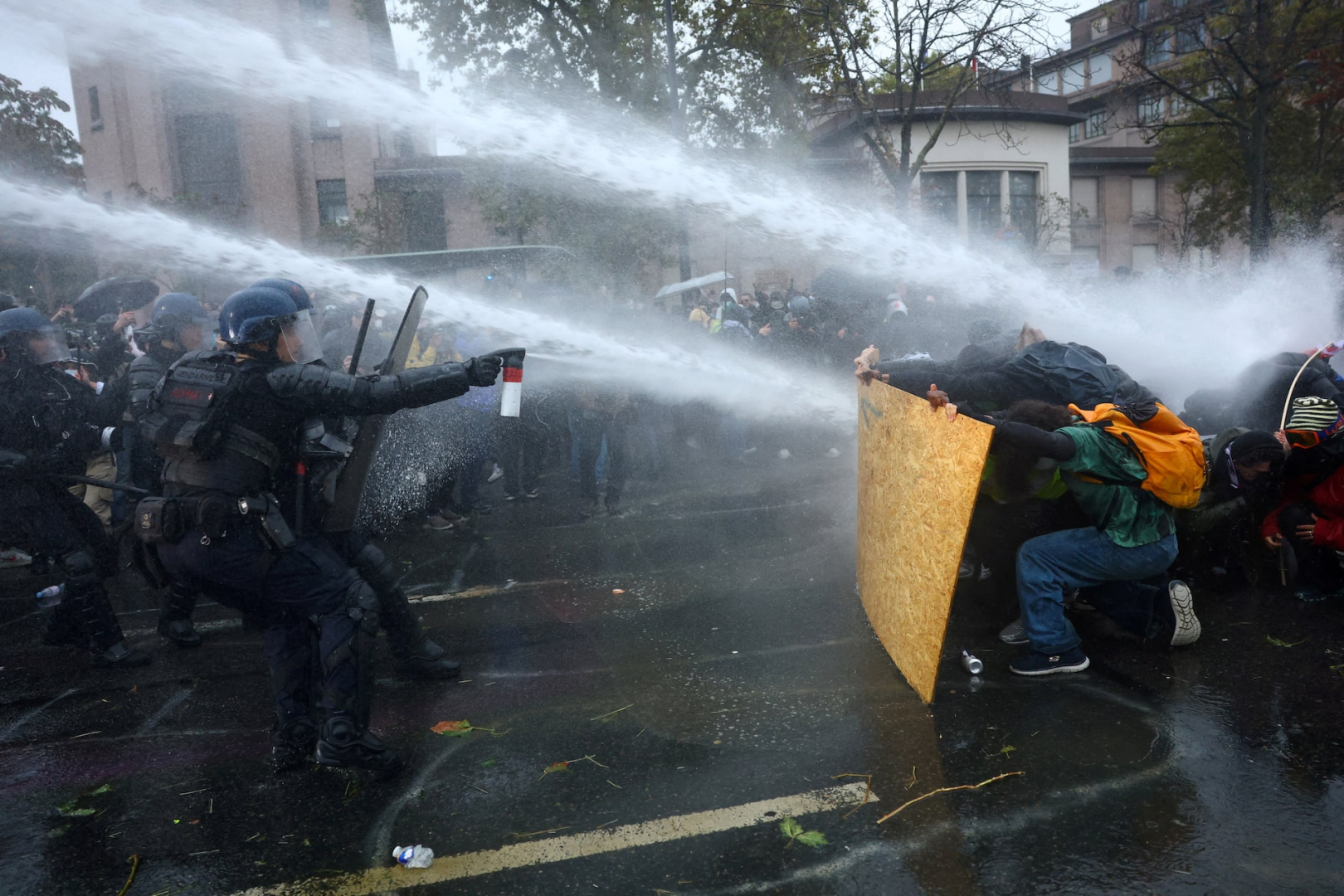
Before long, students, trade unions, farmers and climate activists joined in. Their demands grew rapidly as the cost of almost everything continued to rise, public services were left chronically underfunded, and the authorities appeared unwilling to listen. By the end of October, hundreds of thousands of people were already out on the streets. According to local authorities, around 410,000 people took part in demonstrations on October 24. Police deployed water cannons and tear gas, while protesters set fires and caused widespread damage. In Limoges, the town hall was burned down, and more than 2,000 people were arrested across the country. The unrest even prompted Interior Minister Laurent Nuñez to submit his resignation, which President Emmanuel Macron refused to accept. Curfews were imposed in several regions.
Protests subsequently spread to other European countries. In Italy, for example, the decentralized movement Italia in Piazza mobilized people through social media. Over the weekend, unrest erupted in Milan, Turin and Bologna. Shop windows were smashed and rubbish bins set on fire in Piazza del Duomo, while more than 140 police officers were injured. In the north, young people took to the streets, while in the south, farmers and truck drivers angered by rising fuel prices joined the protests. In Belgium, trade unions have been staging strikes for weeks to oppose budget cuts and tax reforms. Students unhappy with rising tuition fees have joined them. Clashes with police have broken out in Brussels and Liège. In Portugal, Porto has become a focal point of the protests. Housing activists are demanding the repeal of a new rental law. In Greece, thousands of students and teachers marched through Athens carrying cardboard signs reading, "study or survive." They have openly ridiculed the government's €120 housing subsidy, arguing that it is not even enough to rent half a room.
In Spain, the protests are also driven by the housing crisis and rising rents. The case of 87-year-old María del Carmen Abascal, who was evicted in September from the Madrid apartment where she had lived for more than 70 years, has drawn particular attention. She died on October 7, although the cause of her death was not publicly disclosed. Her story became one of the triggers for renewed demonstrations in defence of the right to housing and intensified criticism of the property market. Protesters are demanding measures to curb soaring rents and protect tenants, particularly elderly people and low-income families.
The scale of the problem, however, varies from one European country to another. For example, more than a quarter of urban residents in Greece (29%) face housing costs exceeding 40% of their income, compared with just 2.6% of urban residents in Cyprus. According to Eurostat, housing prices across the EU rose by an average of 53% between 2015 and 2024. The steepest increases were recorded in Hungary (+209.5%), Lithuania (+135%) and Portugal (+124.4%).
Rents across the EU have also risen sharply. Between 2010 and the first quarter of 2025, rental prices increased by an average of 27.8%. Rents went up in every EU country except Greece, where they fell by 11%. The largest increases were recorded in Estonia (+220%), Lithuania (+184%), Hungary (+124%) and Ireland (+115%).
EU institutions identify limited housing supply as one of the main causes of the crisis. A European Parliament report notes that the global financial crisis of 2008 led to a significant decline in investment in new housing. The COVID-19 pandemic further slowed construction, disrupting permit procedures, delaying material deliveries and creating labour shortages.
Look deeper, and the protests in all these countries lead, in one way or another, back to economic pressures. As CNN notes, they share a bleak economic outlook and high levels of public debt. The result is fewer jobs and less money, while food prices and rents continue to rise. Buying a home is even further out of reach. Young people would not be taking to the streets if they had something to lose and felt confident about their future. But that future looks increasingly uncertain. It is unclear where they will find work as the number of industrial enterprises declines, or where they will live and how they will afford it. This, incidentally, is also one of the reasons birth rates are falling around the world.
Alongside the economic drivers of the protests, there is a political dimension. The New York Times has highlighted a phenomenon known as "gerontonomics," a term coined by Oxford University professor Tim Vlandas. The idea is that different generations naturally have different priorities. Young people want investment in education, a stable labour market and affordable housing. Older people, meanwhile, want higher pensions, more social benefits and protection for the assets they have accumulated over their lifetimes.
As technology advances and healthcare becomes more accessible, the older population continues to grow. At the same time, falling birth rates mean there are fewer young people. It would be wrong to overlook the fact that the number of people worldwide aged over 60 increases by around 3% every year. By 2050, they are expected to account for more than 20% of the global population.
Meanwhile, the political influence of older voters continues to grow. At elections, they tend to support candidates who promote their interests, leaving younger voters at a disadvantage. Technological progress also brings its own challenges. Artificial intelligence, in particular, is increasingly affecting the labour market and, in effect, taking away opportunities from entry-level workers.
Reuters, citing an EU survey, reports that rising prices and the cost of living are a concern for 40% of Europeans aged 16 to 30. Of the 92.7 million people in the EU who were at risk of poverty or social exclusion last year, young people aged 18 to 24 faced the highest risk, at approximately 26.3%. At the same time, Generation Z fears that it will be left to shoulder the financial burden of previous generations.
Image: Hannah McKay / Reuters
Here we are to serve you with news right now. It does not cost much, but worth your attention.
Choose to support open, independent, quality journalism and subscribe on a monthly basis.
By subscribing to our online newspaper, you can have full digital access to all news, analysis, and much more.
You can also follow AzerNEWS on Twitter @AzerNewsAz or Facebook @AzerNewsNewspaper
Thank you!