
Chekhov’s ‘Seagull’ takes centre stage at Baku International Arts Festival [PHOTOS]
Qabil Ashirov
Read moreThe production of The Seagull by renowned Russian theatre director Lev Dodin was presented at the Azerbaijan State Academic Musical Theatre on October 29 and 30 as part of the second Baku International Arts Festival (BIAF), which runs from October 28 to November 8 with the support of the Heydar Aliyev Foundation and Azerbaijan’s Ministry of Culture.
Staged by the Maly Drama Theatre – Theatre of Europe in St. Petersburg, the production, which has received the prestigious Golden Soffit and Golden Mask theatre awards, offers a profound and distinctive interpretation of Anton Chekhov’s celebrated play, Trend’s correspondent reports.
Dodin’s approach to Chekhov’s classic is more than a stage adaptation of a well-known work. It is an attempt to reassess human relationships, the nature of artistic creation and the responsibility artists bear towards themselves and the world around them. The production seamlessly intertwines reflections on life and art, exploring the characters’ destinies through their inner contradictions, hopes, disappointments and search for a place in the world.
The ensemble cast lends particular expressive power to the production. Igor Chernevich plays Trigorin, Elizaveta Boyarskaya portrays Arkadina, Anna Zavtur takes on the role of Nina Zarechnaya, Evgeny Zaifrid plays Treplev, Sergei Kuryshev portrays Sorin, Oleg Ryazantsev plays Medvedenko, and Polina Sevastyanikhina appears as Masha.
The stage design by Alexander Borovsky, one of the best-known artists in contemporary theatre, creates a metaphorical image of a lake with boats gently rocking on the water, conveying the fragility of human existence and the ever-changing nature of emotions.
Baku leaves a lasting impression on the cast
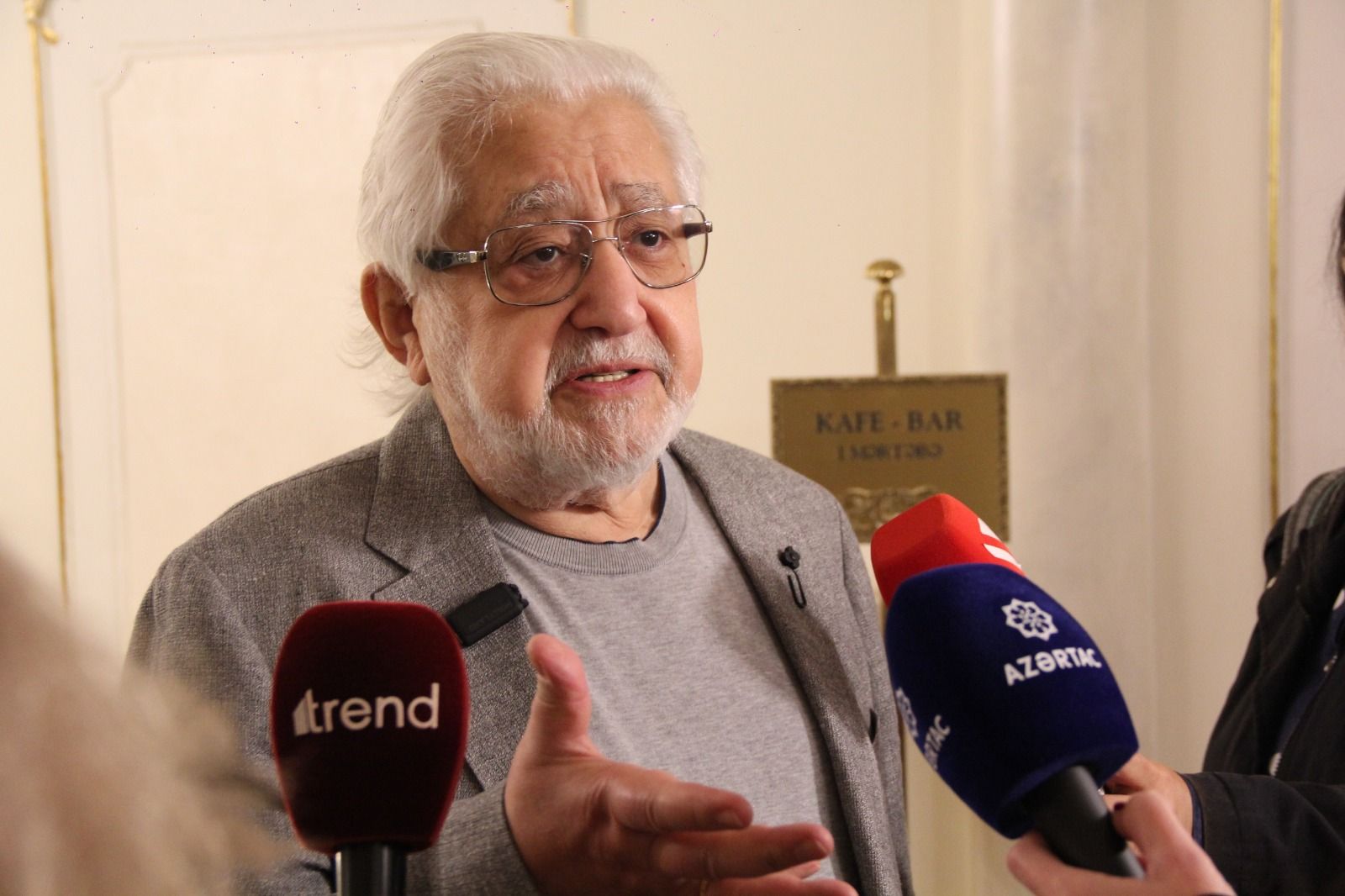
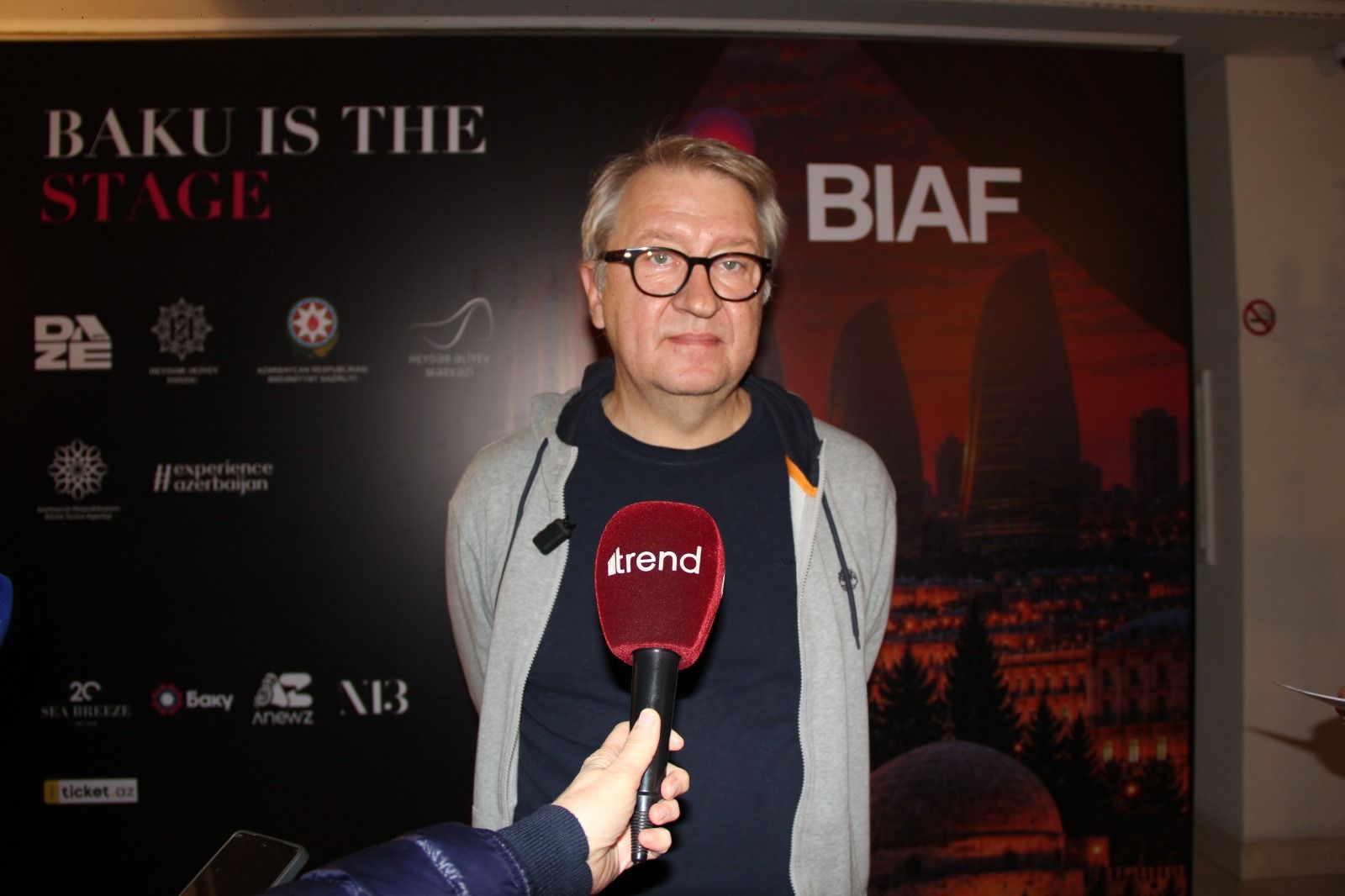
Lev Dodin spoke highly of the importance of international cultural initiatives, noting that art and cultural dialogue become particularly valuable during challenging periods in history. In his view, festivals such as BIAF in Baku help preserve mutual understanding between people and create spaces for communication that transcend national borders.
Baku made a strong impression on the production’s cast. Visiting the Azerbaijani capital for the first time, Dodin praised the city’s beauty, the splendour of its theatre architecture and the views of the Caspian Sea. The renowned director also expressed a desire to explore the Old City, Icherisheher, and discover more of the capital’s landmarks.
“I am grateful that such a festival exists and that we have become part of it. And, in general, I am glad that we are in Baku. Everything is wonderful, absolutely wonderful! Such a beautiful, magnificent theatre,” the director said.
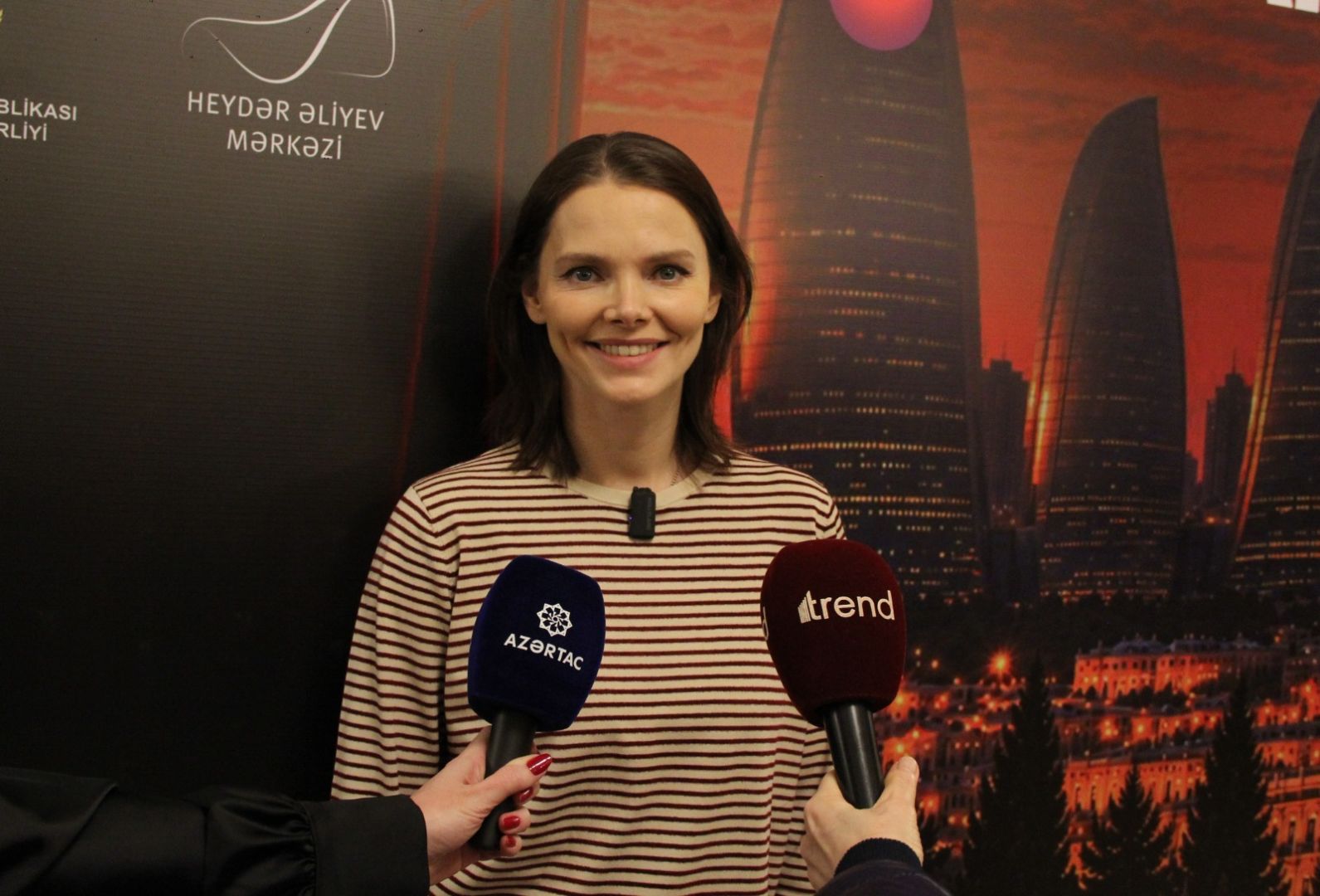
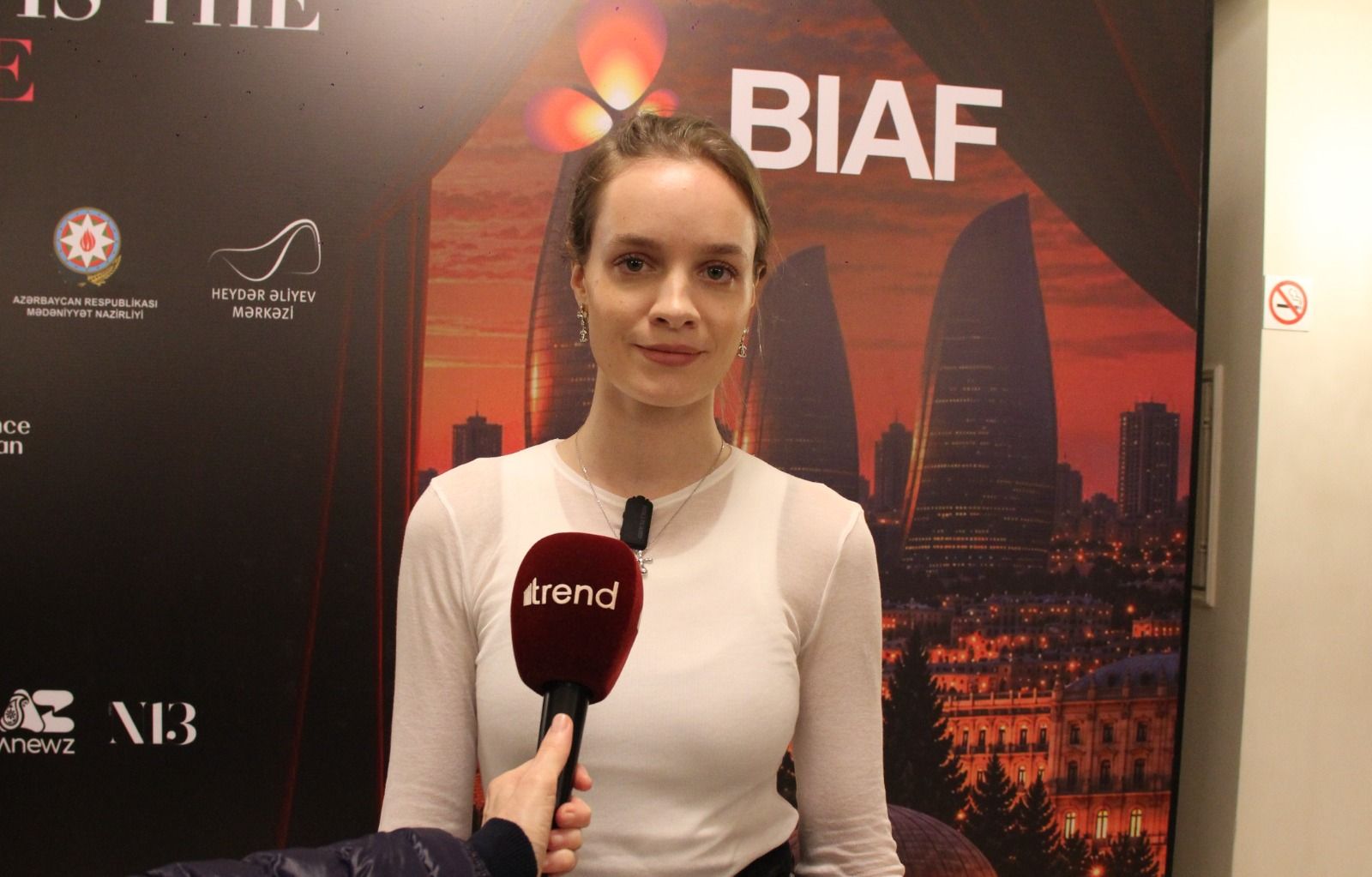
Elizaveta Boyarskaya was also visiting Baku for the first time and said the city had immediately won her over with its architecture, cleanliness and atmosphere. She had already taken a walk along the waterfront, visited Icherisheher and Little Venice, and admired the building of the Azerbaijan State Academic Musical Theatre.
“From an architectural point of view, it is an absolutely flawless and beautiful building, with a very beautiful auditorium,” she remarked.
Anna Zavtur likewise shared her impressions of her first visit to Baku, saying that the city had captivated her with its beauty and architecture. She was particularly struck by the cleanliness of the streets and the attention paid to the urban environment.
“I have already fallen in love with this city. It is incredibly beautiful, and I really like the architecture,” the actress said. She had visited Icherisheher and hoped to continue exploring the Azerbaijani capital, including a visit to the Heydar Aliyev Center.
Igor Chernevich, who had previously visited Baku on tour, described it as a wonderful city and said he would gladly spend more time there to discover both the capital and other parts of Azerbaijan.
“It is a beautiful city. Wonderful. I really enjoy walking around here,” the actor said.
A new interpretation of Chekhov through the characters
Lev Dodin explained that his understanding of Chekhov’s work had evolved over the past two decades. As time passes, people change, he noted, while Chekhov’s works continue to encourage audiences to ask questions about themselves and the world around them.
“Chekhov is a writer and playwright who is always a little ahead of his time,” Dodin said.
The director explained that certain elements of the play had receded into the background in the new production, while others had acquired greater significance. His priority was less about following every line literally than about preserving and intensifying the work’s inner essence. In his view, the boundary between respecting the author’s intentions and exercising directorial freedom is determined by intuition, personal understanding of the material and artistic taste.
Dodin also highlighted the distinctive nature of Chekhov’s humour, in which laughter frequently coexists with pain and comedy becomes a means of gaining a deeper understanding of human life.
“This is a comedy of life. A comedy akin to Shakespeare’s comedies, where you do not have to laugh all the time. Where you often have to cry through laughter and laugh through tears,” the director said.
One of the production’s central themes is the artist’s fate, with creative work presented as both a calling and a difficult ordeal. Dodin stressed that his The Seagull is dedicated to people of the arts — those who feel life particularly deeply, respond to events in their own ways and accept responsibility for their decisions and actions.
This idea is reflected in the production’s interpretation of its characters. Elizaveta Boyarskaya, who plays Arkadina, explained that her character and Trigorin are connected by more than their personal relationship. They share a profound understanding rooted in their common devotion to art. Although their relationship faces serious challenges, both recognise creativity as an inseparable part of their existence.
According to Boyarskaya, Arkadina emerges in this interpretation as a complex and contradictory personality. Her uncompromising attitude towards her son, Treplev, stems partly from their differing views on artistic creation. For Treplev, external recognition is particularly important, whereas for Arkadina and Trigorin, art is primarily an inner necessity — a way of speaking about people, their time and human suffering.
Boyarskaya noted that artistic creation is simultaneously a reward and a heavy cross for an artist, a burden that few are capable of bearing. This gives Arkadina’s relationship with her son a particular dramatic depth: beneath the generational conflict lies a clash between different understandings of vocation, talent and the true meaning of art.
Anna Zavtur offered her own interpretation of Nina Zarechnaya. She said that, in Dodin’s production, Nina appears more determined and ambitious from the outset than she is traditionally perceived to be. She is far more than a naive young woman dreaming of a theatrical career; she is a strong-willed individual prepared to pursue her ambitions relentlessly.
The actress also observed that Nina’s relationship with Arkadina unfolds through a process of mutual recognition. In the younger woman, Arkadina seems to see a reflection of her own past, adding another layer of psychological complexity to their interactions. This interpretation gives Chekhov’s familiar characters new shades of meaning and makes their actions more comprehensible in the context of their personal struggles and artistic ambitions.
Igor Chernevich, who portrays Trigorin, acknowledged that developing the character had required considerable effort. He said the creative team had primarily sought to tell a story about artists and their relationship with their calling. Finding the right and authentic tone proved challenging, meaning that work on the production continues even after its premiere.
“We simply want to share what interests us, and we very much want to be heard and understood by those who come to see this production,” the actor said, speaking about the company’s appearance at BIAF.
The The Seagull performances at the Baku International Arts Festival have provided more than an opportunity for Baku audiences to encounter one of Russia’s leading theatre companies. They have also opened a new conversation about Chekhov, the nature of artistic creation and the complex inner world of human beings.
In Dodin’s interpretation, the classic retains its artistic power while revealing fresh dimensions, reminding audiences that true art offers no definitive answers but helps people understand life more deeply.
Here we are to serve you with news right now. It does not cost much, but worth your attention.
Choose to support open, independent, quality journalism and subscribe on a monthly basis.
By subscribing to our online newspaper, you can have full digital access to all news, analysis, and much more.
You can also follow AzerNEWS on Twitter @AzerNewsAz or Facebook @AzerNewsNewspaper
Thank you!