
Baku’s crowded diplomatic calendar is becoming a foreign-policy doctrine
Akbar Novruz
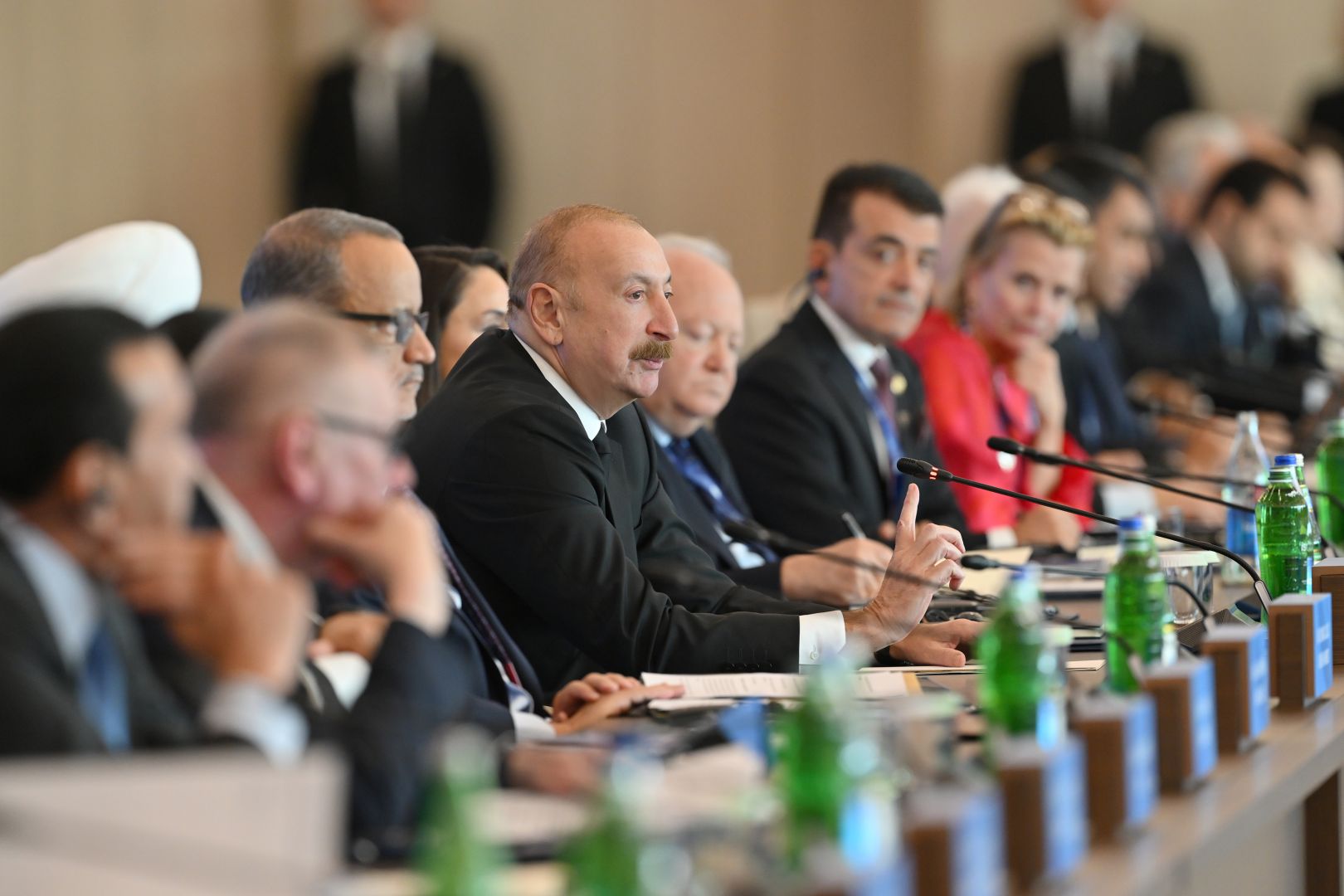
Read moreIt is rather an odd way for a small state to try to make itself heard by gathering the entire world to talk about how to get along. However, Azerbaijan’s seventh World Forum on Intercultural Dialogue saw some 2,000 delegates gather in Baku, of whom more than 500 were international participants coming from over 100 countries. This time, President Ilham Aliyev asked who sets the rules at either end.
Azerbaijan’s President delivered something sharper than the usual plea for tolerance: an argument that national sovereignty means little if powerful states reserve the right to lecture others while international institutions struggle to uphold their own decisions. Perhaps a country unable to dictate international rules can make itself useful to those who write them. Hosting confers no automatic authority. But invitations, chairmanships and negotiations on familiar ground provide access, agenda-setting opportunities and visibility.
After decades of unsuccessful efforts to reverse occupation and subsequent military victories, Azerbaijan wants its experience read as a political lesson. In Baku’s telling, neither international recognition nor diplomatic sympathy is a substitute for the capacity to protect national interests. The harder question is whether a lesson born of one conflict can be translated into a credible principle for an increasingly fractured world.
A capital that refuses to remain on the sidelines
Baku has had decades to gather all those diplomatic invitations and responsibilities which normally fall to cities many times larger. The city’s chairmanship of the Conference on Interaction and Confidence Building Measures in Asia was extended to 2028. At the October summit, CICA issued a Baku Declaration and named an Azerbaijani diplomat as the organization’s new secretary-general. Despite being located outside of Central Asia, Azerbaijan is also a member of the consultation arrangement for Central Asian leaders.
Azerbaijan, then, is set to host an Organisation of Islamic Cooperation summit in 2027 and a European Political Community summit in 2028. These organizations belong to different political geographies, ideologies, and strategies. Baku’s logic is that it should not have to pick sides to be able to make a meaningful engagement in other camps.
It is about being relevant as a middle power, but not about being a superpower. A middle power; that is, one which is not large enough to dominate its neighbours in the region, but whose economic and geographical importance is such that it will be able to influence decisions of far more powerful players. It has resources to shape the domestic policies of its neighbours, and from time to time we have witnessed it speaking as an equal to Moscow and Türkiye - which are considered the regional powers. And organizing summits is not the same as solving disagreements. However, in a context of fraying alliances, organizing rival groups has political significance. The question is whether the organizers can turn their busy schedule of summits into sustainable arrangements.
Baku's uncomfortable lesson of unenforced rules
The most significant point raised by President Aliyev relates to the difference between what international organizations say and do. Four resolutions were passed in 1993 by the UN Security Council regarding the conflict and calling for withdrawal from occupied territories of Azerbaijan. Diplomacy was claimed to have not brought results for many years. Azerbaijan regained control over many of its territories in the war of 2020 and secured its control over Karabakh through its military campaign in September 2023.
Ilham Aliyev invoked Article 51 of the UN Charter and portrayed Azerbaijan’s military action as the enforcement of rights that international mechanisms had failed to protect. This is the Azerbaijani government’s legal and political interpretation. The 1993 resolutions did not themselves grant an unrestricted authorisation to use force; the conduct and consequences of the wars remain subject to international scrutiny. Nonetheless, the political problem is hard to avoid. A global system that has territorial integrity as its fundamental tenet requires credible ways of safeguarding that. The case of Baku presents the peacekeeping organizations with a pertinent query: how can it be managed when promises last for decades but enforcement does not?
The right to decide, and the duty to negotiate
From there, the Azerbaijani President moved to a second argument: the rejection of political tutelage. He challenged those who presume the right to dictate domestic conduct to another country: “Do you have a moral right to lecture someone, to teach someone, to lecture an independent country on how to live, what to do, and what not to do?” The remark was made in a general discussion of double standards, rather than naming any particular ally or adversary.
Language that was surprising for an occasion meant for dialogue. But it reveals the underlying politics behind the ostensibly forward-looking foreign policy of Azerbaijan. For Baku seeks to have relations with various centers of power but at the same time insists that such engagement should not be supervision. This reflects the fact that in a place where the demands of neighbors and faraway partners often clash, it also demonstrates the dilemma of sovereign multilateralism. Relations with China, the USA, the European countries, and its neighbors are given as an example of how cooperation is possible without subordination to any one political center. But sovereignty does not give immunity to criticism, and refusal to submit to external pressure should not mean a right to evade responsibility to the international community. The stronger form of the argument expects consistency from all, including Azerbaijan.
So in that regard, the strategy, the language, and the reasoning are simple. It does have concrete elements. First, because Azerbaijan’s attitude to east-west traffic across the Caspian Sea and to north-south transportation routes means that this strategy has significance for parties that may normally ignore the South Caucasus. Secondly, energy exports, infrastructure, and low debt mean that Baku is able to maneuver diplomatically, although it remains vulnerable to pressure from outside the country.
At the same time, the forum proposed one of the domestic components of Ilham Aliyev's strategy: Azerbaijanism, which he defined as an “inclusive national concept” that unites Azerbaijan’s different ethnic and religious groups. His statement that there are no threats to the regime’s stability internally is, of course, a political judgment rather than a claim that can be verified independently. But this idea is essential to his foreign policy argument.
The lesson of Baku, therefore, is not that force is a better substitute for diplomacy, or that small states need not abide by international norms. A middle power does not need to chair the world's most powerful organisation to matter. It can become a useful junction between organisations whose members do not share the same worldview. The message of Baku is a call to question a world order that talks boldly about sovereignty but acts in an inconsistent manner in supporting it. Azerbaijan has shown that it can get the attention of the world and rally diverse partners. How well it succeeds in turning this experience into a viable model will be determined by a far tougher test than organizing yet another summit.
Here we are to serve you with news right now. It does not cost much, but worth your attention.
Choose to support open, independent, quality journalism and subscribe on a monthly basis.
By subscribing to our online newspaper, you can have full digital access to all news, analysis, and much more.
You can also follow AzerNEWS on Twitter @AzerNewsAz or Facebook @AzerNewsNewspaper
Thank you!