
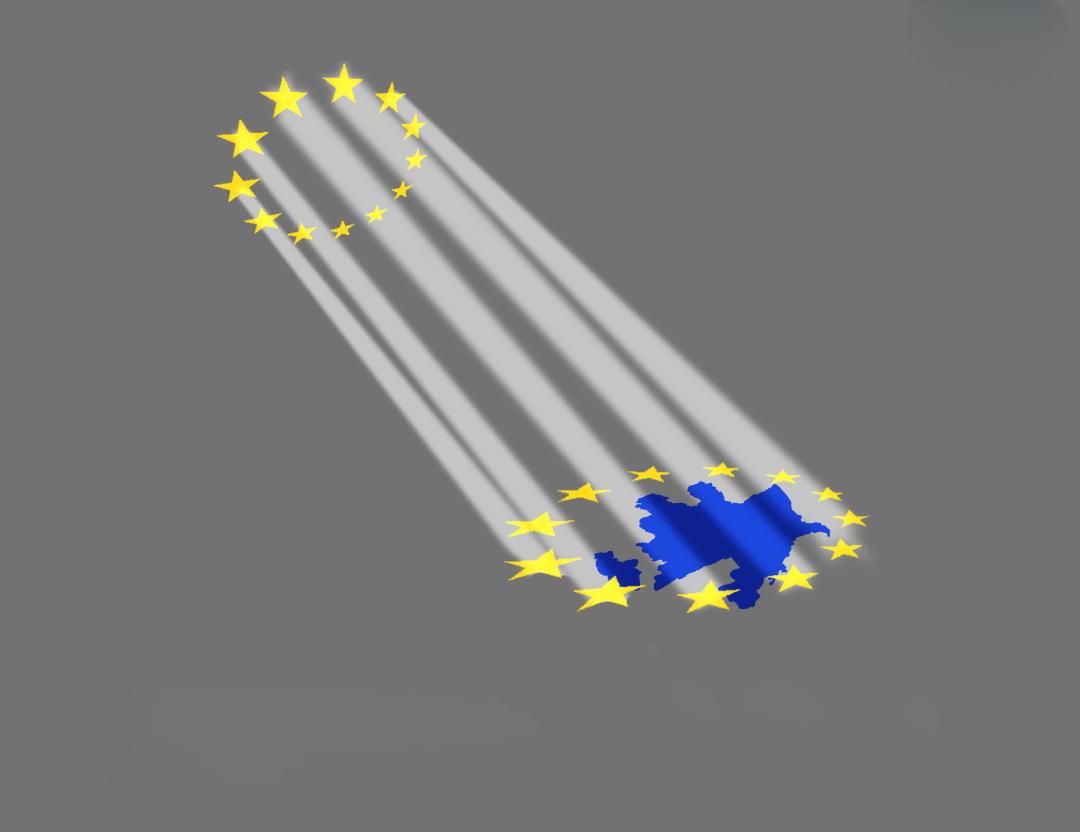
Could Azerbaijan become part of Europe’s future? Stubb’s 40-member EU vision raises question
Elnur Enveroglu
Read moreThere are various ways to analyse relations between Azerbaijan and the European Union, but one approach stands out as particularly compelling: the strategic interests of the Old Continent in Azerbaijan. In other words, Azerbaijan’s European future is a question of strategic interests, not geography alone. Sitting on the western shore of the Caspian Sea, the country offers Europe three things it increasingly needs: diversified energy supplies, alternative trade routes connecting it with Asia, and opportunities to build a more resilient economic partnership across the South Caucasus. However, the value of these assets raises a more difficult question: could a country that is already important to the European Union as an economic partner eventually become part of the bloc itself?
In fact, there are sound reasons for Brussels to take Azerbaijan seriously. The EU is Azerbaijan’s largest trading partner, accounting for 38.7% of its total trade and 70.2% of its exports. In 2025, European imports from Azerbaijan reached €13.9bn, while EU exports to the country amounted to €2.8bn. The imbalance, in the meantime, reflects the importance of Azerbaijani energy supplies, but it also shows how much the relationship could gain from a broader economic foundation.
Let's admit that energy remains the most immediate reason for Europe to value Azerbaijan. Since Russia’s full-scale invasion of Ukraine, the EU has sought to reduce its dependence on Russian energy and diversify its suppliers. Azerbaijan has become part of that effort through the Southern Gas Corridor, which brings Caspian gas to European markets via Türkiye and the Trans Adriatic Pipeline. According to the European Commission, gas supplies from Azerbaijan increased by more than 40% between 2021 and 2024. The partnership also covers renewable energy, energy efficiency and methane emissions, suggesting that the relationship is no longer confined to the sale of hydrocarbons.
But energy is only part of Azerbaijan’s appeal, as its location gives it a role in the emerging transport network linking Europe with Central Asia and China. In 2025, the East-West transport corridor passing through Azerbaijan carried approximately 16.9 million tonnes of cargo, while the North-South corridor handled 9.3 million tonnes. These figures demonstrate the country’s importance as a transit hub, although they also underline the need for continued investment in infrastructure, capacity and efficiency.
For Europe, stronger connections across the Caspian could offer additional access to Central Asian markets, energy resources and critical raw materials. How about for Azerbaijan? Taking a more analytical approach, one could say it could bring transit revenues, foreign investment and opportunities to develop logistics, manufacturing and services. For instance, China’s role makes this relationship even more consequential. Rather than choosing between engagement with Beijing and closer ties with Europe, the EU could use more diversified transport routes to reduce its dependence on individual trade arteries and strengthen its economic presence across Eurasia.
Azerbaijan also has a case for expanding cooperation beyond energy and transit. Its agricultural and food exports are growing, but the sector still has considerable room to improve productivity, processing and access to higher-value markets. In 2025, the country’s agricultural exports reached approximately $1bn, while exports of agricultural and agro-industrial products combined amounted to around $1.3bn. The European Union, meanwhile, recorded agricultural industry output worth €531.9bn in 2024. In short, its experience in food safety, agricultural technology, research, processing and supply-chain management could help Azerbaijan turn more of its production into competitive export goods.
Numerous advantages could be cited in favour of Azerbaijan’s accession to the European Union. However, despite these benefits, they do not provide sufficient grounds for the country to become an EU member automatically. Strategic value and political eligibility are two different questions, and the distinction is essential to understanding Finnish President Alexander Stubb’s recent remarks.
Speaking at the opening of the academic year at the College of Europe in Bruges on 26 October 2026, Stubb outlined a vision of an EU with roughly 40 member countries within the next 30 years. He said he would like to see the Western Balkan countries, Ukraine and Moldova join the bloc, alongside Iceland, Norway, Switzerland and the United Kingdom. He also mentioned Türkiye, Armenia, Azerbaijan and Georgia, making their future membership conditional on how they develop.
The Finnish President's qualification is important, but it should not be understood as a promise or announcement of a new EU policy or as suggesting that accession negotiations were imminent. To be clearer, his remarks were a long-term political vision, not a formal enlargement commitment. Nevertheless, naming Azerbaijan among the countries whose future relationship with the Union remains open is significant. It places the South Caucasus within a wider debate about how Europe might expand its influence and security partnerships in a world increasingly shaped by geopolitical competition.
There is evidence that the EU already sees Azerbaijan as more than a gas supplier. The two sides have maintained a Partnership and Cooperation Agreement since 1999, and the EU describes itself as Azerbaijan’s largest trade partner and main investor. Their energy partnership, formalised in a memorandum signed in July 2022, also includes renewable energy and regional connectivity. Besides, these are practical foundations for a closer relationship, even if they fall well short of an accession process.
Moreover,Azerbaijan has not applied to join the EU and its current relationship with the bloc is based on cooperation and partnership, rather than the formal accession framework used for candidate countries. Nevertheless, over the next 30 years, Azerbaijan could become more deeply integrated into European energy, transport, agricultural and industrial networks. Such a relationship would already be significant, even without full membership. Whether it could eventually progress further would depend on reforms in Azerbaijan, the evolution of the regional security environment and the EU’s own willingness to enlarge.
The country has assets that Europe needs, from Caspian energy to transport links and access to Central Asia. But those assets are the beginning of the argument, not its conclusion. Stubb has raised the possibility of a wider European Union in which Azerbaijan’s future is not ruled out. Turning that possibility into a credible prospect would require both sides to move beyond strategic convenience towards a relationship built on shared expectations, practical cooperation and political compatibility.
Here we are to serve you with news right now. It does not cost much, but worth your attention.
Choose to support open, independent, quality journalism and subscribe on a monthly basis.
By subscribing to our online newspaper, you can have full digital access to all news, analysis, and much more.
You can also follow AzerNEWS on Twitter @AzerNewsAz or Facebook @AzerNewsNewspaper
Thank you!