
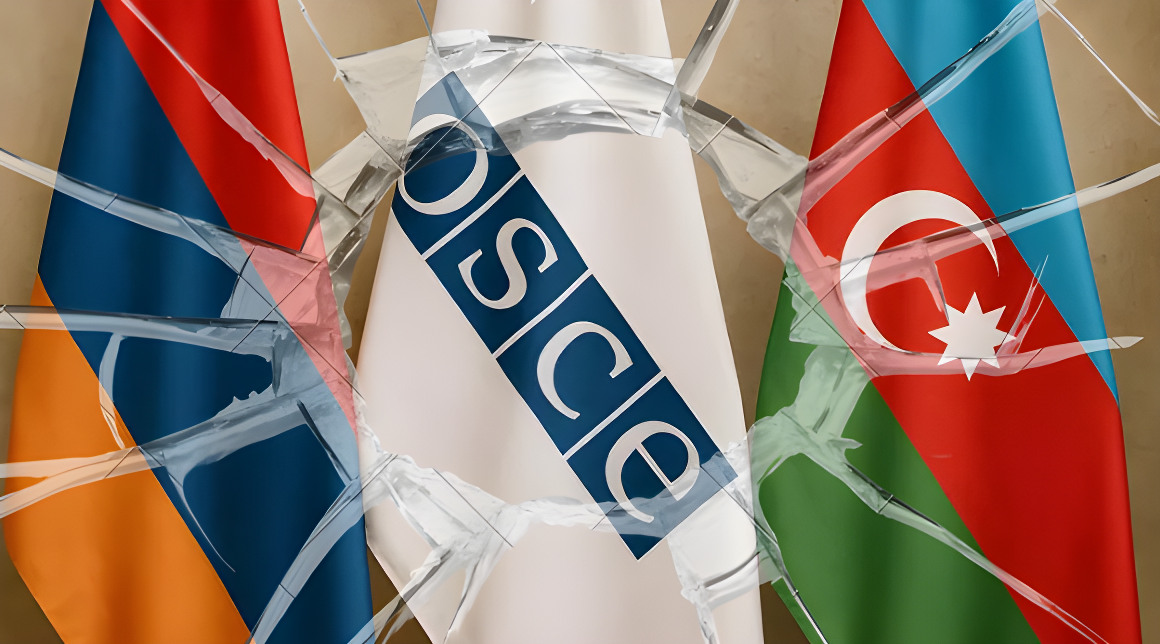
Baku’s strategic patience ends Minsk Group era, rewrites regional power dynamics
Akbar Novruz
Read moreFor nearly three decades, the world watched as negotiations over Garabagh dragged on, producing endless reports, summit meetings, and diplomatic formulas. The OSCE Minsk Group, hailed as the key to peace, became a stage for promises without results. While the co-chairs debated, Armenia maintained its occupation, and Azerbaijan’s sovereignty remained frozen on paper. Yet behind the scenes, Baku was quietly preparing, combining patient diplomacy with strategic strength. When the 44-day war erupted in 2020, it was not a sudden shock; it was the culmination of years of careful planning, revealing that real power on the ground outweighs endless conferences and biased mediation.
Established in March 1992, the Minsk Group brought together Azerbaijan, Armenia, Belarus, Germany, Italy, Russia, Türkiye, Sweden, Finland, and later France. Its stated purpose was to mediate a peaceful resolution of the conflict. In practice, however, it failed to deliver meaningful results for decades. Despite the ceasefire of February 1994, no significant progress was made toward restoring Azerbaijan’s territorial integrity. High-level engagements, including President Heydar Aliyev’s 1997 meeting with French President Jacques Chirac, strengthened the framework in theory but yielded little in practice.
Structural limitations and biased mediation were at the heart of the group’s ineffectiveness. Dominance by the co-chairs, the United States, Russia, and France, marginalized other member states and limited potential international support for Azerbaijan. Consensus-based decision-making encouraged performative diplomacy rather than tangible conflict resolution. Armenia, benefiting from this imbalance, maintained its occupation with minimal accountability. The Kazan Principles of 2001 and the Madrid Principles of 2007 offered only superficial recognition of Azerbaijan’s territorial claims, effectively legitimizing Armenia’s presence in occupied areas and constraining Azerbaijan’s sovereignty.
Throughout these years, Azerbaijan pursued a careful balance between diplomacy and strategic readiness. Offers that compromised sovereignty, such as proposals to exchange Garabagh for Armenia’s Meghri region, were rejected. Leaders like Heydar Aliyev and later Ilham Aliyev used negotiations to identify Armenia’s red lines and simultaneously strengthen Azerbaijan’s political, military, and legal position. This careful planning ensured that the country could act decisively when peaceful efforts failed.
The 44-day Patriotic War of 2020 decisively shifted the balance of power. Azerbaijan restored control over its occupied territories, effectively implementing UN Security Council resolutions independently and demonstrating that decades of ineffective mediation could not substitute for real action on the ground. This campaign fundamentally altered the regional dynamic, showing that diplomacy backed by strength in the field produces results.
The collapse of the Minsk Group as a functional mediation body became inevitable. Its co-chairs often pursued their own geopolitical interests and repeatedly acted in favor of Armenia, eroding its credibility. Following the war, Armenian attempts to portray the group as a continuing "security mechanism" were increasingly untenable, as legal and military realities had already changed.
The significance of Azerbaijan’s diplomatic success was further highlighted by the unprecedented opening of Armenian archival materials. When Prime Minister Nikol Pashinyan shared decades of correspondence, analytical reports, and working drafts from the Minsk Group, the true dynamics of the negotiations were revealed. These documents exposed the internal panic, hesitations, and strategic miscalculations within Armenian leadership. Of particular note was a letter from former Armenian President Serzh Sargsyan to Vladimir Putin after the April 2016 clashes, which acknowledged the irreversible shift in the balance of power and the collapse of the illusion of military parity. Sargsyan recognized that Armenia could no longer rely on the occupied territories as leverage, yet he chose to pursue the status quo rather than accept the realities dictated by Azerbaijan. These archives confirmed what Azerbaijan had long understood: the negotiation process had been deeply imbalanced, with one side steadily strengthening its position while the other clung to illusions.
On August 8, 2025, Foreign Ministers from Azerbaijan and Armenia signed a joint appeal to the OSCE to formally dissolve the Minsk Group. This represents a legal and diplomatic victory for Azerbaijan, confirming both the restoration of territorial integrity and the ineffectiveness of decades of biased mediation. The dissolution validates Azerbaijan’s long-term strategy, reinforces its diplomatic influence, and establishes a foundation for sustainable peace in the region.
Today, the lessons are clear. Garabagh negotiations demonstrate that effective conflict resolution requires impartiality, structural balance, and enforceable outcomes. Organizations dominated by a few powerful actors, pursuing their own geopolitical interests, are incapable of delivering fair and lasting solutions. Azerbaijan’s success illustrates the importance of integrating legal, diplomatic, and military strategies in a coherent approach to uphold sovereignty and achieve tangible results.
In the end, the Minsk Group’s demise stands as both a legal and diplomatic victory for Azerbaijan, validating decades of strategy and marking a new chapter in regional stability. It reinforces the principle that sovereign rights, when pursued systematically and with resilience, cannot be indefinitely delayed by ineffective international mechanisms or partisan mediation.
As the archives lay bare Armenia’s miscalculations and the limits of the Minsk Group, one lesson stands out: in conflicts where reality and diplomacy collide, strength on the ground shapes the peace. Azerbaijan’s long march toward justice proves that time and strategy favor those who prepare while others stall in empty talk.
Here we are to serve you with news right now. It does not cost much, but worth your attention.
Choose to support open, independent, quality journalism and subscribe on a monthly basis.
By subscribing to our online newspaper, you can have full digital access to all news, analysis, and much more.
You can also follow AzerNEWS on Twitter @AzerNewsAz or Facebook @AzerNewsNewspaper
Thank you!