
Azerbaijan, Indonesia seek to unlock untapped trade potential

Ulviyya Poladova
Read moreAs a country located at the crossroads of Europe and Asia, Azerbaijan has long sought to build balanced and productive relations with both European and Asian states. In this broader foreign economic strategy, Indonesia is increasingly emerging as a promising economic partner.
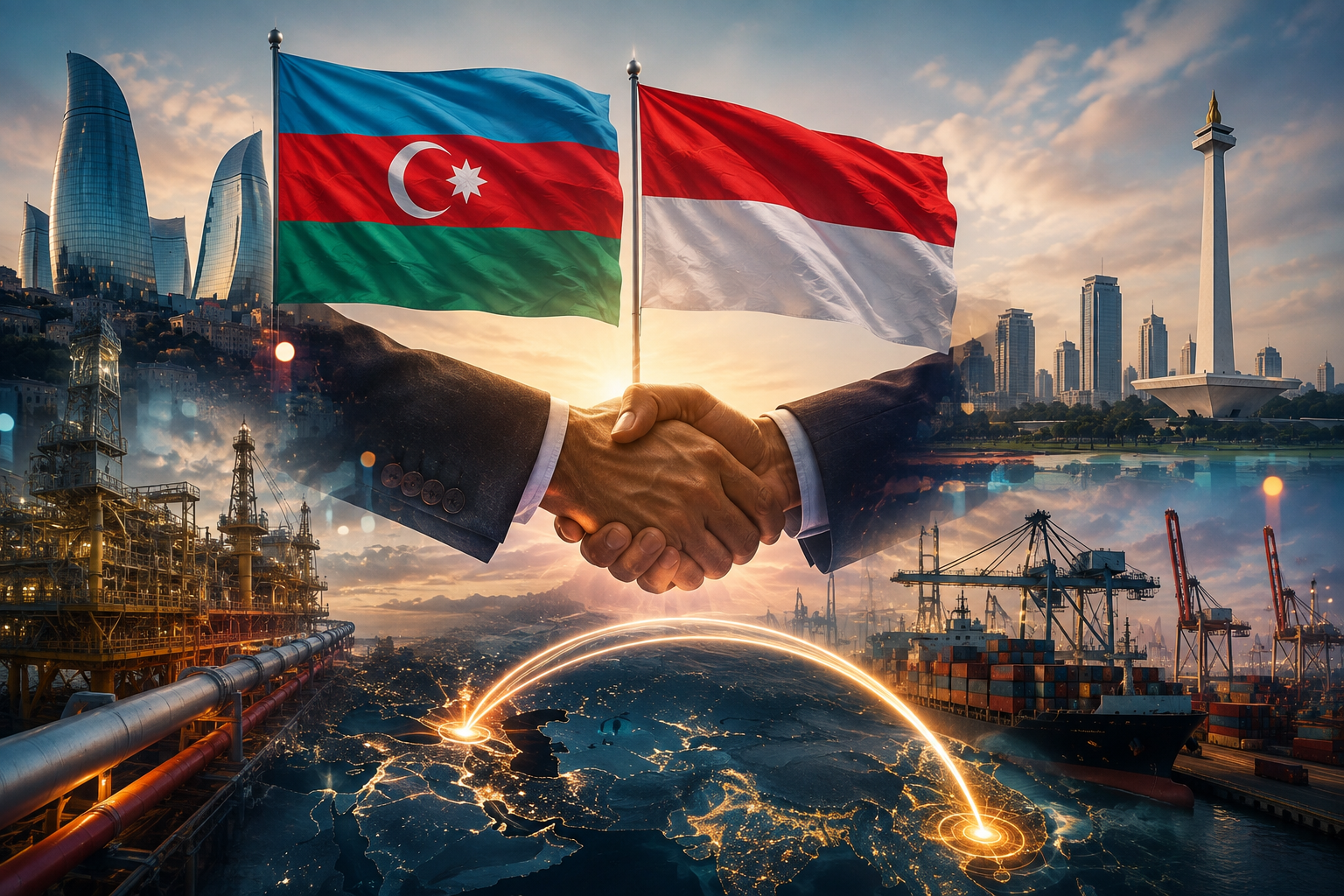
Although Azerbaijan and Indonesia are separated by thousands of kilometres, their economic relations have considerable potential for growth. At first glance, the two countries may appear very different, separated by geography, scale, and historical experience. Yet a closer look shows that Azerbaijan and Indonesia have more in common than might be assumed, and their growing dialogue points to significant opportunities for deeper cooperation.
A recent meeting between Yusif Abdullayev, Executive Director of the Export and Investment Promotion Agency of Azerbaijan (AZPROMO), and Berlian Helmy, Indonesia's Ambassador to Azerbaijan, highlighted this trend. The discussions focused on the possibility of organizing an Azerbaijan-Indonesia economic forum in the future. The sides also exchanged views on products with export potential and explored possible areas of cooperation. Among the sectors identified were construction, agriculture, tourism, pharmaceuticals, and the food and beverage industry.
This meeting reflected a broader recognition that the relationship between Azerbaijan and Indonesia contains considerable untapped potential. Both sides appear increasingly interested in turning goodwill into practical economic projects, trade links, and investment partnerships.
Indonesia, thanks to its openness to international cooperation, can become a strategic partner for Azerbaijan in the implementation of mutually beneficial initiatives in business, investment, trade, tourism, and other sectors. At the same time, Azerbaijan's geographic position gives it a special role in this relationship. Situated between Asia and Europe, Azerbaijan offers Indonesia a potentially valuable hub for access to European markets. This advantage is especially important at a time when countries are looking to diversify their trade routes, partnerships, and export destinations.
Beyond geography, Azerbaijan also presents itself as a country undergoing dynamic development in social and cultural spheres, especially among young people. This creates a favorable atmosphere for cooperation not only in commerce, but also in broader people-to-people and institutional ties.
Ambassador Berliane Helmi previously highlighted one particularly important area of interest for Indonesia, fertilizers. He stated earlier this year that Indonesia views Azerbaijan as a reliable supplier of fertilizers, which are critically important for Indonesian agriculture.
In this context, Indonesia could become a promising market for Azerbaijani agricultural, food, chemical, and petrochemical products. It opens the door to a broader commercial relationship beyond energy. For Azerbaijan, expanding into a large and dynamic market like Indonesia would represent an important diversification opportunity.
The Indonesian diplomat also emphasized the importance of water sustainability and water security. He noted that Azerbaijan has broad experience in providing clean drinking water, including technologies related to the desalination of the Caspian Sea, and stressed the importance of developing cooperation in this sphere.
Trade relations between Azerbaijan and Indonesia already exist, and Indonesia appears among the destinations of Azerbaijani exports in official statistics. In January-August 2025, Indonesia accounted for around 0.4 percent of Azerbaijan's total exports. This figure is still modest, especially when compared with Azerbaijan's major trading partners such as Italy, Türkiye, Russia, and China. However, that is precisely what makes the relationship interesting. The current volume of trade remains relatively small, but the room for expansion is substantial.
In other words, Azerbaijan-Indonesia trade should not be judged only by its present scale, but by its future potential. When the existing base is limited, even moderate progress in the right sectors can produce visible results. The challenge is to identify the most practical areas for growth and to build mechanisms that allow businesses on both sides to move from discussion to implementation.
Energy is already one of the clearest pillars of the relationship. It would be unfair not to note that Indonesia is also an importer of Azerbaijani oil. In January-February of this year, Azerbaijan exported 38.6 thousand tons of crude oil and petroleum products obtained from bituminous minerals to Indonesia, with a total value of $17.9 million.
The energy dimension of the relationship gained further weight in March of this year, when Azerbaijan and Indonesia agreed to hold the first meeting of the Working Group on Energy. It underscores Azerbaijan's role as a country that partners view as reliable and worth engaging with on long-term issues. The establishment of such a platform also creates an opportunity to move beyond individual shipments or contracts toward a more structured dialogue on cooperation.
Tourism is another sector where new opportunities are beginning to emerge. In April of this year, the Azerbaijan Tourism Bureau presented the country for the first time at Indonesia Travel Expo 2026 (ITE) in Jakarta. At the exhibition, Azerbaijan was showcased as a promising tourist destination for the Indonesian market. Business meetings were held with local travel agencies to develop cooperation and identify new opportunities for joint business initiatives.
Multilateral cooperation has also created new opportunities for strengthening economic ties between Azerbaijan and Indonesia. Azerbaijan joined the D-8 Organization for Economic Cooperation in 2025, and Indonesia is among its members. In 2026-2027, Indonesia holds the chairmanship of the organization. This creates an additional framework through which the two countries can strengthen their economic ties.
Within the D-8 framework, particular attention is given to expanding trade and investment, developing the halal economy, strengthening food security, advancing the green transition, deepening digital cooperation, and improving transport connectivity.
The future of Azerbaijan-Indonesia relations will likely depend less on grand declarations and more on consistent follow-through. Organizing an economic forum and launching sector-based business contacts effectively could turn a modest trade relationship into a more strategic one. The foundations already exist. If both sides act with continuity and practical focus, the partnership between Azerbaijan and Indonesia may become one of the more interesting examples of cross-regional cooperation linking the Caucasus and Southeast Asia.
Here we are to serve you with news right now. It does not cost much, but worth your attention.
Choose to support open, independent, quality journalism and subscribe on a monthly basis.
By subscribing to our online newspaper, you can have full digital access to all news, analysis, and much more.
You can also follow AzerNEWS on Twitter @AzerNewsAz or Facebook @AzerNewsNewspaper
Thank you!