
Azerbaijan’s AI push gains momentum with new Israel partnership [INTERVIEW]
![Azerbaijan’s AI push gains momentum with new Israel partnership [INTERVIEW]](https://www.azernews.az/media/2026/02/05/a40fcdea-86d4-4904-aced-3979d4608abf.png)

AzerNEWS Staff
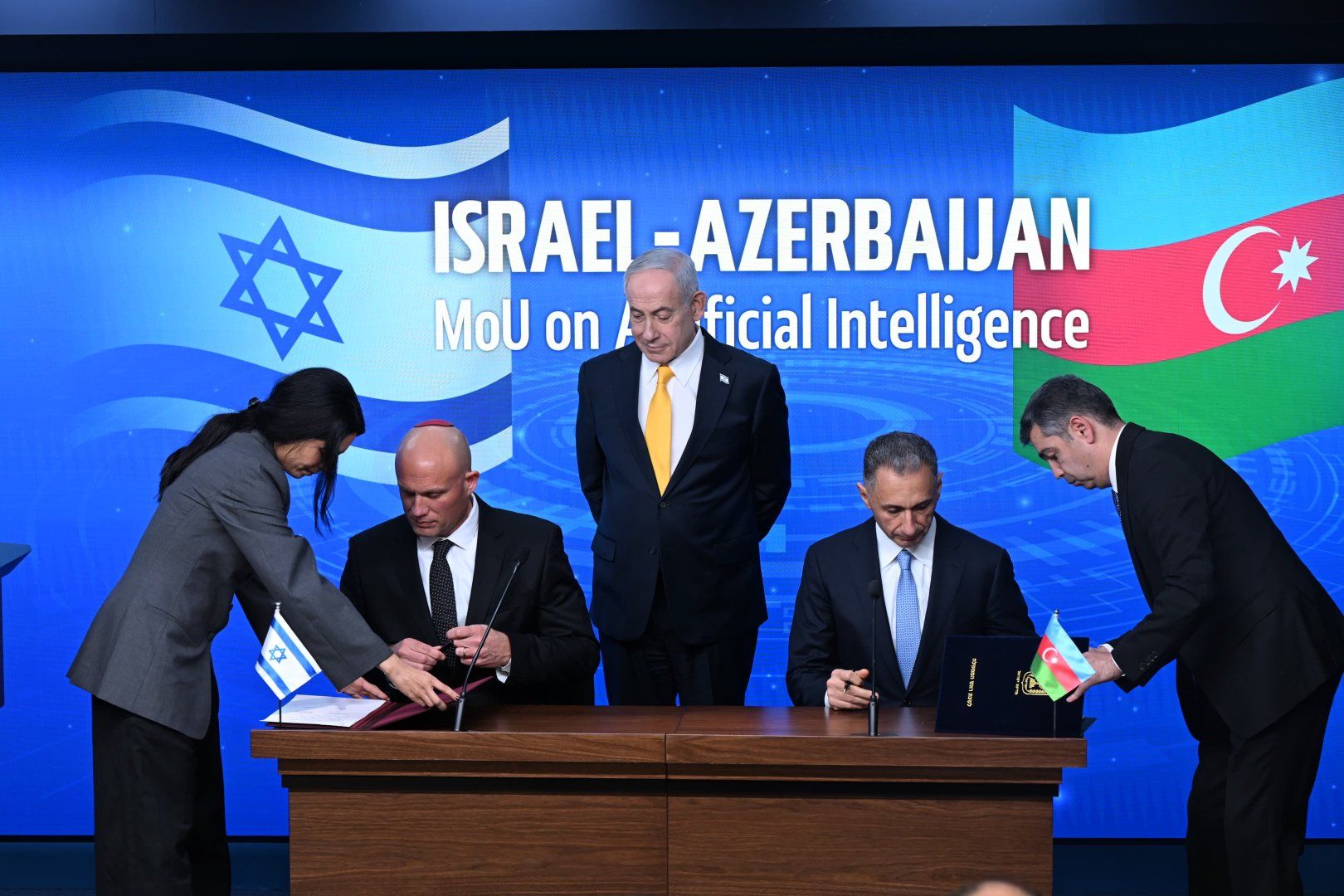
Read moreAs artificial intelligence reshapes economies and governance worldwide, Azerbaijan is seeking to move from strategy to implementation. A new memorandum of understanding signed with Israel on artificial intelligence signals a push towards infrastructure, talent development, and applied use cases. In this interview, AI expert Etibar Aliyev outlines what the agreement aims to deliver, how it fits into Azerbaijan’s national AI strategy, and which sectors stand to benefit most.
---------------------------------
Q: What is the main objective of the memorandum signed between Israel and Azerbaijan in the field of artificial intelligence? What potential benefits could this cooperation bring to Azerbaijan, and in which areas is growth expected?
The MOU's primary goal is to formalize a framework for practical collaboration between Israel and Azerbaijan in AI, with a focus on implementation rather than merely symbolic agreements. As highlighted by Etibar Aliyev, the cooperation is designed to enhance Azerbaijan's AI capabilities through infrastructure development, research initiatives, and human-capital development. "The agreement targets key bottlenecks such as access to computing power, operationalizing AI safely at scale, and ensuring the availability of skilled professionals," he explains.
For Azerbaijan, these advancements have the potential to significantly accelerate its AI landscape. The agreement offers substantial benefits by tackling the critical barriers to AI integration, such as building the right infrastructure and ensuring the trained workforce necessary for the deployment of AI at scale. Aliyev further emphasizes that this partnership will foster AI-driven innovation in sectors such as urban mobility, cybersecurity, and human-capital development. These areas are expected to see immediate traction, contributing to both economic growth and digital transformation.
Q. How can cooperation with Israel in the field of AI contribute to the successful implementation of Azerbaijan’s “Artificial Intelligence Strategy for 2025–2028”?
Azerbaijan's “Artificial Intelligence Strategy for 2025–2028” outlines an ambitious vision for AI integration across the economy and public services. The partnership with Israel, according to expert, aligns perfectly with the strategy’s goals and will likely accelerate its implementation. The cooperation can expedite the deployment of enabling infrastructure, create the workforce readiness needed for successful AI adoption, and demonstrate real-world use cases for AI across various sectors.
"The memorandum’s focus on supercomputing and applied deployment can provide the necessary tools and frameworks to translate the strategy’s goals into tangible outcomes," he explains. This includes defining deployment standards, establishing monitoring mechanisms, and ensuring the responsible use of AI. Furthermore, the human-capital focus of the MoU will reinforce Azerbaijan’s workforce priorities by introducing joint training programs and project-based learning, ensuring that the country develops a strong talent pool capable of advancing AI innovation.
Q. What new projects could emerge from the cooperation between the two countries in AI in the future? What specific steps can be taken in terms of training specialists and conducting joint research under this collaboration?
Looking to the future, he foresees a variety of projects stemming from this collaboration, which will combine infrastructure, applied pilots, and structured research initiatives. The emphasis on supercomputing and AI application in civilian sectors is likely to result in new projects focused on improving access to high-end AI resources for Azerbaijani institutions and startups, as well as establishing shared governance frameworks for AI deployment.
Smart mobility and transport digitalization stand out as one of the most promising areas for collaboration. AI’s potential to optimize traffic flow, improve route planning, and enhance fleet management could significantly impact Azerbaijan's urban infrastructure. He also points to cybersecurity and secure digital transformation as key areas for collaboration, which will be critical as the nation continues to expand its digital footprint.
As for the development of AI specialists, the expert suggests that education must be directly linked to the deployment needs of Azerbaijan’s public and private sectors. "Creating role-based competency tracks, running 'train-the-trainer' programs, and incorporating real-world capstone projects will ensure the workforce is equipped with the skills needed to meet national challenges," he asserts. Joint research efforts should also be grounded in real-world applications, with clear problem-solving goals and access to computing resources, data governance rules, and collaborative structures for transparent intellectual property management.
Q. In which key civil sectors can joint AI projects be implemented, and what impact could these projects have on Azerbaijan?
AI holds the potential to transform a variety of key civilian sectors in Azerbaijan, and several areas are particularly ripe for AI-driven innovation. As the expert points out, transport and urban mobility are high-priority sectors where AI can address issues such as congestion forecasting, predictive maintenance, and fleet optimization.
Additionally, AI can improve public services by automating workflows, enhancing citizen support, and reducing administrative burdens. These initiatives are expected to improve the efficiency and accessibility of services, ultimately benefiting the general population.
AI can also play a transformative role in energy and utilities by enabling predictive maintenance, demand forecasting, and operational optimization. These applications not only improve service reliability but also help reduce operational costs. Furthermore, healthcare and education sectors stand to gain from AI through resource allocation optimization and the development of AI-assisted learning systems that can enhance workforce readiness.
In terms of national security, the integration of AI in cybersecurity will be crucial to protecting Azerbaijan's digital infrastructure as the country undergoes increasing digitalization. The memorandum’s emphasis on civilian applications ensures that the projects will have a broad impact, directly benefiting citizens while simultaneously building long-term AI capabilities for Azerbaijan.
------------------
Why Azerbaijan’s AI deal with Israel matters
The memorandum between Azerbaijan and Israel reflects a shift away from aspirational technology policy towards execution. Rather than focusing on abstract innovation goals, the agreement prioritises computing infrastructure, applied deployment, and workforce readiness — the elements that often determine whether AI strategies succeed or stall.
Israel’s appeal lies not only in its technological sophistication, but in its experience translating AI research into scalable civilian systems. For Azerbaijan, this offers a chance to shorten development cycles and avoid the costly inefficiencies seen in many emerging AI ecosystems.
Crucially, the emphasis on civilian sectors anchors AI development in public value rather than experimentation for its own sake. If implemented consistently, the partnership could help Azerbaijan build a durable AI ecosystem that would be capable of scaling over time and contributing to both economic growth and social resilience.
Here we are to serve you with news right now. It does not cost much, but worth your attention.
Choose to support open, independent, quality journalism and subscribe on a monthly basis.
By subscribing to our online newspaper, you can have full digital access to all news, analysis, and much more.
You can also follow AzerNEWS on Twitter @AzerNewsAz or Facebook @AzerNewsNewspaper
Thank you!