
Iran named UN’s top partner in war on drugs
By Sara Rajabova
The United Nations Office on Drugs and Crime (UNODC) has named Iran the "number one partner".
"In the war on drugs, Iran is the number one partner of the United Nations," UNODC Executive Director Yury Fedotov was quoted as saying by IRNA news agency.
The comments came on the eve of the 56th session of the UN commission on narcotic drugs, scheduled to kick off in Vienna on Monday. The session will last until March 15.
Iranian Interior Minister Mostafa Mohammad-Najjar, who is also the secretary general of Iran Drug Control Headquarters, will attend the first two days of the session along with a high-ranking delegation.
Fedotov said earlier that Iran's effective role in the fight against drug traffickers and the discovery of drugs has been highlighted in all UN reports and assessments.
In January, Deputy Chief of the UNODC Branimir Bratonov also hailed the Iranian law enforcement for their relentless efforts in combating drug trafficking.
He said that despite the sanctions, Iran has, in fact, no shortage of equipment for fighting narcotics, praising Iran's achievements in the war on drugs.
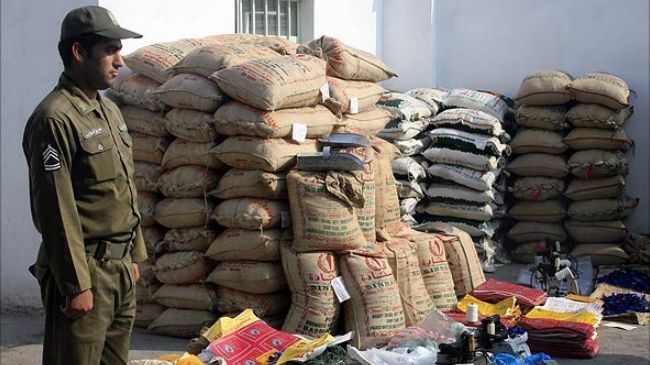
Iran has a 900-kilometer border with Afghanistan, which is the world's number one opium and drug producer. Iran's geographical position has made the country a favorite transit corridor for drug traffickers who intend to smuggle their cargoes from Afghanistan to drug dealers in Europe.
Iran spends billions of dollars and has lost thousands of its police troops in the war against traffickers. The country has reportedly spent more than $700 million to seal the borders and prevent the transit of narcotics destined for European, Arab and Central Asian countries.
Owing to its rigid efforts, Iran makes 89 percent of the world's total opium seizures and has turned into the leading country in combating drugs.
Iranian police officials believe that drug production in Afghanistan has seen a 40-fold increase since the US-led invasion of the country in 2001.
Iran's Law Enforcement Police General Ali Moayyedi earlier criticized the NATO forces in Afghanistan over increasing drug production and trafficking, saying they have created a safe haven for drug traffickers.
Moayyedi said "the evidence substantiating our claim is the growth in the production of narcotics in Afghanistan after the presence of the occupying forces in that country."
Iran has always lambasted the NATO forces in Afghanistan over increasing drug cultivation, production and trafficking in Afghanistan, and said that almost all the world's opium production is done before the eyes of the foreign troops in Afghanistan.
While Afghanistan produced only 185 tons of opium per year under the Taliban, according to the UN statistics, since the US-led invasion, drug production has surged to 3,400 tons annually. In 2007, the opium trade reached an estimated all-time production high of 8,200 tons.
Afghan and Western officials blame Washington and NATO for the change, saying that allies have "overlooked" the drug problem since invading the country 12 years ago.
Here we are to serve you with news right now. It does not cost much, but worth your attention.
Choose to support open, independent, quality journalism and subscribe on a monthly basis.
By subscribing to our online newspaper, you can have full digital access to all news, analysis, and much more.
You can also follow AzerNEWS on Twitter @AzerNewsAz or Facebook @AzerNewsNewspaper
Thank you!