
Why President Aliyev’s absence from Turkic Summit matters more than it seems
By Farman Aydin | AzerNEWS
Azerbaijan’s president has no need to abandon the Turkic world to make clear that friendship cannot mean accepting public humiliation or interference in sovereign decisions.
By any conventional measure, the relationship between Azerbaijan and Türkiye is among the closest in international politics. Bound by history, language, culture and a shared strategic outlook, the two countries have long described themselves as “one nation, two states”. However, the slogan that has helped define their partnership is now facing an uncomfortable test: what happens when the language of brotherhood is used to demand political conformity?
For the past month, Azerbaijan, its president and its domestic policies have faced an increasingly hostile campaign in sections of Türkiye’s political and media landscape. The immediate controversies have varied, from Azerbaijan’s relations with Israel to the conduct of an Azerbaijani representative during Benjamin Netanyahu’s address to the United Nations and a decision concerning school uniforms. But the underlying accusation has remained remarkably consistent: Azerbaijan should conduct its foreign policy and make its domestic choices according to the expectations of those who claim to speak in the name of the Turkish nation or the wider Muslim world.
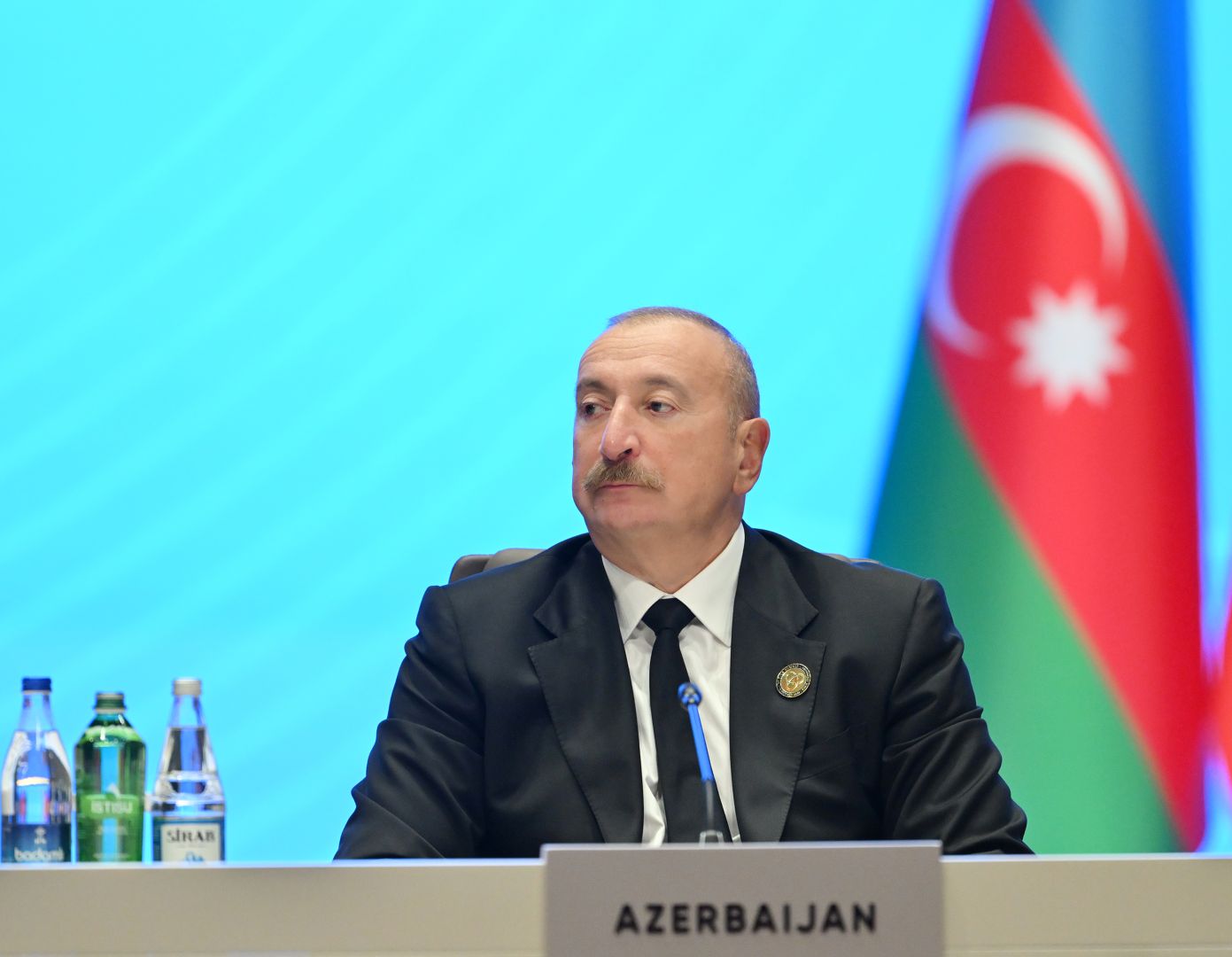
That is a troubling proposition, because brotherhood between sovereign states cannot mean that one country reserves the right to dictate the political choices of another. Against this background, President Ilham Aliyev’s decision not to attend the latest summit of the Organisation of Turkic States in Türkiye should not automatically be interpreted as a retreat from the Turkic world. It can equally be understood as a diplomatic signal that even the closest partnerships require mutual respect.
Now let's find a concrete answer to the question in many minds: what made this relationship worsen? Certainly, the controversy did not emerge overnight. Over the past three years, Azerbaijan has periodically found itself the target of criticism in Türkiye, particularly over its close relationship with Israel. The latest wave has brought those tensions into sharper focus, turning disagreements over foreign policy and domestic affairs into a much broader argument about Azerbaijan’s political identity.
The problem is not that Azerbaijan should be immune to criticism. No government deserves such immunity, and genuine friendship between countries should leave room for disagreement. The problem arises when criticism becomes a sustained campaign of personal insults, national stereotyping and pressure designed to undermine a neighbouring country’s right to make independent decisions.
The relationship between Baku and Ankara was never meant to rest on political subordination. The principle of “one nation, two states” recognises a profound affinity while acknowledging that the two countries remain separate sovereign entities, each with its own interests, responsibilities and foreign policy priorities.
Azerbaijan’s relationship with Israel is a case in point. Baku has developed ties with Israel for reasons that include security, technology, trade and energy. Those relations are part of Azerbaijan’s broader foreign policy, which also encompasses close cooperation with Türkiye and partnerships with countries across Europe, Asia and the Middle East.
One may debate the merits of particular decisions. But demanding that Azerbaijan abandon or restructure its relationships to satisfy another country’s domestic political constituencies is a different matter altogether.
There is also an uncomfortable question of consistency. Türkiye itself has maintained various forms of economic, diplomatic and strategic engagement with Israel, despite serious political disagreements and Ankara’s increasingly critical rhetoric towards the Israeli government. Those relationships have generated their own public controversies. If engagement with Israel is to be treated as a legitimate subject of political debate, the same standards should apply to both countries rather than being used selectively against Azerbaijan.
Moreover, the latest escalation gathered momentum in October, following controversy over an Azerbaijani representative’s presence during Netanyahu’s address to the United Nations. It intensified further after a decision by Azerbaijan’s Cabinet of Ministers concerning a standard school uniform became a focus of heated debate.
The school uniform issue was particularly revealing. A domestic policy question was recast in sections of the Turkish information space as a confrontation over religious identity, with claims and interpretations circulating well beyond the original context. The debate increasingly became less about the details of the policy itself and more about portraying Azerbaijan as hostile to religious values.
Such a narrative risks obscuring an essential distinction: criticism of a government decision is not the same as proof that an entire state or society is hostile to religion. Nor should a policy dispute become a licence to denigrate a neighbouring nation.
The reported demonstrations outside Azerbaijan’s diplomatic missions in Ankara and Istanbul, accompanied by accusations and insults, added another dimension to the controversy. Turkish media and social media discussions also helped carry the dispute into Arabic-speaking information spaces, widening the audience for negative portrayals of Azerbaijan.
The consequences should not be underestimated. When political disagreements are repeatedly framed in moral absolutes, public discussion becomes more difficult to moderate. A disagreement over policy turns into a test of loyalty, and a country that refuses to comply with external expectations is portrayed as an adversary.
For Azerbaijanis, the hostility is especially painful because it comes from a country regarded as a close ally. Baku has long treated Türkiye as a strategic partner, while the two governments have built extensive cooperation in defence, energy, transport and regional diplomacy.
That makes the present atmosphere more than an ordinary dispute between neighbouring states. It raises questions about how resilient the relationship is when public sentiment is mobilised against one of the partners. So the question is: Should Ankara have remained a spectator? No. Because the Turkish government’s response is more than important. Ankara is not responsible for every statement made by a journalist, political activist or social media user. Nor should every expression of public anger be treated as a state-sponsored campaign.
Nevertheless, governments have a responsibility to discourage incitement, challenge misleading claims when necessary and prevent political disagreements from becoming a source of hostility between friendly nations.
Besides, when inflammatory rhetoric is allowed to circulate unchecked for an extended period, it can acquire a momentum of its own. Correcting misunderstandings afterwards is considerably harder than preventing them from becoming entrenched.
The Turkish authorities could have addressed the issue earlier and more clearly, distinguishing legitimate political debate from personal abuse and hostility directed at Azerbaijan as a state and society. A more timely response might have limited the damage.
This is not an argument for censorship or for shielding Azerbaijan’s leadership from scrutiny. It is an argument for political responsibility. A strategic partnership cannot be sustained by official declarations alone if the public atmosphere surrounding it is allowed to deteriorate. Meanwhile, there is a wider lesson here for both countries. The strength of the Azerbaijani-Turkish relationship, which should be measured by the ability to manage it without questioning the other side’s sovereignty or dignity.
The decision to skip the Turkic States summit must also be considered in its broader diplomatic context.
Presidents do not attend every international gathering to which they are invited. Their schedules reflect competing commitments, political calculations and the practical demands of state leadership. Absence from a summit is not, in itself, evidence of a rupture.
There are precedents on both sides. In July 2024, Turkish President Recep Tayyip Erdoğan did not attend the informal summit of the Organisation of Turkic States in Shusha. His absence was attributed to his attendance at the Türkiye-Netherlands football match during the European Championship.
Erdoğan also did not attend the World Urban Forum in Azerbaijan in May 2026 or the seventh summit of the Conference on Interaction and Confidence Building Measures in Asia, held in October. These absences did not mean that Türkiye was withdrawing from cooperation with Azerbaijan or abandoning its role in regional organisations.
The same principle should apply to Aliyev. His decision not to travel to Türkiye should not automatically be portrayed as a rejection of the Turkic world. Azerbaijan has been one of the founding members of the organisation and has invested considerable political effort in strengthening cooperation among Turkic states. There is little reason to conclude that a single absence overturns that record.
At the same time, diplomacy is not conducted in a vacuum. When a country faces sustained public hostility in a partner state, the decision of its leader to attend a major gathering inevitably acquires political significance. It is reasonable to interpret the absence as a possible signal of displeasure, even if its precise motivation has not been officially established.
The distinction matters. It would be premature to claim that the controversy was definitively the sole reason for Aliyev’s decision. Yet it would be equally simplistic to ignore the political atmosphere in which the summit took place.
Azerbaijan was also hosting the FIFA U-15 World Cup and Festival, which began on 24 October and is scheduled to conclude on 30 October. The demands of a busy domestic and international calendar provide another relevant consideration. Ultimately, the president’s decision belongs to the broader calculation of national priorities and diplomatic interests.
The greatest risk now would be to allow a dispute over political expectations and public rhetoric to become a test of allegiance to the Turkic world itself.
Azerbaijan has no reason to abandon the Organisation of Turkic States. On the contrary, its strategic interests lie in preserving and strengthening a platform that connects countries through trade, transport, energy, security and cultural cooperation. Türkiye remains indispensable to that agenda, just as Azerbaijan remains an important partner for Ankara.
But institutional cooperation should not be confused with unconditional political agreement. Membership of a common organisation does not require every leader to attend every summit, nor does it oblige one country to accept insults in the name of solidarity.
The phrase “one nation, two states” is most meaningful when both parts of it are respected. The shared nationhood expresses cultural and historical closeness; the existence of two states affirms political independence and equality. Remove the second principle, and brotherhood risks becoming a demand for obedience.
Aliyev’s absence, viewed in this light, can be defended as a legitimate diplomatic choice. It may serve as a reminder that relations between allies require reciprocity, restraint and respect, particularly when public controversies threaten to damage ties painstakingly built over decades.
The responsibility now rests with both governments. Baku should continue to invest in cooperation, avoid allowing a temporary dispute to dictate its long-term regional policy and communicate its position clearly. Ankara, for its part, should make clear that criticism of Azerbaijan’s decisions does not justify hostility towards the Azerbaijani state or people.
The Turkic world needs partners who understand that solidarity is strongest when it is freely given. A summit can be missed. A relationship built over decades should not be discarded over a political storm. But neither should that relationship be taken for granted. Because true brotherhood begins where the demand for unquestioning loyalty ends.
Here we are to serve you with news right now. It does not cost much, but worth your attention.
Choose to support open, independent, quality journalism and subscribe on a monthly basis.
By subscribing to our online newspaper, you can have full digital access to all news, analysis, and much more.
You can also follow AzerNEWS on Twitter @AzerNewsAz or Facebook @AzerNewsNewspaper
Thank you!