
Azerbaijan-US cooperation rises as EU struggles in Ukraine and S Caucasus

Qabil Ashirov
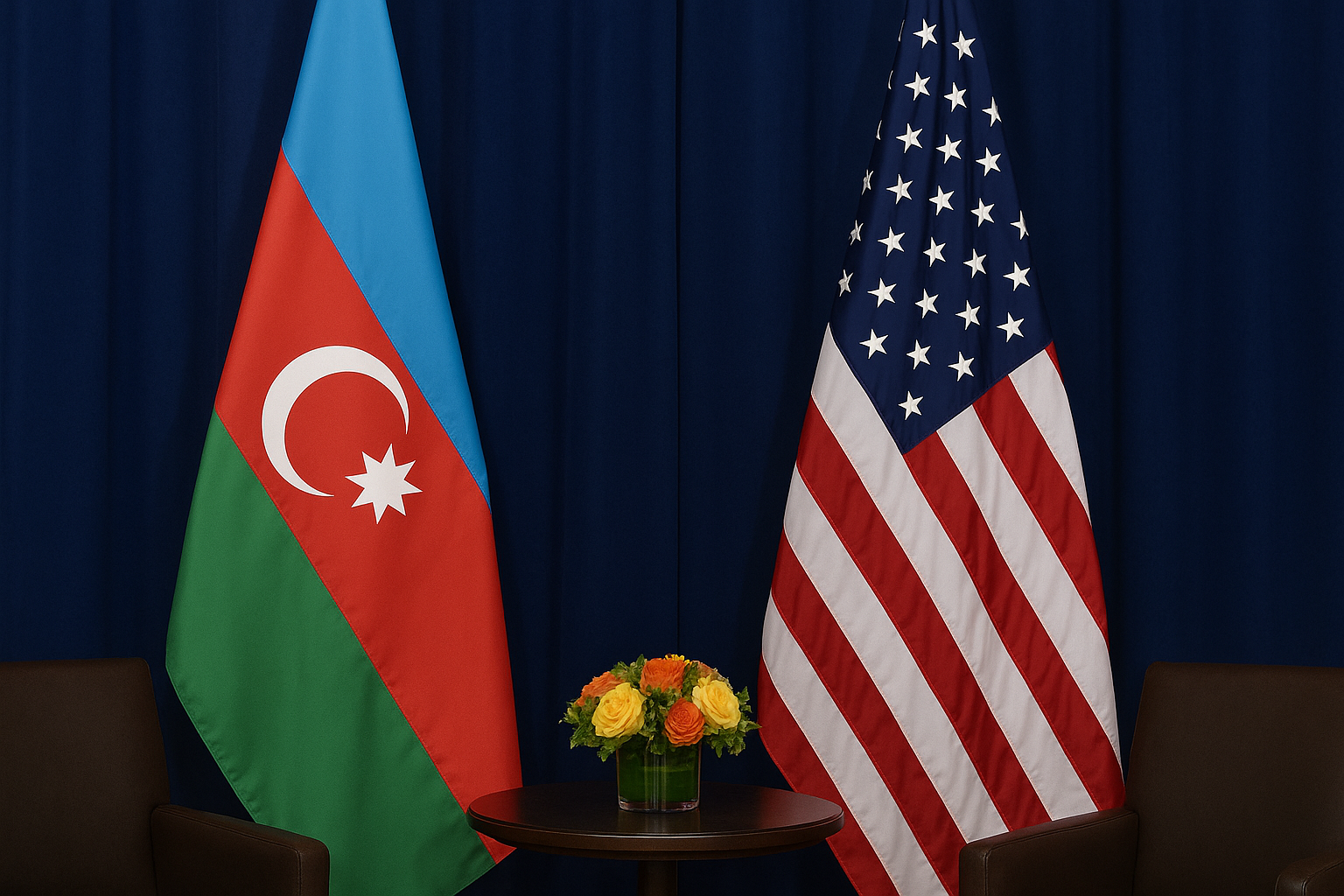
Read moreIn recent months, Azerbaijan’s foreign policy has quietly demonstrated an increasing alignment with the United States, a development that carries subtle but significant implications for the broader geopolitical landscape. The exchange of letters between US President Donald Trump and Azerbaijani President Ilham Aliyev stands as a symbolic testament to mutual respect and shared values between the two leaders. Beyond mere formalities, these correspondences reflect a deeper rapport anchored in traditional and family-oriented values, underscoring a personal dimension often overlooked in the analysis of international relations.
This growing US–Azerbaijan affinity must be contextualized within a broader framework of global diplomacy. The recently adopted US National Security Strategy and President Trump’s public remarks indicate a notable skepticism towards the European Union’s effectiveness in crisis management. There is a growing perception that the EU, despite its economic clout, often struggles to present a unified stance on critical international issues. This critique, while not entirely novel, gains weight when one examines the European response to ongoing conflicts, particularly in Ukraine.
Indeed, the European Union’s handling of the Ukraine crisis has often been marked by hesitation and fragmentation. Divergent national priorities and the inability to formulate a cohesive strategy have hindered efforts to accelerate peace negotiations and provide Kyiv with the decisive support required to strengthen its defense capabilities. As a result, Ukrainian citizens continue to bear the human cost of these institutional shortcomings, illustrating a gap between diplomatic rhetoric and actionable results. In contrast, US-led initiatives in the region have demonstrated a more coherent approach, focusing on tangible outcomes and practical support—a model that Azerbaijan has increasingly found compatible with its own strategic objectives.
This context offers insight into Azerbaijan’s nuanced foreign policy maneuvers in the South Caucasus. While European actors have engaged in agreements with Armenia, these efforts often reflect historical narratives rather than the current realities on the ground. The recently signed EU–Armenia document exemplifies this tendency, prioritizing past conflicts over rapidly evolving regional dynamics that demand pragmatic solutions. Azerbaijan’s observation of these developments reinforces a broader lesson: effective diplomacy requires a willingness to acknowledge change rather than preserve outdated constructs.
A particularly revealing example of the EU’s lack of political foresight is its continued deployment of the European Union Mission in Armenia (EUMA) near the Azerbaijani border. Despite repeated declarations by both Baku and Yerevan that peace talks are progressing, Brussels appears intent on maintaining a quasi-military presence inside Armenian territory. For Azerbaijan, this raises an obvious question: why should an armed monitoring group remain physically embedded between two sides actively negotiating peace? At minimum, it suggests an institutional inertia within the EU—an inability to recalibrate missions and policies in response to new realities.
In practical terms, EUMA’s presence risks hardening perceptions: Armenia may see it as a protective shield, potentially reducing incentives for compromise, while Azerbaijan views it as an unnecessary externalization of the peace process. Instead of encouraging regional confidence-building, the mission risks cementing a sense of dependency and injecting geopolitical signalling into what should be a bilateral negotiation. This echoes a recurring pattern in EU foreign policy—well-intentioned initiatives that become strategically obsolete, yet remain in place due to bureaucratic habit rather than necessity.
One illustrative contrast is the TRIPP (Trump Route for International Peace and Prosperity) initiative, a US-supported framework gaining traction in the South Caucasus. Interestingly, the EU’s statement on Armenia did not even reference TRIPP, a notable omission that reflects its reluctance to acknowledge frameworks emerging from U.S. mediation. Just as Brussels hesitates in Ukraine due to internal disunity, it hesitates in the South Caucasus due to political caution. Yet Azerbaijan’s commitment to TRIPP remains unwavering. The country is advancing its infrastructure, particularly the Zangazur Corridor’s Nakhchivan segment, with determination and resourcefulness. Such initiatives highlight Azerbaijan’s capacity to execute large-scale projects efficiently, regardless of external ambiguity or diplomatic indecision.
Azerbaijan’s actions underscore a broader pattern: the nation is increasingly positioning itself as a pragmatic actor capable of translating strategic planning into measurable outcomes. By contrast, European institutions—constrained by internal divisions—often appear reactive rather than proactive, focusing on legacy sensitivities instead of addressing contemporary opportunities. EUMA’s prolonged deployment is emblematic of this mindset: a reluctance to recognize that the diplomatic landscape has changed, and that new realities demand new instruments.
The subtle implication of these developments is clear. While the European Union continues to navigate its internal complexities, Azerbaijan and the United States demonstrate how aligned priorities, personal rapport between leaders, and innovative project frameworks can yield tangible results. It is a reminder that diplomacy is not solely about declarations or formal agreements; it is about translating vision into action, particularly in regions where historical legacies and contemporary realities intersect.
Ultimately, Azerbaijan’s recent foreign policy trajectory illustrates the potential for smaller but strategically positioned nations to influence regional dynamics decisively. The country’s emphasis on actionable initiatives like TRIPP, coupled with strengthened ties to Washington, reflects an understanding that effective governance and development require more than symbolic gestures. They require execution, resilience, and the capacity to adapt swiftly to emerging opportunities—qualities that have allowed Azerbaijan to surprise observers with the speed and scale of its achievements.
Azerbaijan’s diplomatic and infrastructural initiatives reveal a model of proactive engagement that contrasts sharply with the EU’s more cautious approach. By cultivating strong bilateral relations with the United States while pursuing ambitious regional projects, Azerbaijan is not only advancing its national interests but also highlighting the importance of practical, results-oriented strategies in contemporary geopolitics. For external observers, these developments offer an instructive example: successful diplomacy demands foresight, decisiveness, and readiness to act where others hesitate—rather than the static missions and outdated assumptions that continue to shape parts of Europe’s approach to the South Caucasus.
Here we are to serve you with news right now. It does not cost much, but worth your attention.
Choose to support open, independent, quality journalism and subscribe on a monthly basis.
By subscribing to our online newspaper, you can have full digital access to all news, analysis, and much more.
You can also follow AzerNEWS on Twitter @AzerNewsAz or Facebook @AzerNewsNewspaper
Thank you!