
Heydar Aliyev and the making of independent Azerbaijan

Few figures in modern Eurasian history have shaped the destiny of their nation as profoundly as Heydar Aliyev. Revered in Azerbaijan as the National Leader, Heydar Aliyev stands as the architect of the country’s modern statehood, a statesman whose political skill, discipline, and resolve guided the nation through its most perilous decades. His story is inseparable from Azerbaijan’s journey from a Soviet republic overshadowed by Moscow to a confident independent state charting its own course. To understand contemporary Azerbaijan, one must return to the life and legacy of Heydar Aliyev.
Born in 1923 in Nakhchivan, Heydar Aliyev came of age in an era defined by war, upheaval, and ideological rigidity. Yet even in his youth, he displayed the traits that later came to define his leadership: intellect, endurance, and an unyielding sense of duty. After training in the state security services, H. Aliyev began a career that placed him at the centre of the Soviet apparatus. In 1969, he ascended to the position of First Secretary of the Communist Party of Azerbaijan, effectively the leader of Soviet Azerbaijan.
This period would become the first major turning point in his national legacy. The National Leader inherited a republic marred by corruption, economic stagnation, and institutional neglect. Through administrative discipline, strategic appointments, and a relentless fight against corruption, he transformed Azerbaijan into one of the most dynamic republics of the Soviet Union. Under his leadership, industrial productivity surged, scientific institutions expanded, and Azerbaijani cadres, long underrepresented in Moscow, began to rise within the Soviet hierarchy.
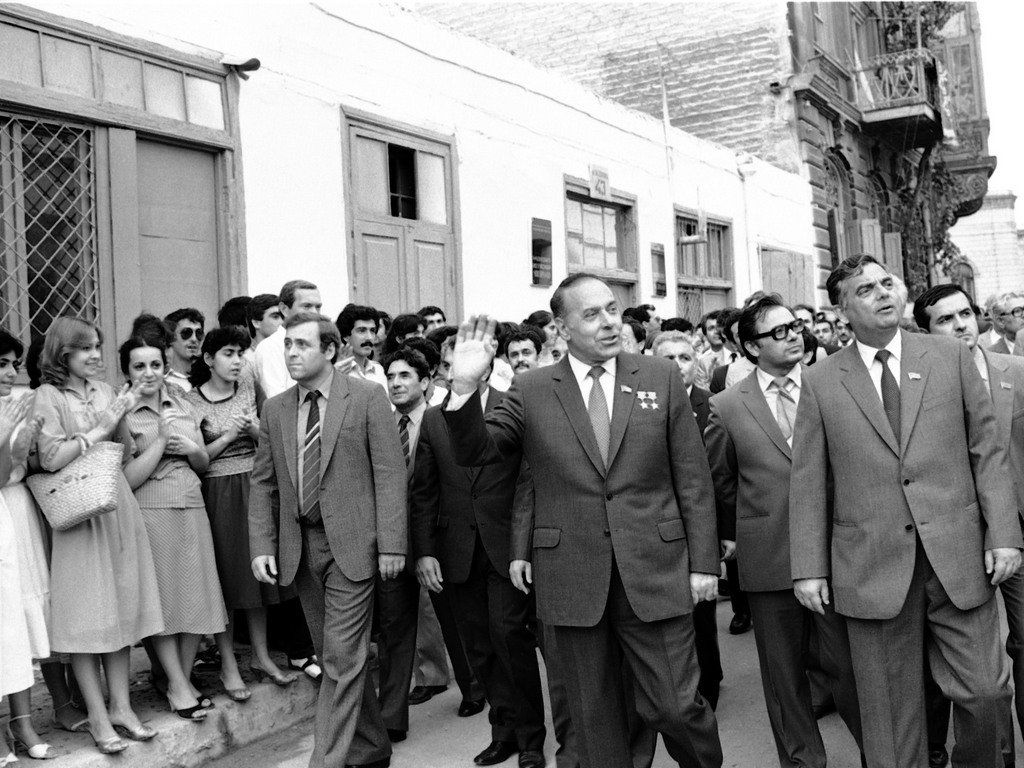
His ascent continued in 1982 when he was appointed First Deputy Chairman of the USSR Council of Ministers, the highest position ever attained by an Azerbaijani in the Soviet government. In Moscow, Aliyev was widely regarded as a highly professional, decisive, and principled administrator. His success was rooted not in ideological zeal but in pragmatic governance, an approach that would later serve independent Azerbaijan.
Yet Heydar Aliyev’s relationship with the Soviet leadership deteriorated dramatically under the Gorbachev administration. In 1987, sidelined by political manoeuvring and disagreements with Moscow’s policies, he resigned from his senior positions. It was a moment of personal and political rupture, but also the beginning of his transition from Soviet statesman to national saviour.
The collapse of the Soviet Union brought independence, but not stability. In the early 1990s, Azerbaijan plunged into an existential crisis: political fragmentation, economic collapse, internal strife, and the brutal war resulting from Armenia’s occupation of Azerbaijani territories. Chaos reigned in Baku; the state teetered on the edge of disintegration. It was at this moment, in 1993, that Heydar Aliyev, then serving in Nakhchivan, was urgently called to lead the country.
What unfolded was not merely a political return but an act of national salvation. Aliyev inherited a country on the verge of civil war, with its institutions paralysed and its territorial integrity compromised. Through a combination of strategic negotiation, political stabilisation, and decisive leadership, he prevented the collapse of the young republic. His early steps included consolidating state power, restoring constitutional order, and calming internal armed groups that threatened national unity. His return marked the re-emergence of professionalism in governance, something Azerbaijan desperately needed.
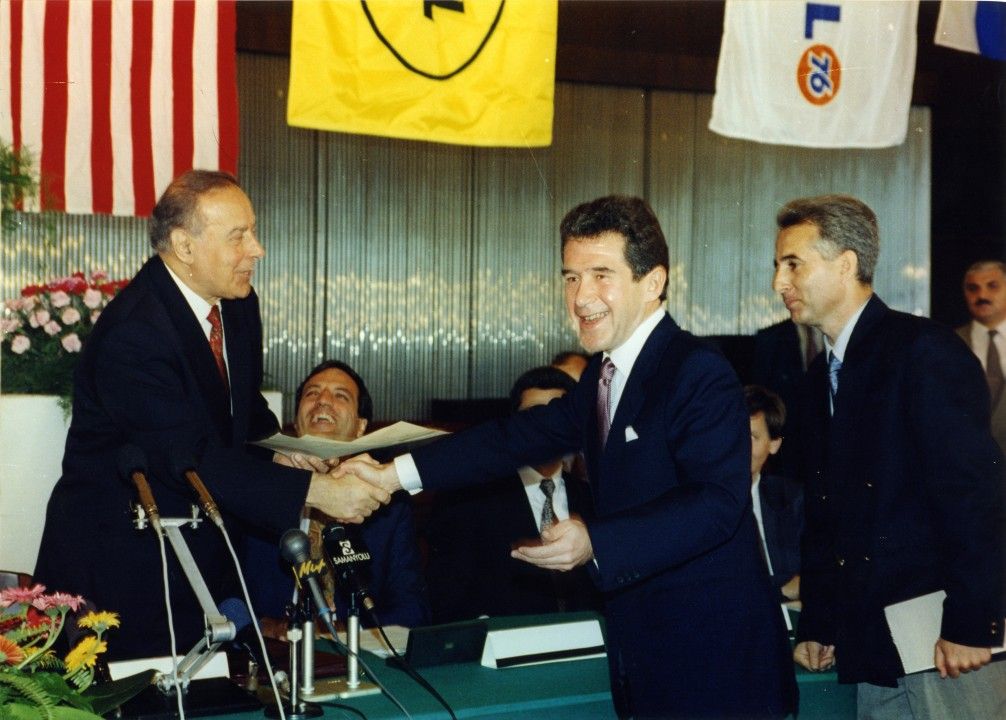
One of his most consequential achievements was the signing of the 1994 “Contract of the Century,” a landmark agreement that opened Azerbaijan’s vast energy resources to international investment. At the time, sceptics doubted the feasibility of turning a war-torn state into a hub of global energy cooperation. Yet Aliyev’s diplomatic mastery and ability to build consensus among major international players helped secure Azerbaijan’s place on the global energy map. The pipelines and energy corridors developed under this vision would go on to shape the geopolitics of the Caspian region for decades.
The National Leader also set about laying the foundations of the modern Azerbaijani state: strengthening the civil service, reforming the armed forces, stabilising the currency, and initiating constitutional reforms that enshrined the principles of sovereignty and national independence. His emphasis on education, culture, and national identity played a central role in rebuilding the morale of a nation exhausted by war and instability.
Perhaps most importantly, Aliyev believed in a balanced foreign policy, one that safeguarded Azerbaijan’s independence in a region defined by competing powers. His approach rested on three pillars: pragmatic cooperation, strategic neutrality, and diplomatic flexibility. By strengthening relations simultaneously with Europe, the United States, Russia, Turkiye, and regional partners, he ensured that Azerbaijan would never again be isolated or vulnerable to external pressure.
Critics have debated the firmness of his political style, yet few dispute the effectiveness of his leadership during Azerbaijan’s most fragile years. Aliyev was a realist: he understood that statehood required strong institutions, political continuity, and disciplined governance. His legacy is seen not only in Azerbaijan’s modern infrastructure and geopolitical relevance but in the confidence with which the nation now asserts itself on the international stage.
Heydar Aliyev’s passing in 2003 marked the end of an era, but his vision lives on in the stability, independence, and development that define modern Azerbaijan. His leadership transformed a country on the brink of collapse into a thriving, self-assured state. As Azerbaijan continues to evolve, his imprint remains unmistakable: a belief in sovereignty, a commitment to national unity, and a deep sense of responsibility to the future.
History rarely grants leaders the chance to shape both the twilight of one era and the dawn of another. Heydar Aliyev did both. His legacy endures not only in monuments or institutions, but in the very idea of modern Azerbaijan, a nation he helped save, build, and set on a path toward lasting independence.
Here we are to serve you with news right now. It does not cost much, but worth your attention.
Choose to support open, independent, quality journalism and subscribe on a monthly basis.
By subscribing to our online newspaper, you can have full digital access to all news, analysis, and much more.
You can also follow AzerNEWS on Twitter @AzerNewsAz or Facebook @AzerNewsNewspaper
Thank you!