
Experts outline barriers and opportunities in next-gen oil and gas coatings

AzerNEWS Staff
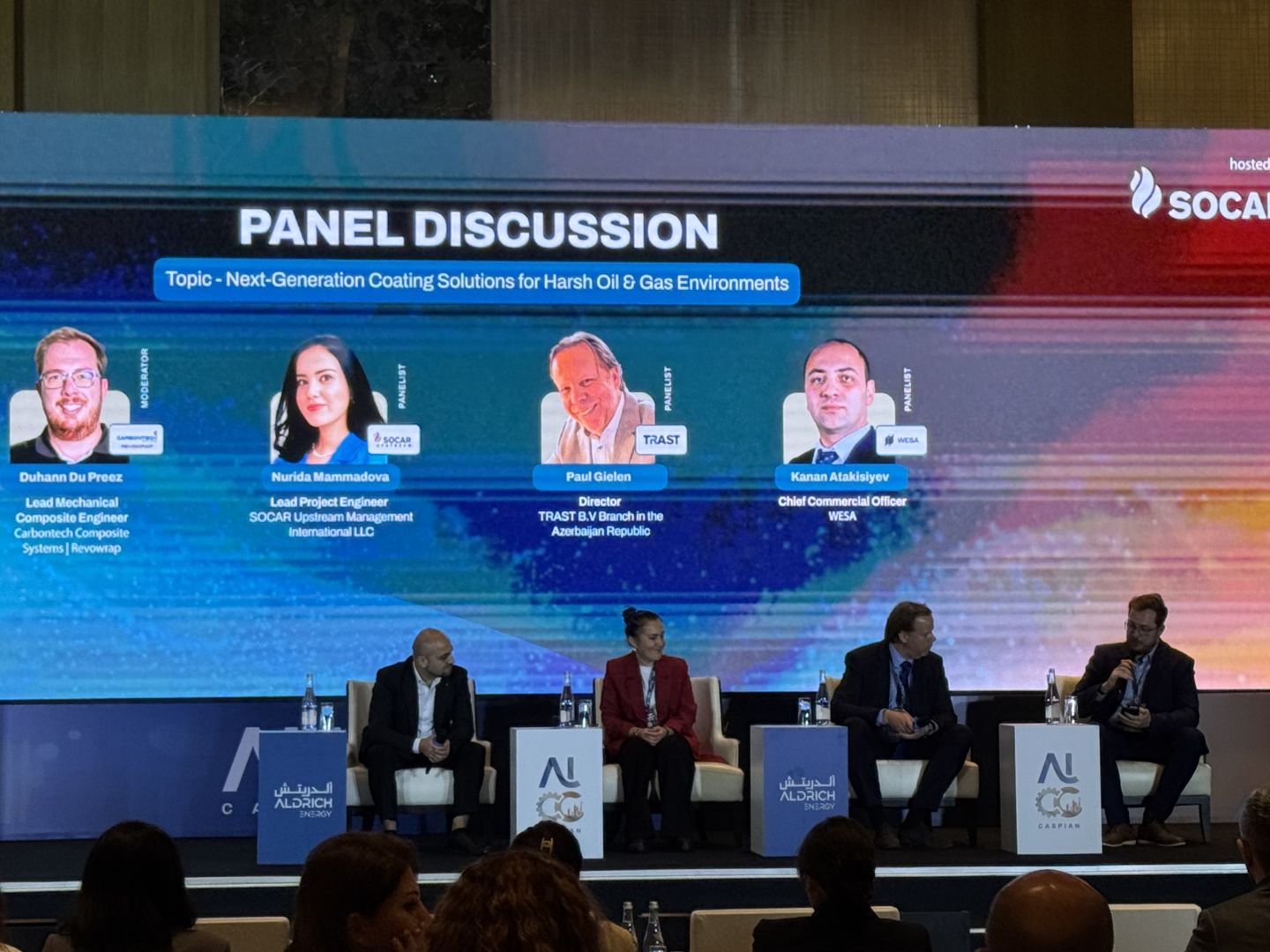
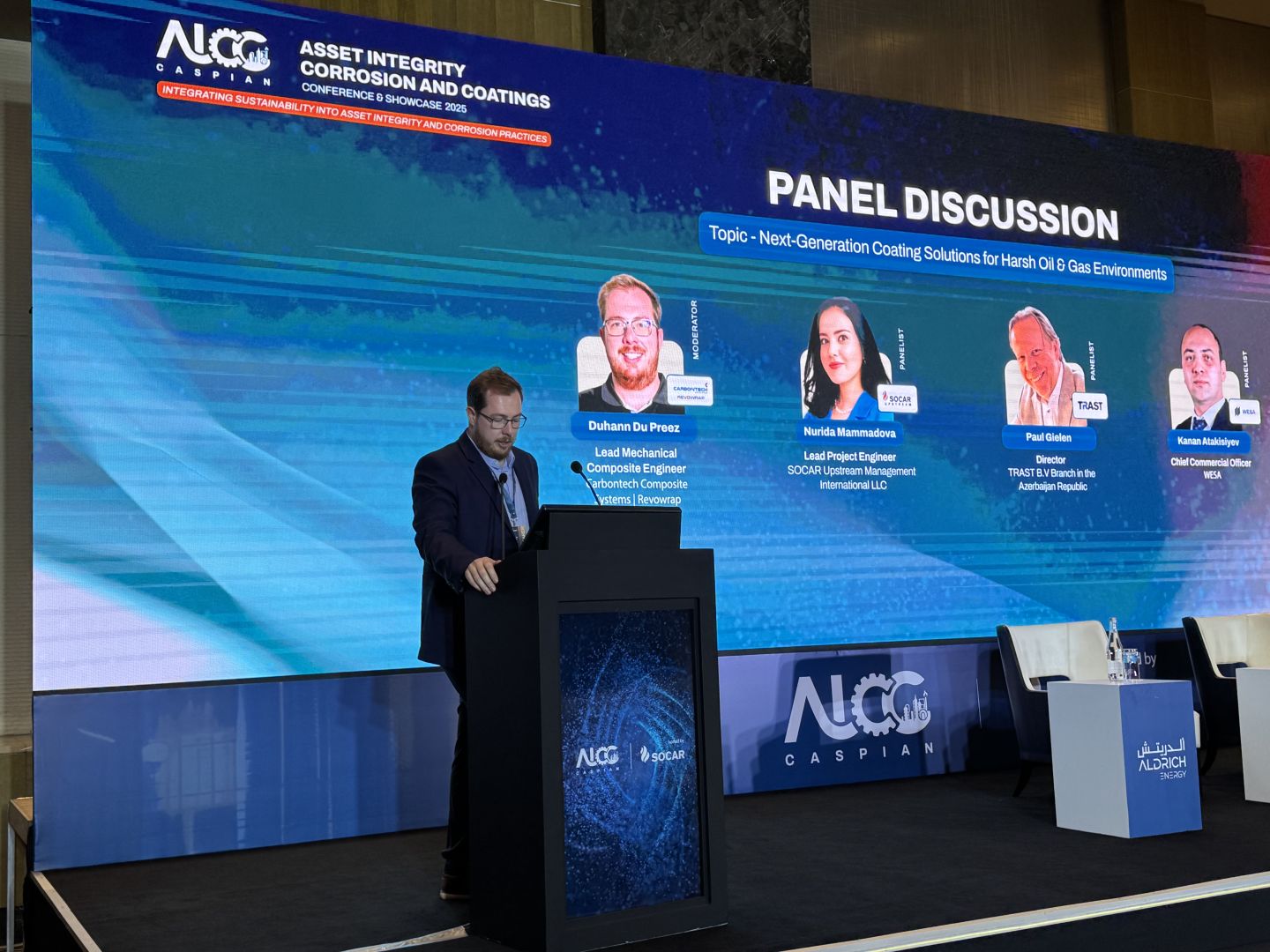
Read moreAt the Asset Integrity & Corrosion and Coatings Conference, a panel discussion on “Next-generation Coating Solutions for Harsh Oil and Gas Environments” brought together experts representing different parts of the value chain, Azernews reports.
Participants included Nurida Mammadova, Lead Project Engineer at SOCAR Upstream Management International LLC; Paul Gielen, Director of TRAST B.V. Branch in Azerbaijan; and Kanan Atakishiyev, Chief Commercial Officer at WESA.
The session highlighted the combined perspectives of asset owners, technical specialists, and commercial leaders—reflecting how each plays a key role in advancing coating technologies in complex oil and gas environments.
Speaking about the adoption of online coating technologies for high-temperature pipelines that cannot be shut down, Nurida Mammadova noted that SOCAR, now operating on an international scale, remains open to innovative solutions. She explained that online coating technologies can be effective under high-temperature conditions where shutdowns are not feasible, but she emphasized that such applications are more suitable for temporary rather than permanent use.
Paul Gielen underscored the importance of surface preparation in ensuring coating performance. He stated that even the most advanced and expensive coating system will fail if the surface preparation is inadequate. In contrast, a mediocre coating applied to a properly prepared surface is far more likely to perform successfully. According to him, surface preparation remains the foundation of any durable coating system.
From a commercial and industry-development viewpoint, Kanan Atakishiyev addressed the ongoing challenge of clients relying on coating specifications developed decades ago. He noted that conditions 20–30 years ago were very different—digitalization was limited, expectations around efficiency were lower, and environmental regulations were far less strict. Despite this, many companies continue to adhere to outdated standards due to comfort and familiarity with older technologies. Atakishiyev emphasized that while resistance to change exists, it also creates opportunities for companies that can demonstrate next-generation solutions through pilot applications or rapid performance testing. Such efforts, he said, allow clients to adopt new technologies without taking on unnecessary risk.
Reflecting on whether this mindset is shifting, Atakishiyev explained that resistance to new technologies is likely to persist across the industry. However, he believes EPC contractors have a responsibility to champion innovation and guide clients toward more advanced solutions. Being among the first to introduce new technologies, he added, can help companies strengthen their competitive position.
Paul Gielen concluded by noting that manufacturers are actively developing new coating technologies and are eager to introduce them to major operators such as SOCAR, bp, and TotalEnergies. While large operators may sometimes be cautious, he highlighted that collaboration between EPC contractors and manufacturers can accelerate the adoption of innovative solutions across the industry.
Here we are to serve you with news right now. It does not cost much, but worth your attention.
Choose to support open, independent, quality journalism and subscribe on a monthly basis.
By subscribing to our online newspaper, you can have full digital access to all news, analysis, and much more.
You can also follow AzerNEWS on Twitter @AzerNewsAz or Facebook @AzerNewsNewspaper
Thank you!