
Families of missing Azerbaijanis stage protest outside European Parliament in Brussels [PHOTOS]

AzerNEWS Staff
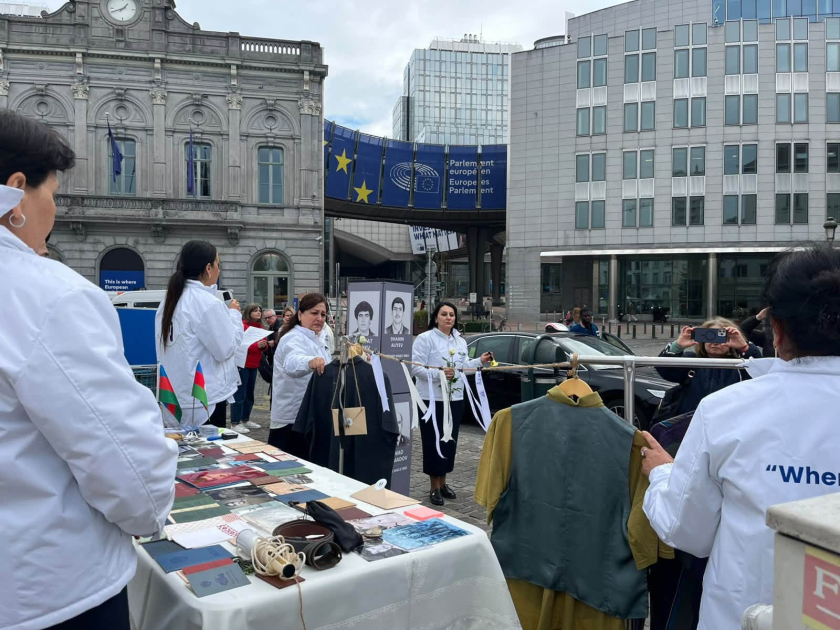
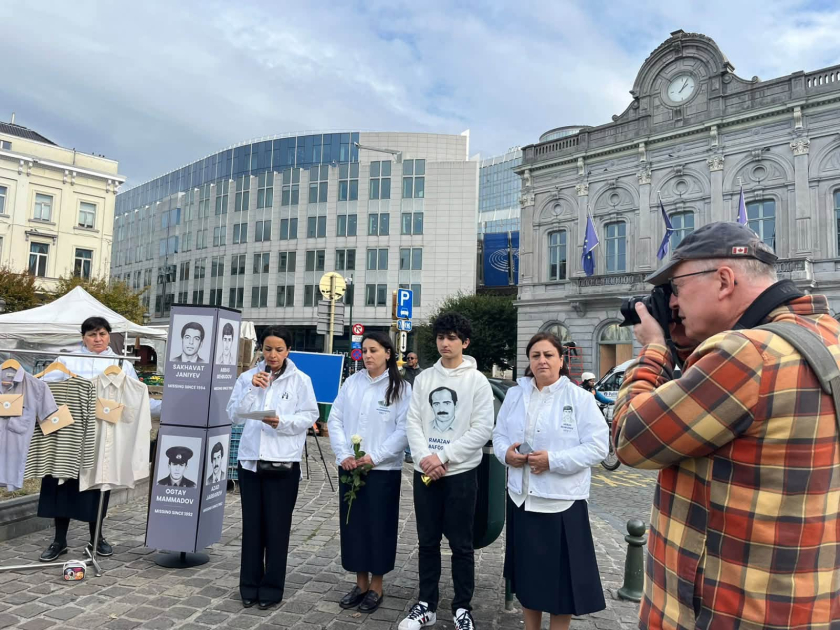
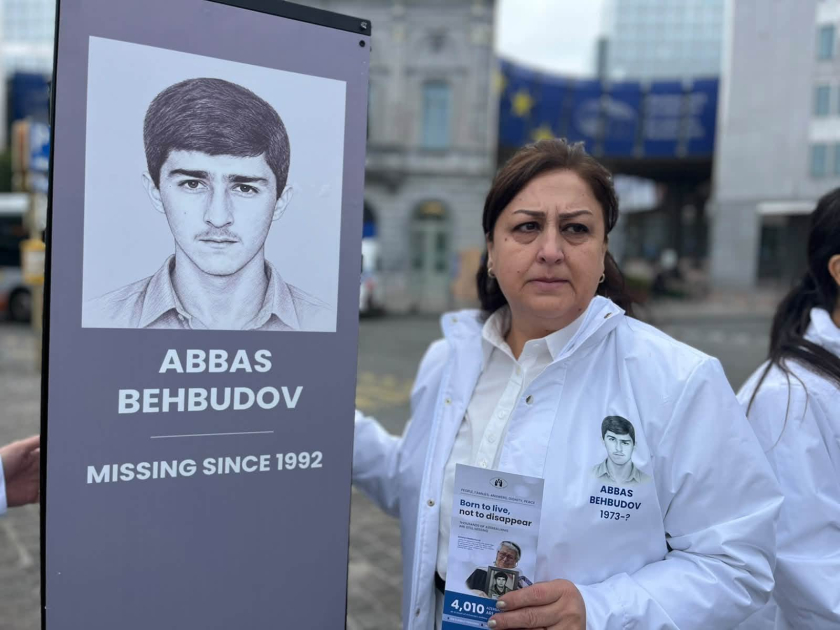
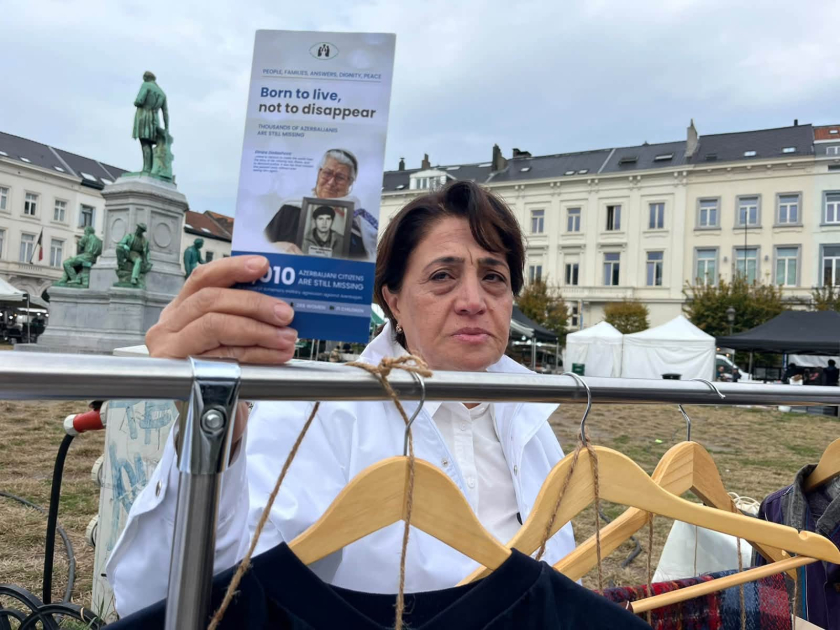
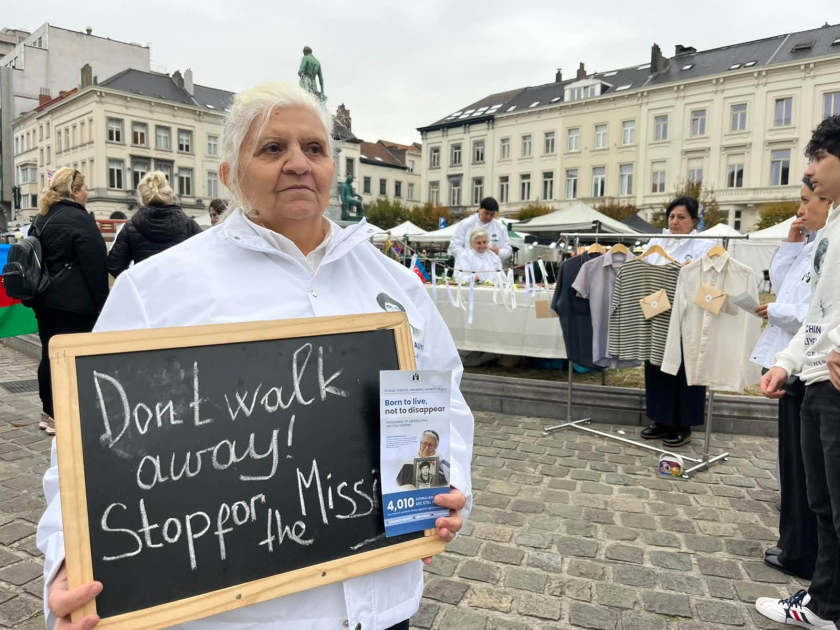
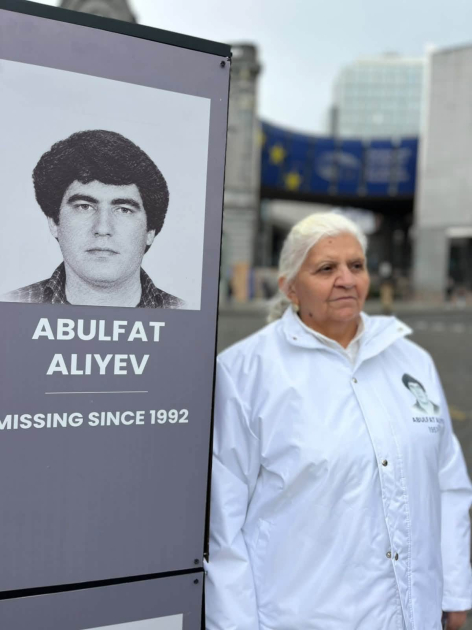
Read moreFamilies of Azerbaijanis who went missing during Armenia’s occupation of Azerbaijani territory have staged a protest outside the European Parliament in Brussels, calling for information about the fate of their relatives and urging Armenia to disclose records relating to missing people and mass graves.
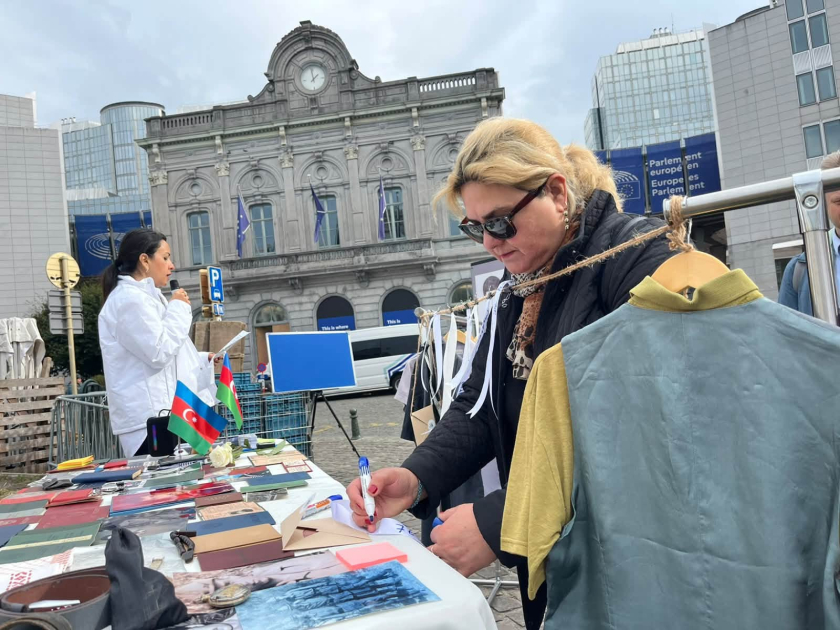
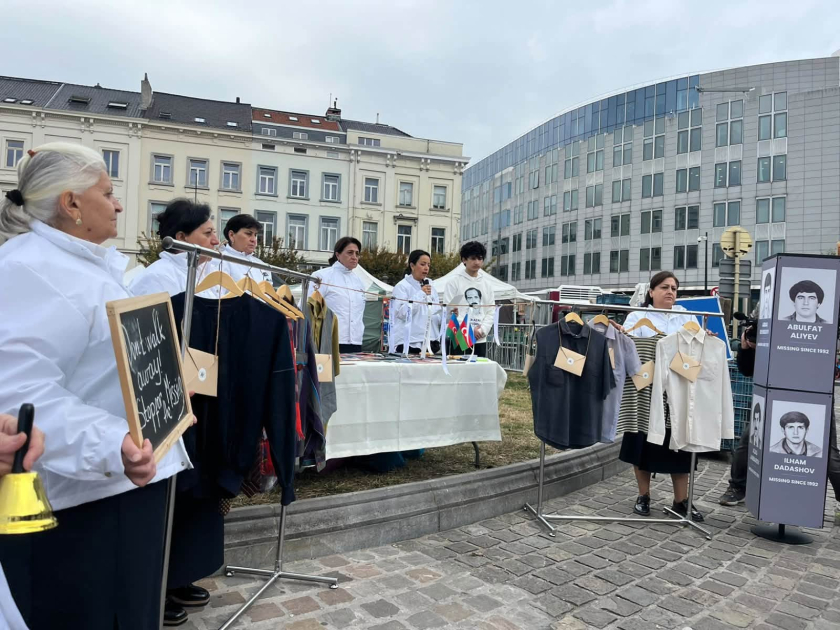
The protest was held on 20 October in Place du Luxembourg and organised by the public association Families of Missing Persons in Karabakh, according to Azerbaijan’s State Support Agency for Non-Governmental Organisations, as reported by Azertag.
A statement read at the protest highlighted the suffering of families who have spent more than three decades without news of their loved ones.
“We are the voice of families who have been unable to hear from their loved ones in this city, home to the institutions of the European Union, for over 30 years; of homes whose doors have not been opened in years; of mothers waiting for their children; and of children who cannot remember their parents’ faces,” the statement said.
It said that 4,010 Azerbaijanis had gone missing during Armenia’s occupation of Azerbaijani territory, including 71 children, 288 women and 319 elderly people.
“Behind every figure lies a human life, unanswered questions,” the statement said, adding that clarifying the fate of the missing was particularly important as efforts to advance the peace agenda continued.
“Sustainable peace must be felt not only between states but also in the lives of individuals.”
The statement said 32 mass graves had so far been discovered in Azerbaijan’s liberated territories. Forensic genetic examinations had established the identities of 328 missing people, and the remains of 273 had been returned to their families.
“Each of these results is an important step towards eliminating uncertainty. But there are still families waiting. They want to know the truth,” it said.
The families called on Armenia to disclose available information and archives, provide details about mass grave sites and clarify the fate of those who remain missing.
They also appealed to the European Parliament, accusing it of consistently defending Armenia while failing to raise the issue of missing Azerbaijanis. The statement described this approach as an example of “anachronism and atavism in international relations”.
“The humanitarian appeal we delivered last year to the UN Office in Geneva is being continued today in Brussels. If human rights are universal, then the right to know the truth is also universal,” the statement said.
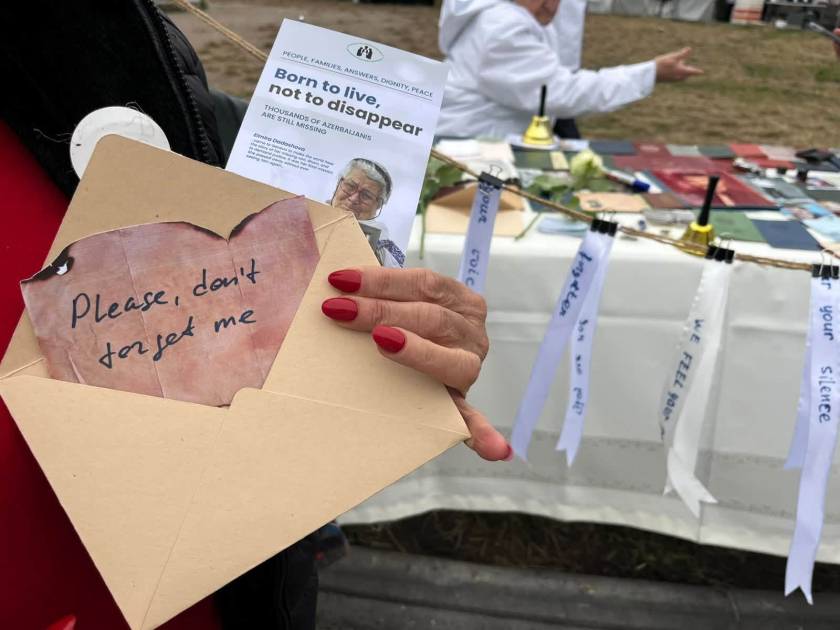
It recalled the case of Elmira Dadasheva, the mother of a missing man who travelled to Geneva last year to appeal to the international community for information about her son. She died shortly after the event without having received any information about his fate.
“We ask the institutions of the European Union: how many more mothers must pass away without news of their children?” the statement asked.
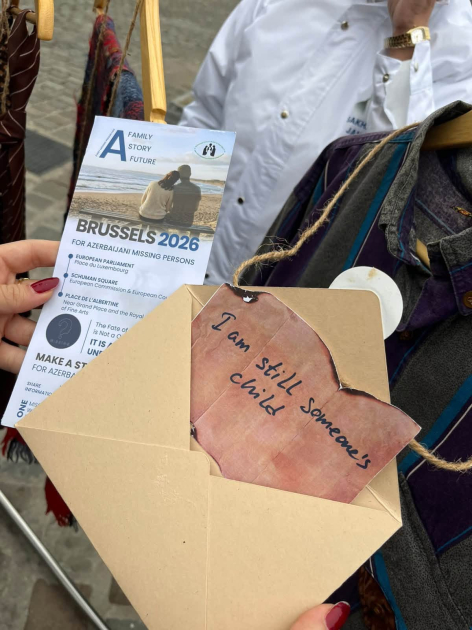
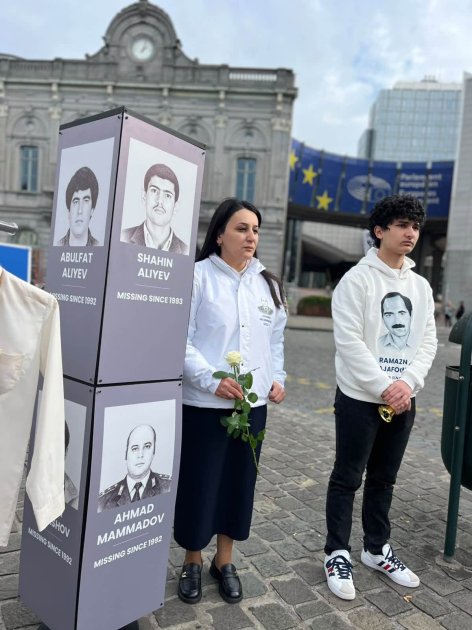
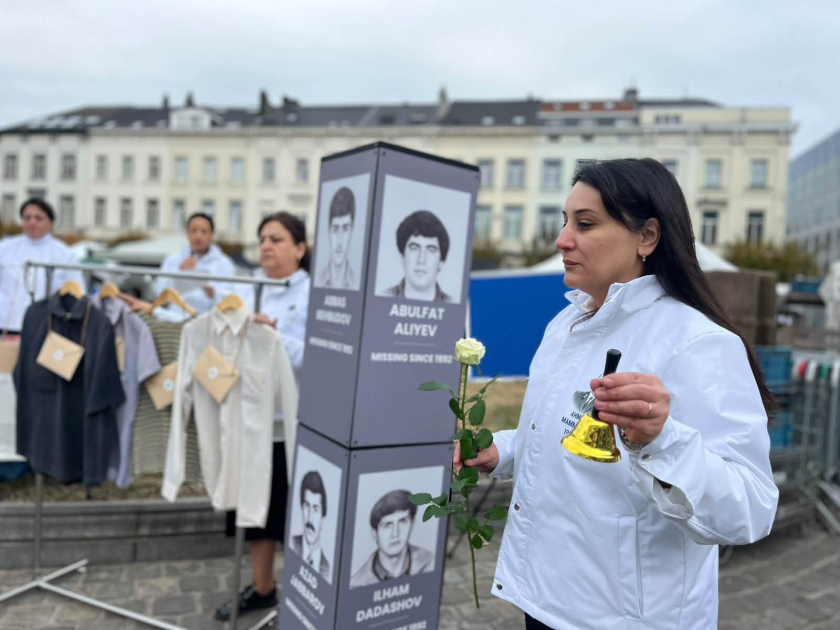
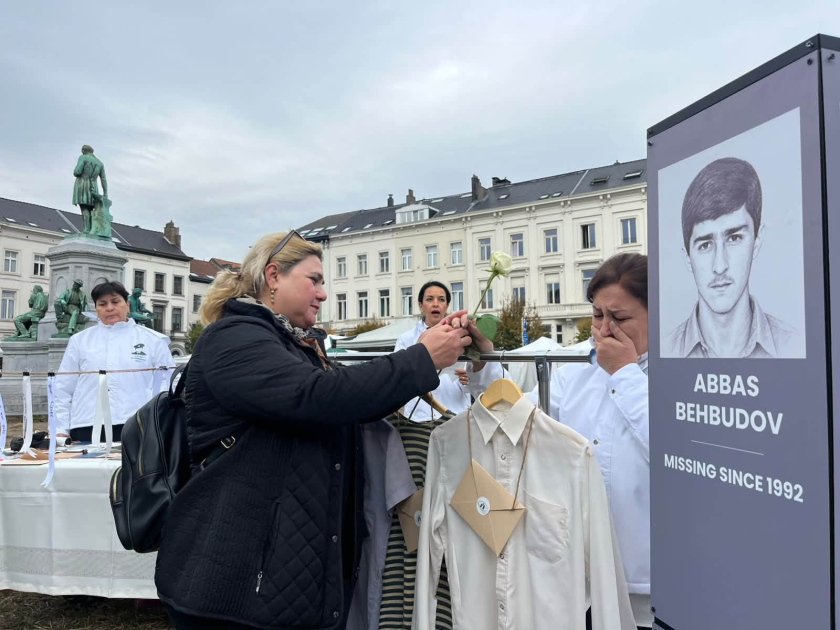
The protest also featured an installation displaying photographs, clothing and envelopes containing letters written on behalf of missing Azerbaijanis. The messages included: “I’m not just a number. I have a name, I have a family,” and “I’m still someone’s child. How much longer must my family wait?”
The installation sought to give a voice to Azerbaijanis who have been missing for more than 30 years and draw international attention to the uncertainty faced by their families.
Visitors left messages of support, tied commemorative ribbons and laid flowers in a show of solidarity with the families.
Konul Behbudova, chair of the public association Families of Missing Persons in Karabakh, said Armenia bore direct responsibility for the fate of the missing Azerbaijanis.
“Our call to the world is this: we are seeking answers regarding the fate of our missing loved ones. Stand in solidarity with the families who have lived in uncertainty for decades! Call on Armenia to share information with Azerbaijan about mass grave sites! No family should have to wait forever!” she said.
On 30 August last year, marking the International Day of the Disappeared, the association held a rally in Geneva outside the Palais des Nations, where the UN’s European office is located. The event took place in front of the symbolic Broken Chair monument, which represents the suffering of people affected by armed violence.
The families said their actions across Europe would continue until they received news about their missing relatives.
The public association Families of Missing Persons in Karabakh is the recipient of a 2026 grant from Azerbaijan’s State Support Agency for Non-Governmental Organisations for its project, “Echo of Absence”.
Separately, the Azerbaijani public association Photoclub Gilavar has organised photo exhibitions in seven European countries as part of the international campaign World Without Mines.
The exhibitions were held in Geneva, Switzerland; Brno, Czech Republic; Ljubljana, Slovenia; Sarajevo, Bosnia and Herzegovina; Zagreb, Croatia; Salzburg, Austria; and Rome, Italy.
The events also drew attention to the threat posed by landmines in Azerbaijan’s liberated territories. According to the organisers, mines have been found in residential areas, cemeteries and even around mass graves where the remains of several missing people were discovered. The exhibitions highlighted what the organisers described as Armenia’s aim of waging war against Azerbaijani civilians.
Here we are to serve you with news right now. It does not cost much, but worth your attention.
Choose to support open, independent, quality journalism and subscribe on a monthly basis.
By subscribing to our online newspaper, you can have full digital access to all news, analysis, and much more.
You can also follow AzerNEWS on Twitter @AzerNewsAz or Facebook @AzerNewsNewspaper
Thank you!