
Turkiye, Azerbaijan face a test of their strategic partnership

AzerNEWS Staff
Read moreWhy a dispute over school dress rules should not be allowed to overshadow decades of political, economic and military cooperation
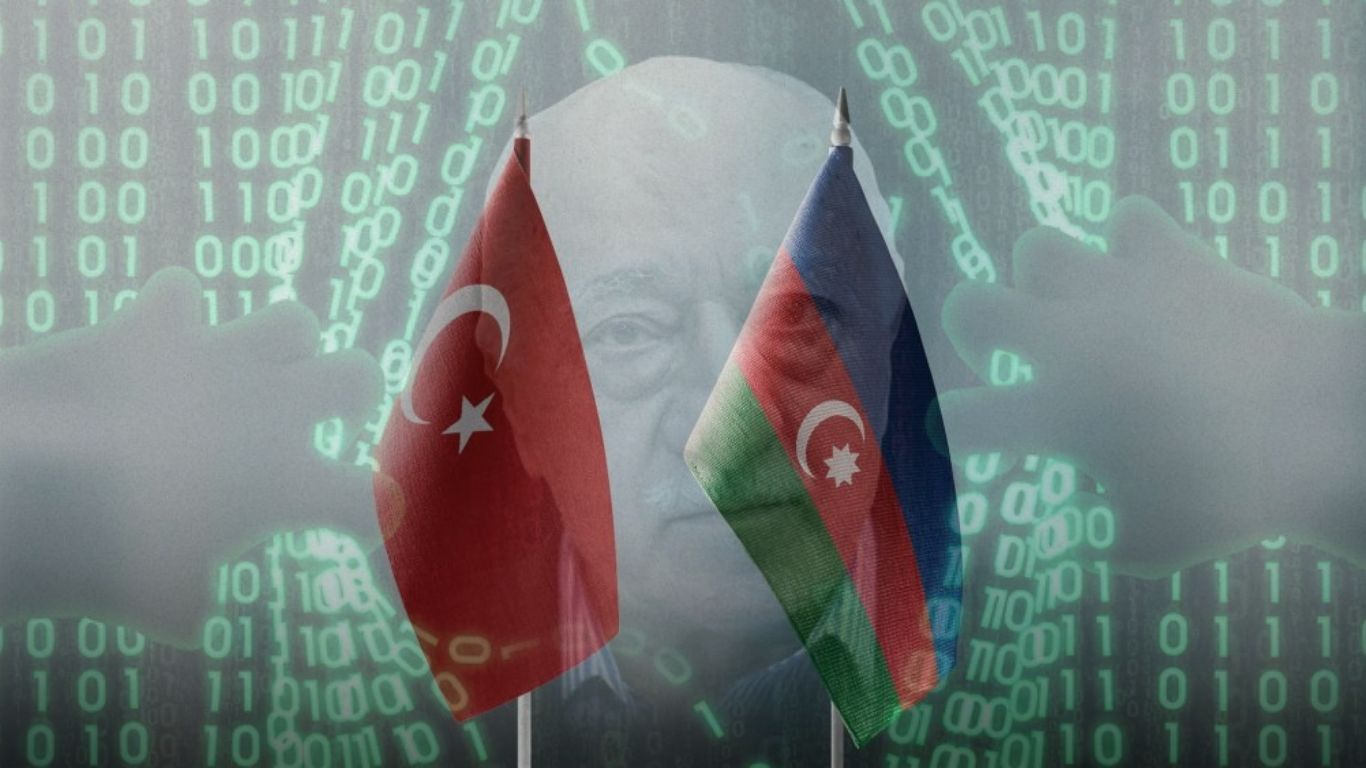
The relationship between Türkiye and Azerbaijan is often described in a phrase that has become central to the political vocabulary of both countries: “two states, one nation”. And it has been more than a diplomatic slogan in the depth of our minds. It also reflects shared historical experiences, cultural affinities, economic interests and a strategic partnership that has grown considerably in recent decades.
Nevertheless, even the closest relationships can face difficult moments, especially in this fragmented world. In this context, disagreements can quickly overgrow and become more than disagreements, especially when social media and some old FETÖ-linked radical groups and entities turn domestic policy questions into international controversies. The recent debate over school uniform regulations in Azerbaijan has demonstrated how quickly such tensions can spill across borders, putting the language of brotherhood to the test.
In fact, the question is not whether Türkiye and Azerbaijan will always agree on every issue. These two sovereign states in no way can reasonably be expected to do so. The more important question is whether differences can be managed through mutual respect, direct communication and an understanding that neither country's national interests should be subordinated to domestic political pressures in the other. However, the law adopted in Azerbaijan seemed to act as a spark for some of the aforementioned organisations. Although reactions to this issue were anticipated from other quarters, forces attempting to undermine state policy shifted their focus toward Türkiye - yet, as always, it proved futile...
The controversy began after Azerbaijan introduced changes to its public education rules in September. The amendments strengthened requirements concerning school dress codes and stipulated that clothing must comply with the principle of secular education. Although the legislation did not explicitly name the hijab, the implementation of the rules at some schools led to students and teachers wearing headscarves being prevented from attending classes, prompting protests and a wider public debate. Azerbaijan's official education authorities published details of the revised requirements on 22 September.
The issue soon attracted attention in Türkiye, where religious groups, commentators and political figures expressed criticism. What might have remained a domestic discussion about education policy consequently acquired a diplomatic dimension.
The sensitivity is understandable, as religious clothing is not simply a question of dress for many people, but it is associated with personal identity, religious freedom and family traditions. Equally, Azerbaijan has its own constitutional framework, secular political tradition and approach to public education. These considerations cannot be reduced to a single argument, and the concerns of families affected by the regulations deserve to be distinguished from the political uses to which the controversy may be put.
Nevertheless, a legitimate debate about religious freedom does not automatically justify treating Azerbaijan's domestic decisions as a matter for external political pressure. Nor should every critical statement from Türkiye be interpreted as evidence of hostility towards Azerbaijan.
The distinction between criticism and interference is important. For instance, friendly countries can express concerns, exchange views and discuss difficult questions. The problem arises when public commentary becomes confrontational, when political actors appear to speak on behalf of another country's citizens, or when social media amplifies the impression that a disagreement represents a fundamental rupture.
This is precisely the kind of situation in which restraint and direct diplomatic engagement become essential.
Hakan Fidan sends a message of restraint
The timing of the controversy was particularly significant because it coincided with the seventh summit of the Conference on Interaction and Confidence Building Measures in Asia (CICA), held in Baku on 15 October 2026.
Türkiye's foreign minister, Hakan Fidan, attended the summit and met Azerbaijani President Ilham Aliyev. Against the backdrop of the growing debate, his subsequent remarks offered a reminder of the strategic importance of the bilateral relationship.
Fidan said that relations between the two countries were built on an unshakable bond of friendship and brotherhood. While acknowledging that Ankara and Baku could sometimes have different approaches to particular questions, he argued that such differences should not be allowed to undermine their strategic ties. He also cautioned against turning disagreements into instruments of propaganda on social media. His remarks were reported by Türkiye's Anadolu Agency on 16 October.
The significance of this message lies in its emphasis on dialogue rather than confrontation. It recognises that a close partnership does not eliminate differences but creates mechanisms for resolving them.
The controversy has also highlighted a broader challenge facing modern diplomacy. Social media allows individual politicians, religious organisations and commentators to reach audiences across national borders almost instantly. Statements made for domestic political purposes can consequently be interpreted as official positions, even when governments have not adopted them.
In such circumstances, the distinction between public debate and state policy becomes increasingly blurred. Political leaders therefore need to be careful not to allow online disputes to dictate the direction of international relations.
The recent tensions do not, by themselves, establish that a coordinated effort exists to damage Azerbaijani-Turkish relations. However, it is reasonable to recognise that actors seeking to exploit existing differences can benefit when controversy replaces dialogue. The most effective response is not to assign motives without evidence, but to prevent disagreements from becoming a source of lasting mistrust.
An economic partnership with strategic weight
The importance of the relationship becomes clearer when its economic foundations are considered.
Türkiye is one of Azerbaijan's principal trading partners, while Azerbaijani investment has established a substantial presence in the Turkish economy, particularly in energy, industry and infrastructure. Bilateral trade turnover reached approximately $5.72bn in 2025, according to information published by Azerbaijan's diplomatic representation in Ankara. Both governments have identified increasing that figure to $15bn as a strategic objective. The Azerbaijani embassy's trade overview provides further details.
The relationship extends well beyond the exchange of goods. Azerbaijan's state energy company, SOCAR, has invested heavily in Türkiye, including through the STAR refinery in İzmir, a major industrial project with an investment of approximately $6.3bn. Such investments connect the two economies through production, energy processing, employment and long-term commercial interests.
Cooperation also covers transport, agriculture, manufacturing, technology and tourism. Turkish businesses operate across Azerbaijan, while Azerbaijani capital contributes to industrial and commercial activity in Türkiye. These connections create practical reasons for both governments to preserve a stable political relationship.
Energy and connectivity add another dimension. The two countries occupy important positions along routes connecting the Caspian region, the South Caucasus and European markets. Türkiye provides Azerbaijan with access to Mediterranean transport infrastructure and wider international markets, while Azerbaijan serves as a key link between the Caspian basin and routes leading westwards.
Their partnership is therefore not simply a matter of historical sentiment. It has become part of the economic geography of the wider region.
A prolonged political dispute would risk undermining confidence, complicating commercial cooperation and distracting both countries from opportunities in trade, energy and transport. There is no reason to assume that the present controversy will produce such consequences, but the wider stakes explain why responsible political communication matters.
The Azerbaijan-Turkey alliance possesses strategic foundations, and this has been further strengthened, especially since 2020.
The Shusha Declaration, signed by Azerbaijan and Türkiye in June 2021, formalised their relationship as an alliance and established a framework for cooperation in defence, security, foreign policy and other areas. It also reaffirmed their commitment to sovereignty, territorial integrity and mutual consultation in response to security threats. The full text of the declaration sets out the principles governing the partnership.
Military cooperation has continued to develop through joint exercises, training, defence industry contacts and exchanges of expertise. In October 2026, the two countries' defence ministers met in Shusha and discussed further cooperation, including the joint Power of Unity-2026 military exercise. Azerbaijan's Ministry of Defence reported on the meeting on 2 October.
Meanühile, Türkiye is an important security partner with considerable military capabilities and experience for Azerbaijan, and for Türkiye, Azerbaijan provides a close partnership in the South Caucasus and a strategic connection to the Caspian region and the wider Turkic world. Undoubtedly, their cooperation has implications for regional stability, although it should not be understood as a substitute for diplomacy with neighbouring states. Lasting peace in the South Caucasus requires workable relations among all countries in the region, functioning transport links and respect for internationally recognised sovereignty.
This is particularly relevant as Azerbaijan and Armenia continue to navigate the difficult process of normalising relations. Türkiye's position, Azerbaijan's security priorities and the development of regional connectivity will remain important elements of the broader geopolitical picture.
Against this background, it would be counterproductive for a dispute over school regulations to become a proxy for wider political rivalries. Neither country benefits from allowing a domestic controversy to obscure the strategic interests they share.
And finally, one of the most sensitive aspects is respect for Azerbaijan’s sovereignty and refraining from interference in its internal affairs. In such relationships, the concepts of friendship and brotherhood are often misunderstood and frequently and inappropriately invoked in the context of political matters.
There is, however, an important principle that should not be lost amid appeals to friendship. Azerbaijan is an independent state with its own institutions, laws and political priorities. Its decisions on domestic matters are made within its national legal framework, and responsibility for those decisions rests with its own authorities.
Türkiye, as a close ally, has every opportunity to raise concerns through diplomatic channels and engage in frank discussions with Azerbaijani officials. The same principle applies to any other partner. But friendship cannot mean that one country acquires a special right to determine the domestic policies of another.
This is not an argument against criticism, nor does sovereignty exempt governments from public scrutiny. Rather, it is an argument for conducting disagreements in a manner consistent with the independence and equality of both states.
The distinction is particularly important when questions of religion and education are involved. Azerbaijani authorities must address the practical consequences of the school rules, including their impact on students' access to education and the concerns of affected families. Public confidence depends on clear communication, consistent implementation and a willingness to explain the legal basis of government decisions.
At the same time, political figures abroad should recognise the limits of their authority. Expressions of solidarity with religious communities need not become demands directed at another government, just as criticism of external commentary should not be used to dismiss every concern raised by citizens.
Respect for sovereignty and respect for individual rights are not necessarily opposing principles. Responsible political leadership requires taking both seriously.
The history of Azerbaijani-Turkish relations offers a strong basis for expecting the current tensions to remain manageable. The countries have built a partnership that encompasses trade, investment, energy, defence, diplomacy and cultural ties. Their leaders have repeatedly described the relationship as strategic, and both governments have invested considerable political capital in maintaining it.
But the durability of an alliance should not be measured by the absence of disagreements. It should be measured by the ability to resolve them without allowing temporary disputes to damage long-term interests.
That responsibility belongs to political leaders, media organisations and commentators in both countries. They should distinguish verified information from speculation, avoid treating isolated statements as the views of entire societies and resist the temptation to turn sensitive domestic questions into tests of national loyalty.
Those who seek to exploit disagreements between Türkiye and Azerbaijan may find opportunities when emotions overwhelm careful judgement. However, the most effective way to deny such efforts influence is not to assume that every critic is acting in bad faith. It is to preserve channels of communication, maintain public trust and ensure that decisions are based on evidence rather than suspicion.
The school uniform controversy may expose some differences over secularism. They should not, however, become a reason to disregard the broader interests that bind the two countries together.
Ultimately, the phrase “two states, one nation” carries responsibilities as well as emotional meaning. So, the future of Azerbaijan-Türkiye relations will depend less on the noise generated by any single controversy than on the judgement with which both countries respond to it.
Here we are to serve you with news right now. It does not cost much, but worth your attention.
Choose to support open, independent, quality journalism and subscribe on a monthly basis.
By subscribing to our online newspaper, you can have full digital access to all news, analysis, and much more.
You can also follow AzerNEWS on Twitter @AzerNewsAz or Facebook @AzerNewsNewspaper
Thank you!