
Can Russian diesel help Trump bring down US fuel prices?

Ulviyya Poladova
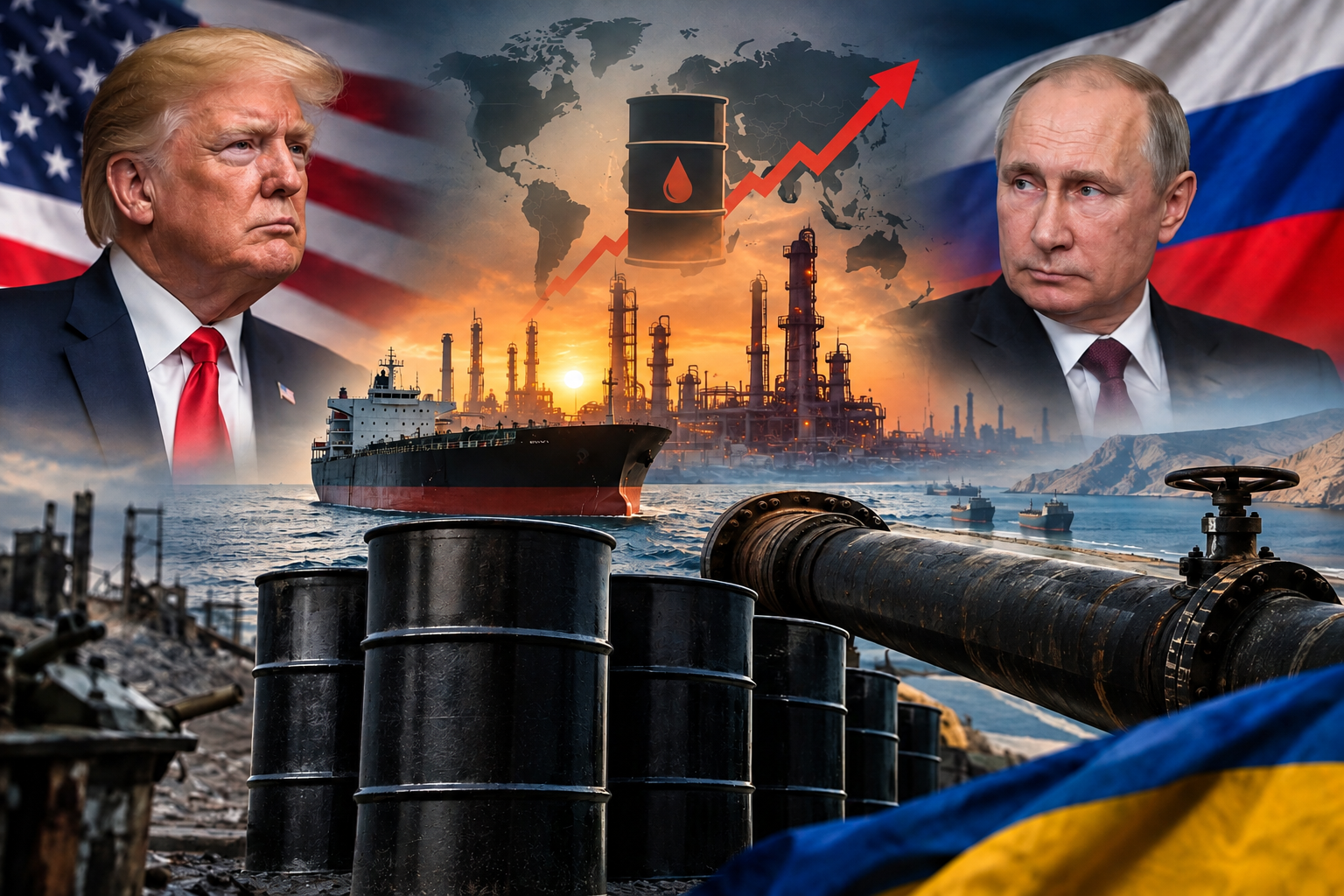
Read moreA few weeks after US President Donald Trump signed a law expanding sanctions on Russia [hell sanctions] his administration issued a general license allowing American companies to buy Russian diesel. The agreement Trump reached with Russian leader Vladimir Putin on diesel purchases drew sharp criticism from both Republicans and Democrats in Congress.
So what pushed the United States into such an abrupt move?
The root cause is a global diesel shortage. Since February, after the war against Iran began, only about a quarter of the usual volumes have passed through the Strait of Hormuz, which in peacetime handled roughly 20 percent of the world's oil and gas supplies. At the same time, strikes on Russian refineries knocked out a large share of capacity. For the United States, the consequences were immediate. The country is still the world's largest diesel exporter, but its stocks fell sharply, and the retail price reached a record $6.53 per gallon on September 22, almost double the level a year earlier. Because diesel powers freight transport and farm equipment, higher prices feed straight into the cost of food and logistics.
According to Pew Research Center, the economy is the top issue for 84 percent of registered voters. The midterm elections on November 3 are only weeks away, and traditionally Republican farm states such as Iowa and Kansas have ended up among the contested ones. Hence the administration's desire to demonstrate to voters a concrete result regarding fuel prices.
Added concern over energy supplies comes from the situation in the Middle East. This past Sunday, Yemen's Houthis reportedly struck King Khalid International Airport in Riyadh, Saudi Arabia, twice with missiles. Twelve people were killed. Because foreign nationals were reportedly among the dead, a number of states led by the United States urged their citizens to avoid travel to Middle Eastern countries. The way events are unfolding points to a further deterioration of the military and political situation in the region. It also raises the likelihood that the Strait of Hormuz will stay closed and that world fuel prices will remain high.
Meanwhile, Ukraine, unhappy with Washington's decision to ease restrictions on Russian fuel exports, has said it intends to keep up drone strikes on Russian refineries. Senior Ukrainian officials have stressed that Kyiv has no intention of halting its attacks on Russian oil refineries, arguing that a "refinery for refinery" arrangement is unequal and demanding an end to Russian strikes on Ukraine’s energy infrastructure.
US Treasury Secretary Scott Bessent said in an interview with Fox News that the agreement between the United States and Russia to supply Russian diesel fuel to global markets serves the interests of American consumers, as it could help bring prices down. Commenting on the easing of sanctions against Russia, Bessent stressed that President Donald Trump intends to pursue policies that serve the interests of the American people.
Europe has predictably opposed the US decision to suspend sanctions. European Union foreign policy chief Kaja Kallas said over the weekend that the move would provide Moscow with additional revenue amid the ongoing war.
"Now is not the time to ease pressure on Russia, and Europe will not do so," Kallas wrote on social media platform X.
On October 12, EU foreign ministers instead decided to add another 1,600 individuals and entities to the bloc’s Russia sanctions lists, targeting those the EU considers linked to Russia’s military-industrial complex. Kallas said this was the largest expansion of the sanctions lists against Russia since the start of the war in Ukraine.
A temporary easing of sanctions on Russia is unlikely to produce a sharp drop in diesel prices on the world market. The US Treasury's decision to lift certain restrictions on Russian diesel exports until April 7, 2027, will of course affect prices. But Russia itself faces serious problems in producing petroleum products. Russian refineries hit by drone strikes have had to cut crude processing by more than half. Revenue from domestic sales of petroleum products is being channeled into repairing more than 20 damaged refineries. Some plants have halted production entirely, while others are running with limits or have partially suspended operations.
The United States produces more diesel than it consumes, yet prices on the American market are rising all the same, because they are coming into line with world prices. There are no export bans on diesel in the US, nor any export duties on it. So the only way to bring prices down at home is to influence world markets by increasing supply.
The most reliable and radical way to put new volumes of diesel on the world market is to settle the question of the Strait of Hormuz. Increased supplies from Kuwait, Saudi Arabia and the UAE would quickly ease market tension. But Trump cannot win a quick victory over Iran right now, and signing a peace deal on Iranian terms would be an even greater loss of face and standing. So he has taken up another war - Russia's with Ukraine.
Will the Russian-American arrangements actually help bring prices down? In principle, oil and petroleum products are goods with inelastic demand. Even a small shortfall can send prices soaring, and even a slight easing of it can, in turn, start pulling prices lower. But 300,000 tonnes a month is still far too little for a world market of 120 million tonnes a month and its internationally traded share of 30 million tonnes. And there will be nothing more before November 3, election day.
Market participants might start to reconsider if there were a sense that Russia's refining volumes could return from the current 3.8-4.0 million barrels a day to 5.5 million. But for that, Ukraine would have to stop its strikes on Russian refineries. And Kyiv is unlikely to make such a concession, because for it those attacks are one of the few effective levers in its efforts to force Moscow.
Here we are to serve you with news right now. It does not cost much, but worth your attention.
Choose to support open, independent, quality journalism and subscribe on a monthly basis.
By subscribing to our online newspaper, you can have full digital access to all news, analysis, and much more.
You can also follow AzerNEWS on Twitter @AzerNewsAz or Facebook @AzerNewsNewspaper
Thank you!