
SOCAR enters Africa continent with Baleine stake in Côte d'Ivoire

Ulviyya Poladova
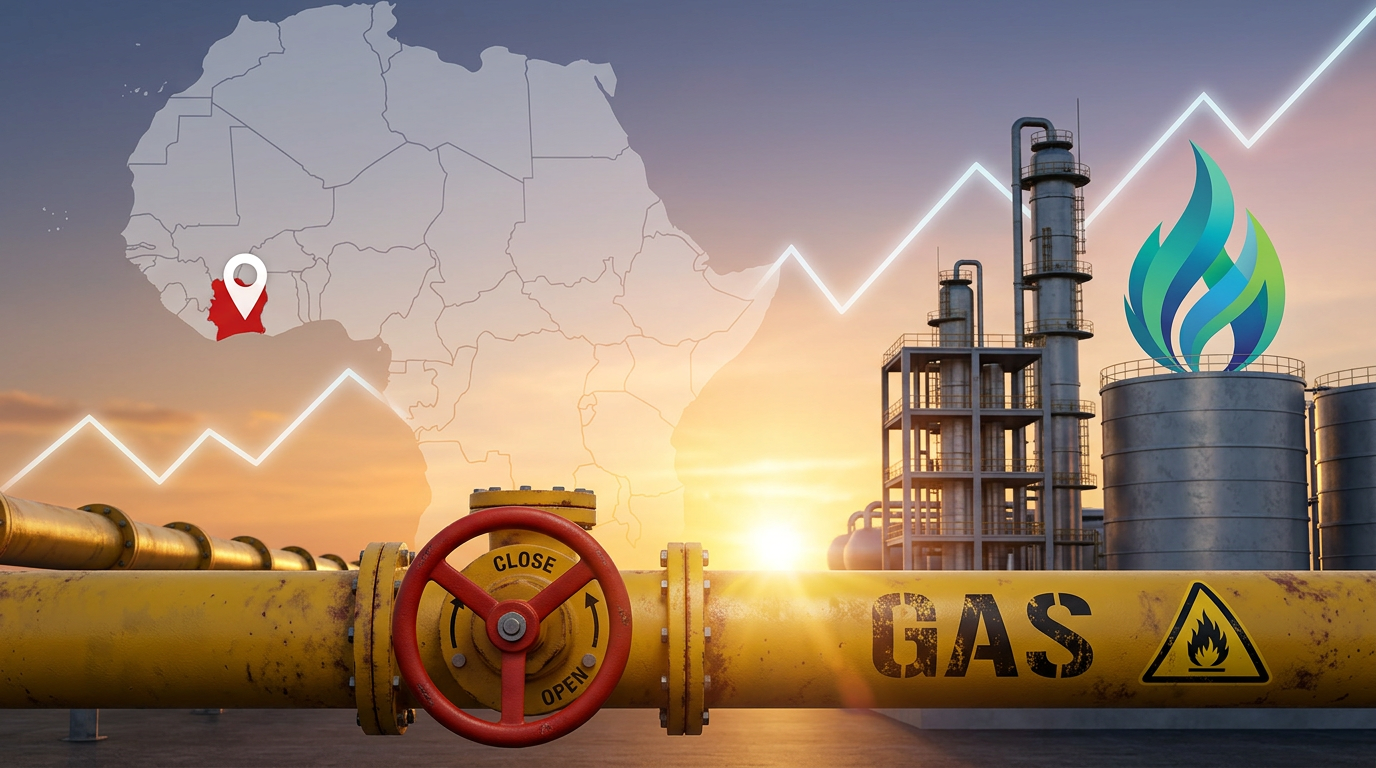
Read moreAzerbaijan's state oil company, SOCAR, has moved into Africa's offshore energy scene by picking up a stake in an oil and gas field off the coast of Côte d'Ivoire. The company has finished acquiring a 10% ownership interest in the Baleine oil and gas field development project in the Republic of Côte d'Ivoire, after securing all the required approvals and meeting the necessary conditions.
SOCAR put it this way: "Our participation in Baleine, one of the largest oil and gas discoveries made in West Africa in recent years, marks an important step in our long-term strategy to diversify our investment portfolio and expand the geographical reach of our international operations."
Baleine, operated by Italy's Eni, was discovered in 2021 and began production in 2023. Its operator describes it as Africa's first net-zero emissions offshore oil and gas project. Now that the deal has closed, the ownership stands as follows: Eni holds 37.25%, Vitol 30%, Petroci 22.75%, and SOCAR 10%.
Buying into Baleine lets SOCAR enter the oil and gas exploration and production market in Africa, and it lines up with the company's long-term plan to grow its international activity in that sector. The acquisition also marks SOCAR's entry into Africa's upstream sector and points to the company's long-term strategy of widening its global upstream footprint. That same intent showed recently when it increased its stake in a Caspian Sea oilfield by buying out Itochu Corporation's participating interest, as the Japanese trading and investment group exited the project.
Behind that small share sits a much bigger process: SOCAR is stretching the geography of its international assets beyond the Caspian region and building a portfolio where projects with already-proven reserves and active production can play a growing role. The deal with Italy's Eni is especially telling because SOCAR isn't buying into an exploration play with uncertain prospects - it's stepping into an asset that already works and can be scaled up.
Before this, SOCAR's expansion abroad mostly developed around the Caspian region, Türkiye, the South Caucasus, Europe, and the Eastern Mediterranean. Baleine in West Africa adds a completely new direction to that map. That's why the deal is worth looking at not only through the volume of future production, but also through the question of what the next geography of SOCAR's international business might be.
And Baleine isn't only an oil project. The gas side carries particular weight for Côte d'Ivoire itself, since a significant share of the gas is meant for the country's domestic market and its power sector. The oil, by contrast, is aimed mainly at export. As a result, the field creates an export stream and strengthens the state's domestic energy base at the same time.
For SOCAR, that also means taking part in a project that matters not just for the partners' revenues but for the host country's energy strategy. Assets like these can be especially interesting for an international oil and gas company, because they build a more durable link between the investor, the operator, and the state. If SOCAR's later investment decisions confirm its interest in the region, Baleine could turn out to be not the end point, but the first foothold.
Earlier, Togrul Kocharli, head of the international business development department at SOCAR Trading, said at a business forum during the 28th annual meeting of the Board of Governors of the Black Sea Trade and Development Bank (BSTDB) in Baku that SOCAR Trading is currently studying opportunities to enter the markets of Africa and Southeast Asia.
"We are looking closely at Africa, at Southeast Asia - at countries like Pakistan, Bangladesh, India. These are huge markets that are a little further from us, but they nevertheless represent an interesting opportunity," the SOCAR Trading representative said.
Strategically, SOCAR's involvement in African projects gives Azerbaijan another lever in its energy diplomacy. By setting foot on the continent, the company gets closer to the players that actually matter there, helps tie African oil and gas into the wider supply chains that feed global markets, and opens up room for joint bets on cleaner energy down the line. For Europe, it means an extra source of oil and gas with a minimal carbon footprint, which improves the continent's energy security at a time when world markets are unsteady.
The retail side of the story deserves just as much attention. Right now the SOCAR network runs 564 stations across Austria, Switzerland, Ukraine, Georgia, Romania, and Türkiye. Moves like these grow the Azerbaijani company's weight on international markets, raise brand recognition, and build infrastructure bridges for energy integration between regions. In a nutshell, the compainy shows that it can combine global ambition, innovation, and sustainable development by shaping Azerbaijan's energy brand on the world stage and laying the groundwork for a safer, more sustainable future in global energy.
Here we are to serve you with news right now. It does not cost much, but worth your attention.
Choose to support open, independent, quality journalism and subscribe on a monthly basis.
By subscribing to our online newspaper, you can have full digital access to all news, analysis, and much more.
You can also follow AzerNEWS on Twitter @AzerNewsAz or Facebook @AzerNewsNewspaper
Thank you!