
Next phase of Europe’s energy security runs through Azerbaijan

Akbar Novruz
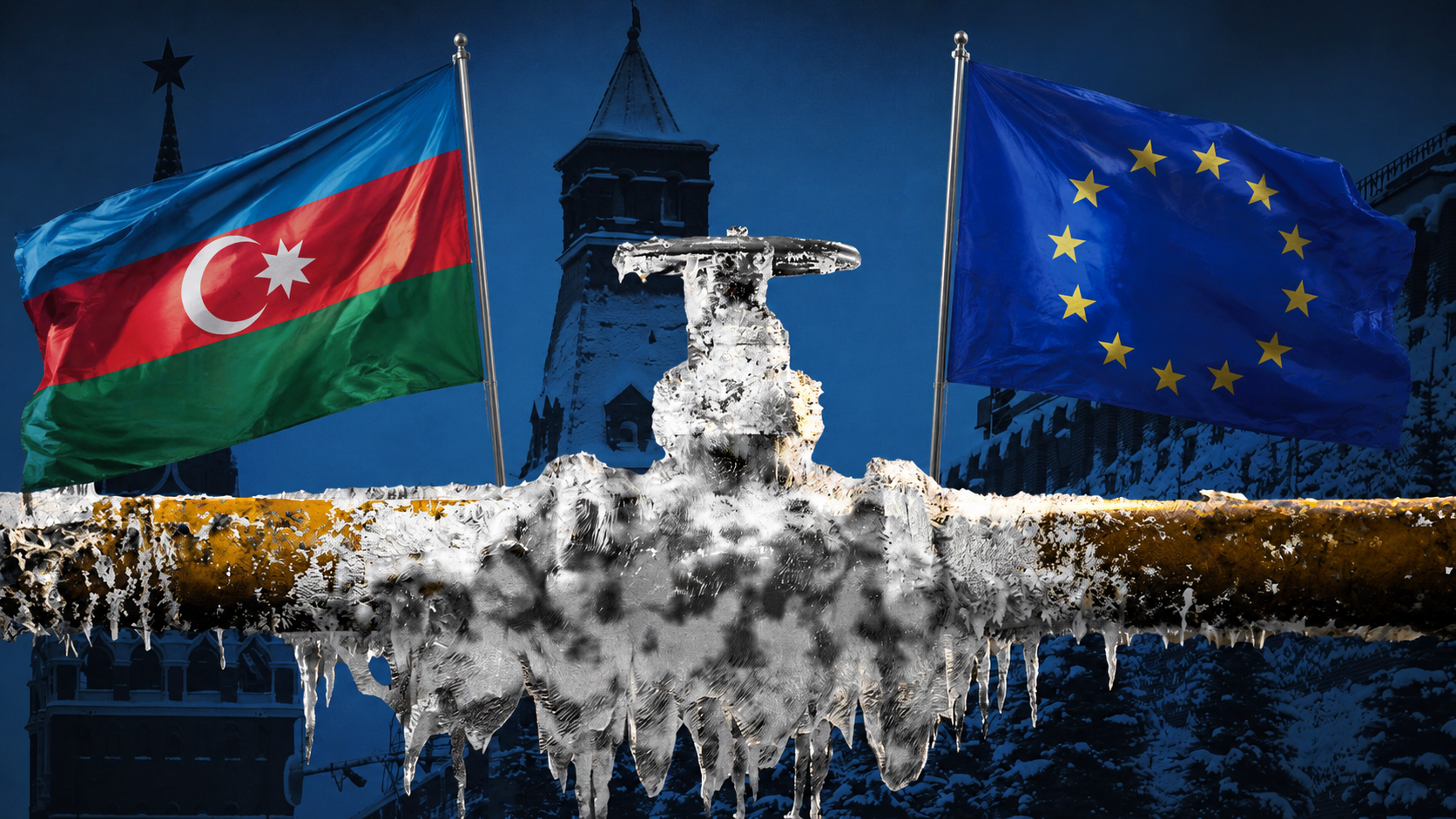
Read moreSince the Gulf crisis, most countries have reevaluated their energy security policies and the methods for delivering energy supplies. Moreover, "it is very likely that the geography and existing infrastructure of Azerbaijan will become even more important than before", as the Azerbaijani President said in his interview with Euronews. This deliberate choice of words, such as "very likely" or "most likely," speaks volumes, as it reflects the mind of a politician who knows precisely what he wants to say yet does not want to sound too categorical about it. What he really wants to say is that Europe has been through three months of energy emergency when Azerbaijan was especially ready to overcome it, and now the queue of countries awaiting its turn in Baku will only grow.
The state of the European gas market when entering May 2026 was one that would not have come as a surprise to those familiar with conditions back in 2022. The price for TTF futures stands around €50 per megawatt hour, representing a year-on-year rise of about 38%, and is close to reaching six weeks of highs. All this happens amid Hormuz closure, very low storage levels (35.85%), and the imminent end of gas from Russia, which is no longer an issue of threats and promises but of a deadline set by law. The immediate prohibition on Russian LNG imports has become effective since 25 April, while pipeline gas agreements should be terminated by 17 June. The complete embargo on Russian gas comes into effect in September 2027.
How does the supply market look?
In the first quarter of 2026, Europe’s leading gas suppliers include the United States, Russia, Norway, Algeria, and Azerbaijan, with significant financial contributions reflecting their varying trajectories. The U.S. tops the list with €4.8 billion in LNG purchases, benefitting from spare terminal capacity amid disruptions from Hormuz and Russia, marking a sharp growth. Russia follows at €3.2 billion, witnessing a decline of 1.5 times year-on-year as it faces an LNG ban effective April 25 and a full prohibition by September 2027. Norway remains stable at €2.74 billion as Europe's most reliable source with a consistent pipeline gas supply, but lacks growth capacity. Algeria contributes €2.65 billion, maintaining steady pipeline volumes to Italy and Spain, although political risks present limited upside. Lastly, Azerbaijan, at €988 million, is on an upward trend due to ongoing pipeline expansions under the Southern Gas Corridor, targeting an increase to over 20 bcm/yr by 2030.
The Eurostat ranking provides us with an insight into the sequence of events. The USA has been growing the fastest because of the excess capacity of the LNG facilities there and the possibility to increase production very fast. Norway has been static because of plateau production from its fields. Algeria is relatively static. Russia has been declining because of the political decision to reduce reliance on Russian gas made by European politicians and because of the ticking of the clock. Azerbaijan is the fifth country in terms of volumes supplied, but first in terms of the growth potential because it not only has new gasfields but also has the infrastructure which can be doubled. The list of countries seeking Azerbaijani gas in the pipeline is not coincidental.
The mention made by Ilham Aliyev in the interview on Euronews concerning "the beginning of gas production from a new field, very soon, probably in the beginning of next month" almost definitely refers to the deep deposits of the ACG complex. The presence of gas reserves in the deep deposits of the ACG complex was proven three years ago, their size has been estimated at 4 trillion cubic feet. Production from the new well is expected to be rather small initially, around 100 million cubic meters in 2026, while the well is getting up to speed. Another deep deposit well of the ACG complex is supposed to be drilled in 2027, achieving volumes of up to 2 billion cubic meters per year by 2028. Alone, they do not represent a game-changer; yet, together with two other factors, they form a certain production growth trend.
| NEAR TERM (2026–2027) | MEDIUM TERM (2028–2030) |
|
ACG deep layers, new well Q2 2026: ~100 mcm in 2026, rising to potentially 2 bcm/yr by 2028. First gas expected within weeks. Commercial volumes likely directed to export market. |
Absheron Phase 2: Final investment decision expected June 2026. Phase 2 will add 4.5 bcm/yr directed to export markets. Proven reserves of 300+ bcm. This is the primary driver of reaching the 20 bcm/yr export ambition by 2030. |
|
Shah Deniz: Existing production base; SOFAZ revenues from Shah Deniz (gas and condensate) nearly doubled in Q1 2026 to 359.6 million manats vs 181.9 million a year earlier, volumes holding up, revenues set to reflect higher TTF prices with 6-month lag. |
TAP expansion Phase 2: Additional compressor stations in Greece and Albania are required; subject to market test and shipper commitments. ČEZ (Czech Republic) and others currently in long-term contract negotiations, demand signals from buyers will determine pace. |
However, here lies the contradiction in the export situation in Azerbaijan: despite record-high prices on the European spot gas exchange (around €50/MWh) and relatively high revenue volumes for other European countries, Azerbaijan has seen its gas export revenue drop by 17.28% year-on-year in the first four months of 2026. It cannot be an issue related to volume, because the total amount of gas exported grew by 3.14%. However, it appears to be a contractual structure issue. The great majority of Azerbaijani gas supplied to Europe is covered by long-term contracts based on oil prices, not spot exchange prices (such as TTF). Moreover, the oil price increase will be reflected in the prices of gas contracts with a six-month lag. This results in a situation whereby Azerbaijan is currently selling gas to Europe at €50/MWh according to oil prices of late 2025, which have not yet been impacted by the war in Iran.
That additional revenue boost will come, as far as the time of its arrival goes; it is just a question of “when,” not “if.” By mid-2026, with the resetting of those oil-linked prices to reflect current Brent values, gas export revenues should grow significantly for Azerbaijan. The evidence is there, at least where the State Oil Fund’s income is concerned, with the Shah Deniz condensate revenues almost doubling in Q1 2026. Those gas revenues should not lag behind. The later realization of that point, however, may prove valuable for analysis. Since the revenues Azerbaijan has been earning currently do not represent full reflection of the financial benefits it can gain now, it is clear that incentives for investments into production facilities expansion become even stronger than in Q1 2026.
Europe also has a storage problem
The threat to Europe right now is not in any shortage of the annual balance of gas, but in its summer re-injection challenge. Current EU gas storage levels stand at 35.85% fullness at the start of May 2026 against the required minimum of 90% before the onset of winter, according to Reuters. The calculations of filling up the remaining 54 percentage points in just six months, taking into consideration the already low Russian supply, high spot LNG prices, and abnormally high power generation demand due to disrupted interconnections, can be considered difficult to execute without problems. According to the calculations of Standard Chartered, if the Hormuz blockade continues throughout the season, TTF prices may reach €90/MWh. It remains to be seen what would actually happen depending on the success of the US-Iran ceasefire agreement.
This situation represents both an opportunity and a challenge for Azerbaijan. On one hand, any extra pipeline gas that Azerbaijan can provide during the upcoming summer injection period is priced at a premium by virtue of the supply shortfall that Europe faces right now. On the other hand, the existing pipeline capacity, TAP, is running pretty much at maximum capacity, having just completed its most recent capacity expansion to reach a total of 11.2 bcm per year. Any extra capacity Azerbaijan gets from the recently discovered well in the ACG deep layer will not come close to filling the current storage shortage in Europe. The extra capacity that could potentially help fill the storage gap, such as US LNG, Norwegian plateau, and additional Algerian volumes, is outside of Azerbaijan’s sphere of influence. However, what is under Azerbaijan’s influence is how quickly it completes the Absheron Phase 2 project and how fast it negotiates the contracts with the European customers for TAP Phase 2 capacity expansion. This decision will be taken in June 2026.
Here we are to serve you with news right now. It does not cost much, but worth your attention.
Choose to support open, independent, quality journalism and subscribe on a monthly basis.
By subscribing to our online newspaper, you can have full digital access to all news, analysis, and much more.
You can also follow AzerNEWS on Twitter @AzerNewsAz or Facebook @AzerNewsNewspaper
Thank you!