
North-South corridor ambitions rise as Moscow seeks deeper routes through Caspian

Akbar Novruz
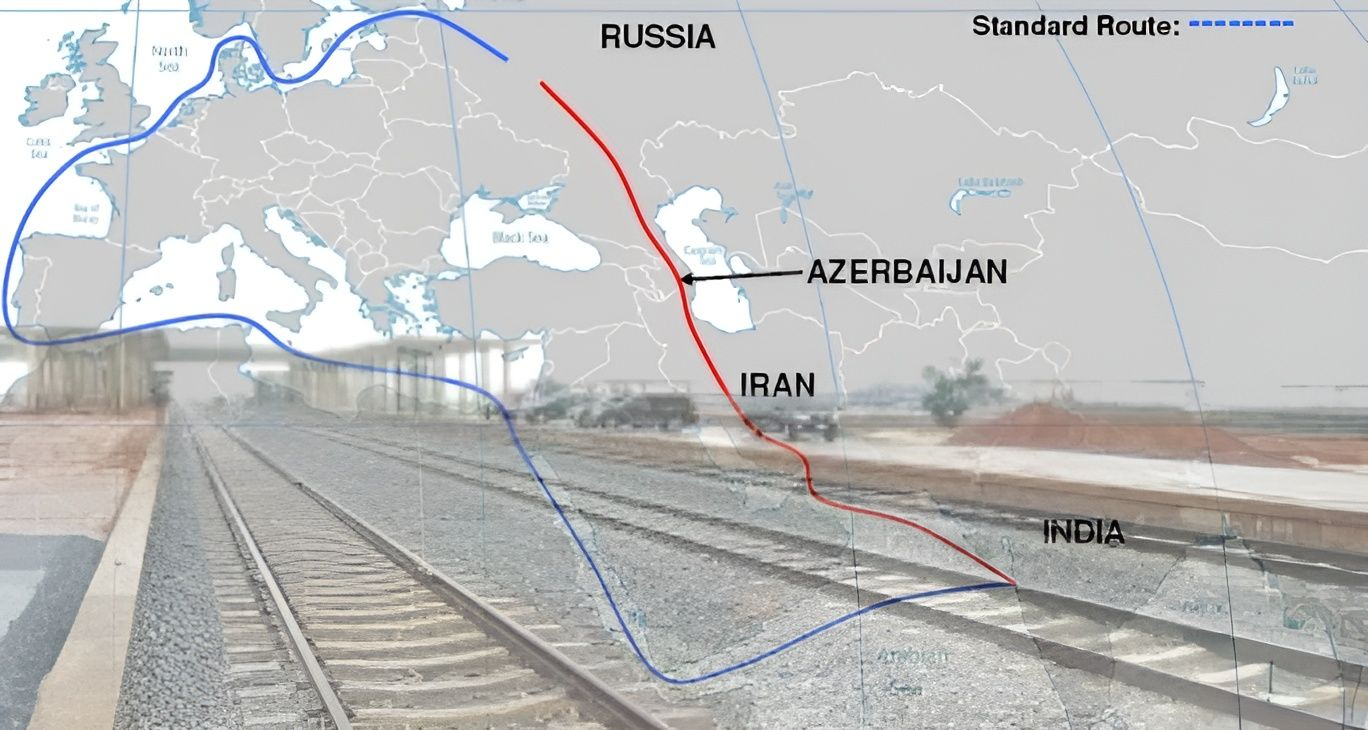
Read moreThe accelerating development of the North–South International Transport Corridor (NSTC) has become a focal point in Russia’s new economic doctrine, reflecting Moscow’s long-term pivot toward alternative trade partners and non-Western transport routes. More than an infrastructure plan, the NSTC is emerging as a geopolitical response to sanctions pressure, an attempt to reshape Russia’s connectivity with the Middle East, South Asia, the Caspian region, and the Indian Ocean basin.
At the VTB “Russia Calls!” investment forum, Russian officials underscored that over 100 individual projects are now underway, ranging from the modernization of the Makhachkala port to deepening the Volga–Caspian Canal, expanding the Astrakhan special economic zone, and establishing new ferry and container connections with Iranian ports. Russia also highlighted emerging cooperation with Azerbaijan and Kazakhstan, two countries crucial to the corridor’s Caspian segment.
For Azerbaijan and the wider Caspian basin, this shift is not merely about transit logistics; it is about positioning at the intersection of competing, yet increasingly interconnected, transport arteries. The simultaneous modernization of Caspian ports, deepening of the Volga–Caspian Canal, and the emergence of joint shipbuilding initiatives reflect Moscow’s intent to anchor itself more firmly within southbound supply chains linking Russia, the Middle East, and the Indian Ocean.
But the NSTC also raises critical analytical questions: Will this transform regional trade patterns? How does it interact with the Middle Corridor, which Azerbaijan has championed, and is the region entering a phase where transport corridors become tools of quiet competition between great powers? Or, conversely, does this expanding network create an integrated system in which multiple routes reinforce each other rather than collide?
It is in this context that transport expert Rauf Aghamirzayev offered his assessment to Azernews, arguing that the discourse should move away from rivalry narratives and toward functional complementarity:
"In my opinion, the North-South and East-West corridors should not be considered competitors to each other. Their directions are completely different. If the Middle Corridor is a route for transporting goods from East to West, that is, from China and Central Asia to Europe, then the North South transport corridor is designed to connect Indian markets with Northern Europe, while also serving as a strategically important route that provides Russia with broader access to the South in the emerging geopolitical landscape. Corridors that complement each other, because the interests of countries in different directions are formed differently."
Aghamirzayev noted that Russia’s intensified focus on the NSTC is not accidental, but rooted in pressing geopolitical necessity.
"Russia's interest is clear, and in light of the recent processes in the region, it needs routes to the south like air and water. Its interest in this direction is also real. There is a growth dynamic in freight transportation. However, there is undoubtedly a need for infrastructure solutions in certain parts of the corridor."
He highlighted that each country along the route is contributing in its own way, but some bottlenecks remain unresolved.
"In this direction, each country is doing its own thing, responsibility. The most important missing element on the Western route is the Rasht-Astara railway line. After Russia announces land acquisition, as it has been promised to be completed in March, launch of the 162km railway can begin with its own investments within the next 4 years."
On potential cooperation in shipbuilding—an initiative mentioned by Russia—Aghamirzayev underlined Azerbaijan’s domestic capacity.
"As for shipbuilding, Azerbaijan has its own shipbuilding plant. The essence of establishing that plant was to both encourage local production and give impetus to the increase in foreign exchange flows and investments. In this sense, I think we can produce it ourselves. At present, I think that any joint production plant can be evaluated in the future, and undoubtedly, the relevant agencies have evaluated the issue."
He concluded by hinting that new announcements may be expected soon.
"Perhaps, in the near future, information will be announced on the implementation of the projects planned in this direction."
Here we are to serve you with news right now. It does not cost much, but worth your attention.
Choose to support open, independent, quality journalism and subscribe on a monthly basis.
By subscribing to our online newspaper, you can have full digital access to all news, analysis, and much more.
You can also follow AzerNEWS on Twitter @AzerNewsAz or Facebook @AzerNewsNewspaper
Thank you!