
Italian scientists develop solar corona observation device
By Alimat Aliyeva
Italian scientists are preparing to test a new device that could significantly improve the way researchers study the Sun’s outer atmosphere, known as the solar corona, AzerNEWS reports, citing foreign media.
A team of researchers from Padua, Italy, has been working in the laboratory for several weeks to complete the development of the Circular Slit Spectrometer (CISS). The prototype is designed to allow scientists to study the solar corona more quickly than conventional instruments.
The device is scheduled to undergo a crucial test at the Javalambre Astrophysical Observatory in Spain during the total solar eclipse on August 12.
CISS uses a different optical design from traditional spectrometers. According to Federico Landini, a lead researcher at the Turin Astrophysical Observatory, the prototype features a circular slit that makes it possible to capture the spectrum of the solar corona at a specific distance from its center in a single image.
Traditional spectrometers scan the corona along a fixed line. Because conditions in the solar atmosphere can change within just a few minutes, scanning the region can take too long to capture a complete picture of rapidly evolving phenomena. The new approach is designed to overcome this limitation by collecting a much larger amount of data at once.
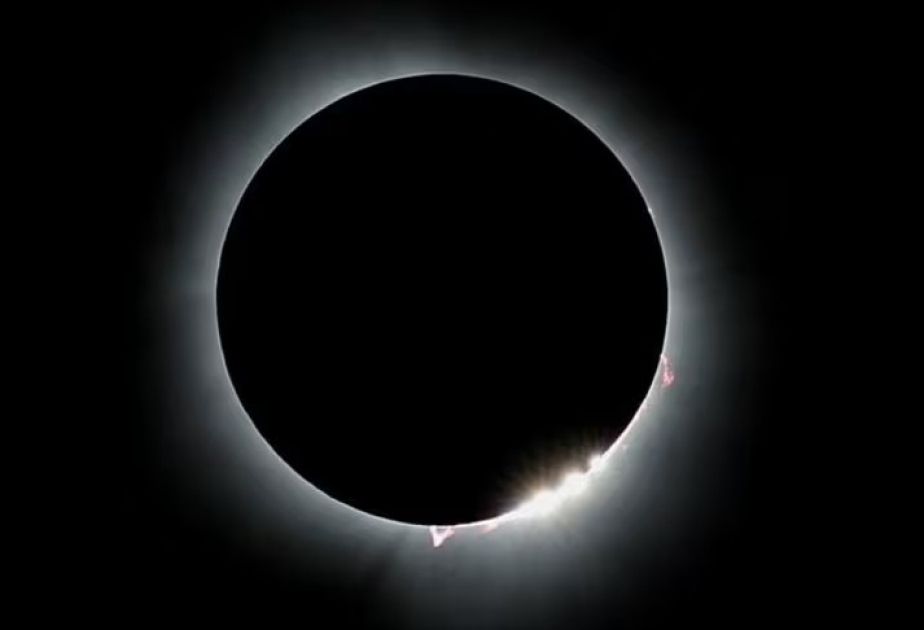
Despite months of preparation, the research team will have only a short window during the eclipse to demonstrate that the instrument works as intended. A total solar eclipse provides a rare opportunity to observe the corona in detail because the Moon blocks the bright surface of the Sun, making the much fainter outer atmosphere easier to study.
This is particularly important for the researchers, who have spent nearly two and a half years developing the prototype. Their work could eventually help scientists better understand some of the Sun’s most mysterious processes, including the origins of solar wind and powerful eruptions that can affect satellites, communications, and power systems on Earth.
Paola Zuppella, a senior researcher at the Institute of Photonics and Nanotechnologies in Padua, said the team must be prepared for any unexpected problems. “There is no room or time for surprises,” she said, stressing that careful coordination among the researchers will be just as important as favorable weather conditions.
Here we are to serve you with news right now. It does not cost much, but worth your attention.
Choose to support open, independent, quality journalism and subscribe on a monthly basis.
By subscribing to our online newspaper, you can have full digital access to all news, analysis, and much more.
You can also follow AzerNEWS on Twitter @AzerNewsAz or Facebook @AzerNewsNewspaper
Thank you!