
Global diesel crisis highlights Azerbaijan’s growing role in fuel supply

Ulviyya Poladova
Read moreAzerbaijan has the most affordable gasoline among the countries of the South Caucasus. Despite relatively low fuel prices compared with neighboring Georgia and Armenia, household spending on automotive gasoline and diesel fuel in Azerbaijan continued to increase in the first nine months of 2026, exceeding 3 billion manats in retail sales.
According to Numbeo's ranking, gasoline in Azerbaijan costs $0.67 per liter, placing the country 90th [the higher the number, the higher the rating] in the global list. The figures highlight the difference in fuel prices across the South Caucasus, where motorists face significantly higher costs in neighboring countries.
That placement is no accident. Azerbaijan is an energy exporter with its own crude, its own refining capacity, and a state oil company, SOCAR, woven deep into the retail chain. When a country pumps and processes a large share of what its drivers burn, the price at the pump is insulated from the swings that batter import-dependent neighbors.
In Georgia, the price of gasoline stands at $1.40 per liter, with the country ranking 55th. Armenia follows with a price of $1.57 per liter, placing it 46th in the ranking. The figures indicate that gasoline in Georgia costs more than twice as much as in Azerbaijan, while the price in Armenia is also considerably higher.
Azerbaijan’s fuel exports continue to play an important role in the energy markets of regional countries, serving as a key factor in maintaining their socio-economic stability. For instance, in January-August 2026, Georgia imported fuel and lubricants worth $234.2 million from Azerbaijan, marking a 23% increase compared to the same period last year. As a result, Azerbaijan ranked second among Georgia’s fuel suppliers.
Interestingly, Armenian Economy Minister Gevorg Papoyan has also highlighted the impact of fuel supplies from Azerbaijan on his country’s market. According to the minister, petrol prices in Armenia could have risen significantly more sharply had the country not imported petrol and diesel fuel from Azerbaijan. Papoyan noted that the availability of an alternative source of supply helped prevent a further increase in prices.
Thus, Azerbaijan plays an important role in ensuring the energy security of South Caucasus amid rising global fuel prices caused by disruptions to shipping through the Bab el-Mandeb Strait due to Houthi attacks and the Strait of Hormuz amid tensions involving Iran and the United States.
The conflict in the Middle East, which has been going on for quite a long period of time, has an extremely negative impact on the global fuel market. Since September, the diesel fuel market has significantly declined: prices have almost doubled amid a reduction in supplies from the Middle East and a ban on diesel exports from Russia and China. Supply disruptions are particularly noticeable in European countries, which are forced to release significant amounts of fuel from their strategic reserves. The average price of diesel fuel in the European Union has already reached €2.24 per liter.
Expensive oil is just the tip of the huge iceberg. The second, deeper layer of the crisis is much less obvious. For many years, European and Asian countries have been purchasing not only raw materials from the Middle East, but also huge amounts of ready-made fuels such as gasoline, jet fuel, and diesel. These imports were integrated into their fuel balance, quietly adjusting their own production figures. Simply put, many economies are accustomed to maintaining their energy sustainability at the expense of Middle Eastern refineries. According to Reuters, the International Energy Agency (IEA) warned that the global diesel fuel market could remain tense until 2027.
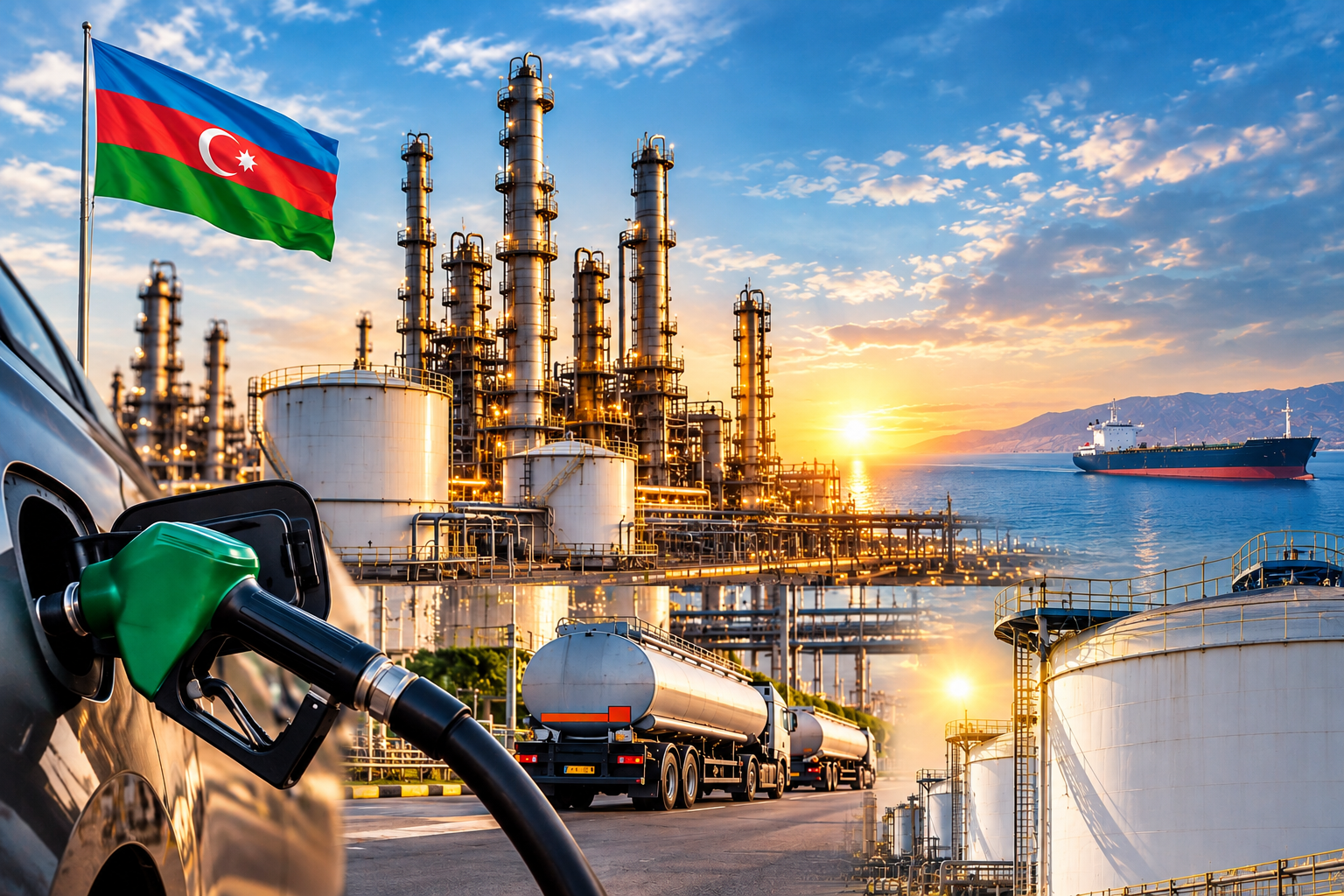
In recent years, Azerbaijan has been steadily reshaping its energy strategy, moving beyond its traditional role as a crude oil exporter towards the production of higher value-added petroleum products. Against this backdrop, the modernization of the Heydar Aliyev Baku Oil Refinery has become a key industrial project aimed at increasing processing efficiency, improving fuel quality and expanding export opportunities. Thus, in 2026, the refinery plans to produce approximately 1.4 million tonnes of Euro-5 gasoline and 2.3 million tonnes of diesel fuel.
The Euro-5 standard here is also not a technical nuance, but a pass to premium markets. This class of fuel meets the strict environmental requirements of the European Union and Türkiye, which means that Azerbaijani diesel and gasoline can go not only to neighbors in the region, but also to places where they are willing to pay for quality and where there is an acute shortage of processing right now. Europe, which has been shutting down its own refineries for years in order to rely on foreign supplies, now finds itself in a position where any reliable producer of high-standard fuel becomes a welcome partner. Baku had long been ready for that role.
For Azerbaijan, expanding domestic refining capacity offers several advantages. Processing more crude oil within the country allows a greater share of the value generated by the oil industry to remain in the domestic economy. It also supports industrial development and creates opportunities to diversify exports.
Here we are to serve you with news right now. It does not cost much, but worth your attention.
Choose to support open, independent, quality journalism and subscribe on a monthly basis.
By subscribing to our online newspaper, you can have full digital access to all news, analysis, and much more.
You can also follow AzerNEWS on Twitter @AzerNewsAz or Facebook @AzerNewsNewspaper
Thank you!