
Hormuz crisis puts Azerbaijan’s oil sector in spotlight

Ulviyya Poladova
Read moreThe closure of the Strait of Hormuz has done more than interrupt tanker traffic. It has exposed a fundamental weakness in the global energy system. During the first half of last year, an average of 20.9 million barrels of oil and petroleum products passed through the strait each day. This volume was equivalent to approximately one-fifth of global oil consumption.
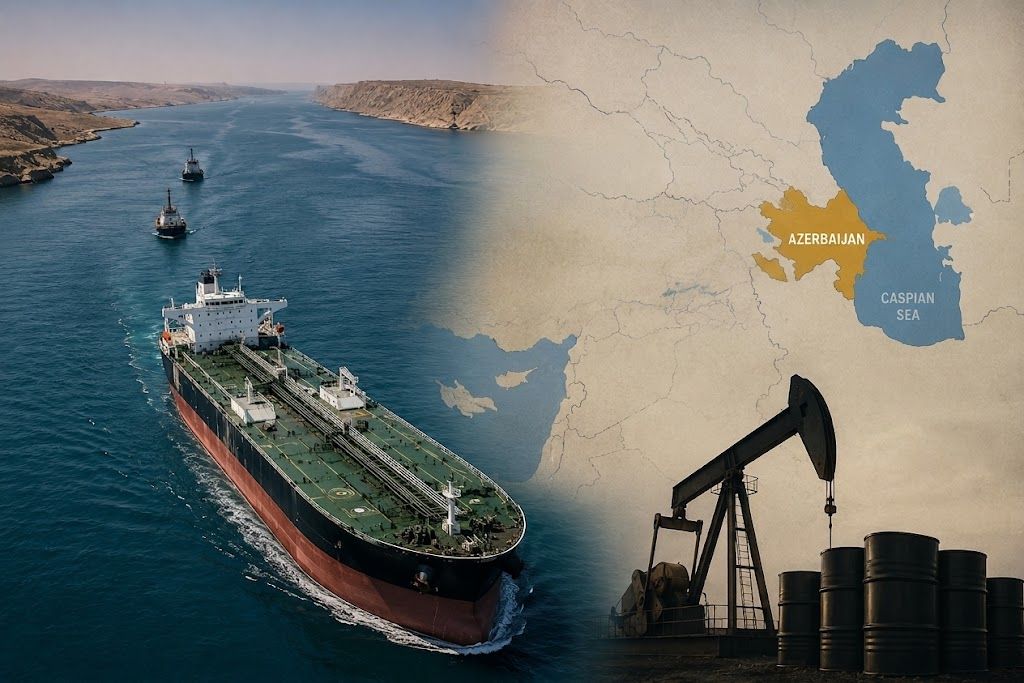
The closure of the Strait of Hormuz directly affects the energy exports of Gulf countries such as Saudi Arabia, Iraq, Kuwait, Iran, the United Arab Emirates, and Qatar. Azerbaijan, however, is in a different position. Unlike these countries, it exports its oil to international markets mainly across the Caspian Sea and through pipelines. Consequently, the closure of the strait does not directly block Azerbaijan's oil exports. Its effects on the country are primarily indirect and are transmitted through global oil prices, demand, transportation costs, insurance rates, and changes in international oil flows.
Over the 20 years since BTC began operating, more than 560 million tons of Azerbaijani crude oil and condensate have been exported through the pipeline. The 1,768-kilometer route was commissioned in June 2006. From that date to the end of June of the current year, approximately 631 million tons of crude oil, equivalent to more than 4.7 billion barrels, were transported through BTC. At Ceyhan, this oil was loaded onto 6,276 tankers and delivered to global markets.
The Baku-Supsa and Baku-Novorossiysk pipelines are also part of Azerbaijan's oil export infrastructure. The Baku-Supsa pipeline has a daily transportation capacity of 150,000 barrels, while the Baku-Novorossiysk pipeline can carry 100,000 barrels per day.
The key advantage of these routes is that they bypass the Strait of Hormuz. A closure of the strait therefore does not create a physical obstacle preventing Azerbaijani oil from reaching export markets. BTC carries Azerbaijani oil directly to the Mediterranean Sea, providing the country with access to international buyers without relying on the Persian Gulf route.
The planned transfer of BTC's operation from bp to SOCAR in July 2026 further demonstrates the infrastructure's strategic importance to Azerbaijan. The existence of BTC, Baku-Supsa, and Baku-Novorossiysk also allows the country to diversify its export routes instead of depending entirely on a single corridor.
The closure of the Strait of Hormuz has substantially reduced the supply of oil reaching the global market. Under such conditions, the likelihood of a further rise in the price of Brent crude increases. Heightened tensions around Hormuz since the beginning of August have already caused volatility in oil markets. The price of a barrel of Brent crude exceeded $91 for the first time since July 30.
At first glance, this development is beneficial for Azerbaijan. If the price of exported oil rises while export volumes remain unchanged, the country's oil revenues increase. However, the consequences cannot be assessed solely through the prism of more expensive oil. Higher prices may increase Azerbaijan's export income in the short term, but a prolonged energy shock could weaken the global economy and eventually reduce demand.
Although Azerbaijani oil does not pass through the Strait of Hormuz, the country cannot remain completely isolated from disruptions in global shipping and insurance markets. Higher security risks surrounding tanker transportation increase both insurance premiums and operating costs. Demand for oil tankers used to transport crude from the Persian Gulf has risen sharply, pushing vessel prices to record levels. According to data from shipbroker Braemar cited by the Financial Times, Middle Eastern countries are seeking ways to continue transporting oil and petroleum products despite ongoing disruptions to traffic in the Strait of Hormuz.
By the end of the second quarter, the average price of both new and used oil tankers had exceeded $130 million. This was the highest level recorded since 2008. One-year charter rates for supertankers also reached historically high levels. The increase in demand and prices is linked to oil-exporting countries' desire to possess their own fleets. Because of security problems in the Strait of Hormuz, third-party carriers and oil purchasers are demanding either larger discounts on crude or higher transportation fees.
The shipping crisis is also affecting routes outside the immediate Hormuz area. In August 2026, the cost of transit through the Panama Canal increased sixteenfold compared with the previous year, reaching an average of $1.1 million per day. This increase was also linked to the closure of the Strait of Hormuz following the conflict in Iran.
According to the International Energy Agency, most of the crude oil passing through Hormuz in 2025 was destined for Asian markets. The available capacity of alternative pipelines is insufficient to replace the entire volume normally transported through the strait. As a result, Asian countries have a stronger incentive to seek crude from alternative suppliers. Azerbaijani oil may gain importance as one of these alternative sources. The ability to transport Caspian oil to international markets through the Mediterranean gives Azerbaijan a geoeconomic advantage.
The importance of this advantage becomes clearer when the scale of the Hormuz disruption is considered. Goldman Sachs estimated that calculated oil flows through the strait had fallen to 2 million barrels per day, equivalent to only 10% of the normal level. This meant that the market was receiving 17.1 million fewer barrels of oil each day. By March 2026, global oil prices had increased by 47% since the beginning of the US and Israeli military operation against Iran in late February. Amid Iranian strikes against Middle Eastern countries in July 2026, Brent crude futures rose by 3.08% to $78.35 per barrel, while US West Texas Intermediate futures increased by 3.09% to $73.62 per barrel.
These developments reinforce Azerbaijan's position as an oil supplier. Nevertheless, the country cannot remain entirely insulated from the broader economic and logistical consequences of a global energy crisis.
Here we are to serve you with news right now. It does not cost much, but worth your attention.
Choose to support open, independent, quality journalism and subscribe on a monthly basis.
By subscribing to our online newspaper, you can have full digital access to all news, analysis, and much more.
You can also follow AzerNEWS on Twitter @AzerNewsAz or Facebook @AzerNewsNewspaper
Thank you!