
Baku’s soft power: Why African nations buying into Azerbaijan’s digital government model

Ulviyya Poladova
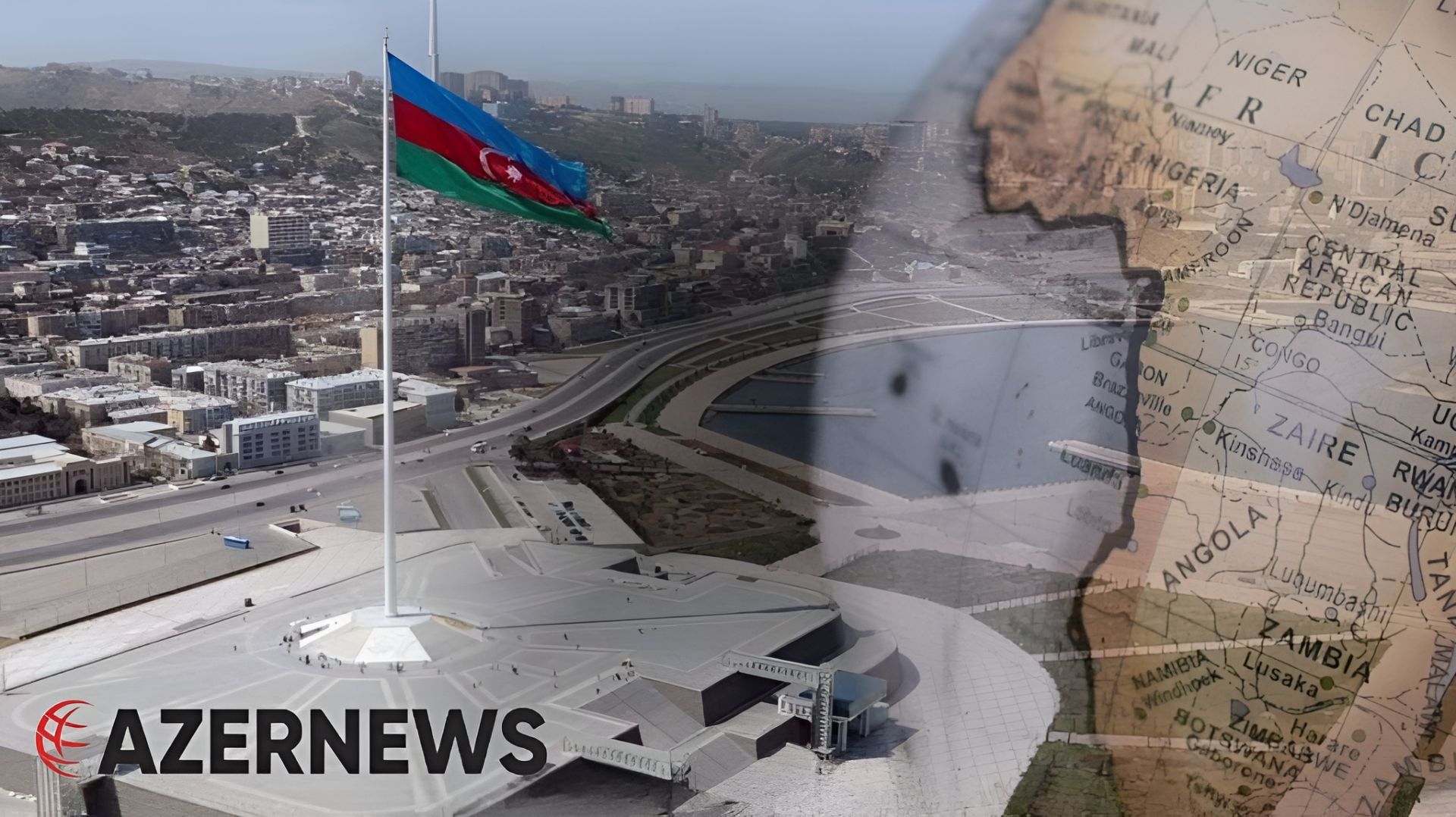
Read moreAzerbaijan’s approach to Africa marks a new model of South-South cooperation, moving beyond traditional transactional engagement. Instead of focusing solely on extracting resources or geopolitical gains, the country prioritises sustainable development and capacity building. Taking all this into account, it is reasonable to say that Azerbaijan's s strategy emphasises mutual growth and the transfer of practical knowledge, drawing on its successful experiences in economic and technological modernisation. This sets the stage for balanced, long-term partnerships that address the real needs of African countries.
Baku is crafting a framework rooted in mutual growth, knowledge exchange, and institutional development. This model, while pragmatic in form, carries strategic ambitions that align both with Africa’s developmental aspirations and Azerbaijan’s own pursuit of diversified global partnerships.
For decades, Africa’s partnerships have often been mediated by external powers driven by geopolitical or resource-driven motives. Azerbaijan’s approach marks a distinct departure. Emerging from its own post-Soviet transformation, Baku has internalised lessons from rapid modernisation and effective governance innovation. This orientation mirrors a broader maturation within South-South cooperation, wherein emerging economies leverage experience-derived knowledge to empower peers rather than to dominate them.
Speaking at an international conference dedicated to Africa Day in Baku, Azerbaijan’s Deputy Foreign Minister Yalchin Rafiyev described Africa as one of the world’s most dynamic and promising regions, emphasising its youthful population, rapidly growing economy, vast natural resources, and rising geopolitical significance.
According to Rafiyev, Africa is becoming an increasingly important actor in shaping the future international political and economic order. The growing influence of the African Union, which recently became a full member of the G20, demonstrates the continent’s rising global profile.
Moreover, for Baku, cooperation with African states is not limited to diplomatic symbolism. Azerbaijan increasingly views Africa as a strategic region for political dialogue, economic diversification, energy cooperation, and multilateral diplomacy.
Rafiyev noted that Azerbaijan currently maintains diplomatic relations with all African countries except the Central African Republic, with formal ties expected to be established later this year.
The pace of diplomatic engagement has accelerated noticeably. Since last year alone, Azerbaijan and African states have held 12 rounds of political consultations, highlighting growing mutual interest in cooperation. Azerbaijani officials have also increased high-level visits to African countries, while delegations from Africa have become more active participants in forums and international events hosted by Baku.
A clear example of this growing partnership can be seen in meetings between President Ilham Aliyev and the leaders of various African states.
Over the past three years, the number of African heads of state visiting Azerbaijan - both on bilateral visits and in connection with major international events - has increased significantly.
The list of African leaders who have visited Baku includes presidents and senior officials from a wide range of countries, such as Somalia, Kenya, Egypt, Rwanda, Angola, Ghana, Guinea-Bissau, Mauritania, Zimbabwe, Comoros, Madagascar, Eswatini, Mauritius, and the Central African Republic, along with other government delegations from Southern African countries.
One of the most notable areas of emerging cooperation is the energy sector. African countries are increasingly engaging with Azerbaijan to explore opportunities in oil and gas development, renewable energy, and investment partnerships.
A recent example is the visit of Kenyan President William Ruto to Azerbaijan. While attending the World Urban Forum in Baku, Ruto held meetings with officials from Azerbaijan’s state oil company SOCAR to discuss potential cooperation in oil, gas, and renewable energy projects.
Energy cooperation stands at the core of Azerbaijan’s engagement with Africa. Long recognised for its hydrocarbons, Azerbaijan now positions itself as a leader in balanced energy transition, coupling oil and gas management expertise with a growing renewable portfolio.
Azerbaijan’s organisation of COP29 in 2024 significantly reinforced this leadership. The summit not only showcased its domestic climate innovations but also created direct platforms for energy dialogue with African partners. Through these engagements, Baku offered technical cooperation, exchange programs, and feasibility studies for renewable energy integration.
Economic relations between Azerbaijan and African countries are also showing significant growth.
Azerbaijan–Africa trade has grown sharply over the past three years, rising from $4.3 million in 2020 to $580 million in 2025, reflecting strong potential for economic cooperation
Azerbaijan is exploring opportunities in sectors such as energy, infrastructure, agriculture, transport, mining, education, and technology. The country’s experience in oil and gas production, renewable energy development, and transport logistics is viewed as potentially valuable for a number of African economies seeking modernisation and diversification.
The steady increase in diplomatic exchanges and sectoral cooperation indicates that relations between Azerbaijan and African countries are moving into a more dynamic phase.
The development of transport corridors is another important factor shaping Azerbaijan’s engagement strategy. Positioned at the crossroads of Europe and Asia, Azerbaijan aims to strengthen its role as a regional logistics and transit hub through projects linked to the Middle Corridor and broader Eurasian connectivity initiatives. Closer cooperation with African partners could eventually contribute to expanding trade routes connecting Africa with the Caucasus and Central Asia.
Azerbaijan’s ASAN xidmet model is perhaps its most celebrated domestic innovation. The ASAN system revolutionised public service delivery through digitisation, transparency, and citizen-centric design. Now, it is being replicated across Africa, most notably in Ethiopia, where the MESOB Service Centre, inaugurated in June 2025, integrates over 120 government and private services under one roof.
This partnership signals a mature phase of institutional trust. It demonstrates how governance models from the Global South can be effectively adapted and localised, instead of imposed through top-down external templates. Similar initiatives are underway in Guinea, Senegal, and Guinea-Bissau, where Azerbaijani expertise is guiding the modernisation of administrative institutions.
Azerbaijan has also carried out important activities in the field of humanitarian cooperation. The Heydar Aliyev Foundation and Leyla Aliyeva have implemented important humanitarian projects in several African countries.
The Azerbaijan International Development Agency, operating under the Ministry of Foreign Affairs of Azerbaijan, continues to implement projects in various areas in Africa.
The relationship between Azerbaijan and Africa is increasingly based on two-way learning rather than a one-sided transfer of experience. Azerbaijan contributes expertise in state-driven development, energy sector management, and post-conflict rebuilding, while Africa offers valuable insights into population-driven growth, innovation, and regional cooperation.
Here we are to serve you with news right now. It does not cost much, but worth your attention.
Choose to support open, independent, quality journalism and subscribe on a monthly basis.
By subscribing to our online newspaper, you can have full digital access to all news, analysis, and much more.
You can also follow AzerNEWS on Twitter @AzerNewsAz or Facebook @AzerNewsNewspaper
Thank you!