
China criticizes U.S. over fresh Iran sanctions
By Sara Rajabova
China has censured the United States over the imposition of new sanctions on Iran, Press TV reported on Friday.
The new US bans are included in the $633-billion military bill for 2013 which President Barack Obama signed on Wednesday. The anti-Iran sanctions portion of the bill, among other economic features, blacklists the Islamic Republic of Iran Broadcasting (IRIB) and will block all the IRIB assets and prevent others from doing business with it.
Chinese Foreign Ministry spokeswoman Hua Chunying told reporters in Beijing that her country "has consistently opposed" sanctions against Iran over its peaceful nuclear energy program.
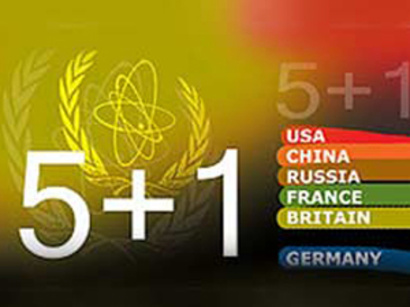
She renewed China's call for the resumption of talks between Iran and the P5+1 group -- the five permanent UN Security Council members plus Germany -- about Tehran's nuclear program.
"We have always seen negotiations and cooperation as the best way to solve the Iranian nuclear issue," Hua Chunying said.
Also, in relevant remarks in December, a Chinese foreign ministry spokesman had called for a new round of talks between Iran and the P5+1.
Meanwhile, Iran's lead negotiator in talks with the world powers, Saeed Jalili, said Tehran and the P5+1 -- Britain, China, France, Russia and the United States plus Germany -- would resume talks later this month, although a venue and date for the negotiations have not been finally determined, Fars news agency reported.
Jalili told reporters in New Delhi that Tehran has agreed to a new round of talks this month.
"We have accepted that these talks should be held in January ... but till now the details have not been finalized," he said.
Also, Jalili on Friday reiterated Iran's right to develop peaceful nuclear energy within the framework of the non-proliferation treaty (NPT).
The European Union announced on Friday that nuclear talks with Iran would resume "very soon".
"They're negotiating... the details for the next round to be held very soon," Sebastien Brabant, a spokesman for EU foreign policy chief Catherine Ashton, who heads the G5+1 group's delegation, said in Brussels.
The talks would be the first high-level negotiations over Iran's nuclear program since the negotiations in Moscow in June, offering at least the prospect of a thaw in a standoff that has grown increasingly tense in recent months. That meeting was followed by low-level technical talks in Istanbul, according to reports.
Late in December, the Russian Foreign Ministry said negotiations were underway to decide a date and venue for the next round of talks between Iran and the six world powers, adding that the two sides might resume negotiations in January.
The six powers want to rein in Iran's uranium enrichment program to ensure it is geared only for civilian energy, through a mix of diplomacy and sanctions. Iran denies Western assertions it is seeking nuclear weapons capability.
Tehran stresses that the country has always pursued a civilian path to provide power to the growing number of Iranian population, whose fossil fuel would eventually run dry.
Tehran is now under four rounds of UN Security Council sanctions for turning down the West's calls to give up its right to uranium enrichment.
Here we are to serve you with news right now. It does not cost much, but worth your attention.
Choose to support open, independent, quality journalism and subscribe on a monthly basis.
By subscribing to our online newspaper, you can have full digital access to all news, analysis, and much more.
You can also follow AzerNEWS on Twitter @AzerNewsAz or Facebook @AzerNewsNewspaper
Thank you!