
Syrian leader reaffirms UN mandate on Golan Heights as he says it's not 'up for debate'
Akbar Novruz
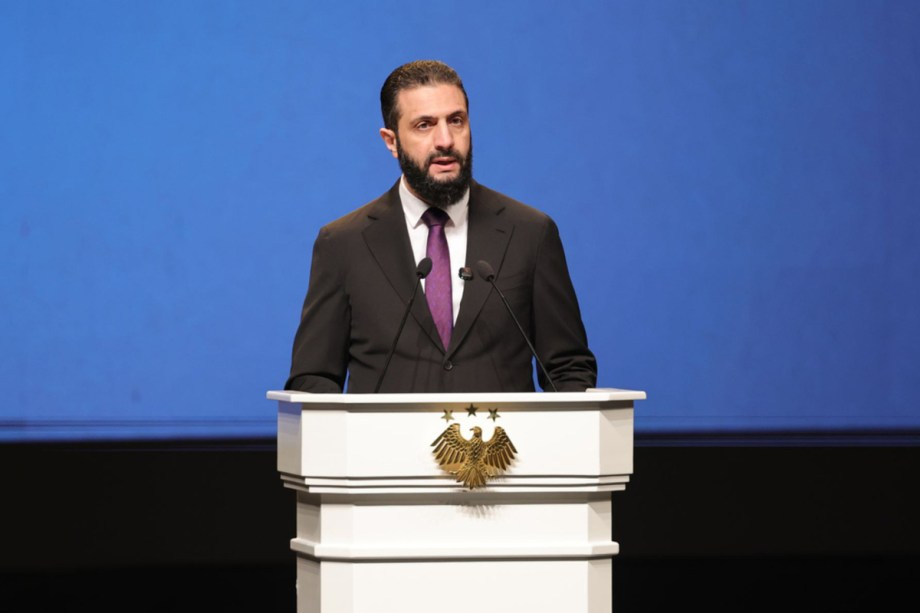
Read moreSyrian President Ahmed al-Sharaa outlined his government's foreign policy priorities, security negotiations and regional economic plans during an Atlantic Council Front Page event in New York on Tuesday, held on the sidelines of the United Nations General Assembly.
Addressing the status of the Golan Heights, al-Sharaa said Syria maintains its legal claim to the territory under international law.
“The Golan is Syrian land according to United Nations resolutions, and there is no room for discussion regarding its status,” al-Sharaa said during the forum.
Israeli withdrawal and US mediation
On border security and regional tensions, al-Sharaa said Syria may require an international commission to assess security concerns along the frontier and distinguish between what he described as genuine security needs and perceived threats.
He said any formal security framework must be preceded by an Israeli withdrawal to positions held under the 1974 disengagement arrangements.
“We demand that Israel withdraw to the areas it occupied under the 1974 arrangements before discussing security arrangements,” al-Sharaa said. “If the security arrangements succeed, it will be possible to move on to discussing a permanent peace.”
Al-Sharaa described the current geopolitical environment as a “historic moment that could achieve benefits for all parties,” while confirming that Washington is involved in facilitating negotiations between Syria and Israel.
He acknowledged, however, that progress in the talks remains difficult.
Turning to regional economic relations, al-Sharaa highlighted efforts to restore Syria's role as a transit hub for trade and energy flows in the Middle East.
He said the Syrian government is working to establish a secure transit corridor across Syrian territory for Iraqi goods, with a particular focus on transporting Iraqi oil to Mediterranean ports.
Al-Sharaa also reaffirmed Damascus's commitment to supporting stability in neighboring Lebanon, saying Syria seeks to assist the Lebanese government and enable state institutions to carry out their responsibilities effectively.
On domestic governance, the Syrian president rejected proposals for power-sharing arrangements based on sectarian, ethnic or regional quotas.
“We do not want a quota system based on ethnic, geographic, or religious lines that would lead to the division of Syria,” al-Sharaa said, arguing that such political arrangements could undermine the country's territorial integrity.
Here we are to serve you with news right now. It does not cost much, but worth your attention.
Choose to support open, independent, quality journalism and subscribe on a monthly basis.
By subscribing to our online newspaper, you can have full digital access to all news, analysis, and much more.
You can also follow AzerNEWS on Twitter @AzerNewsAz or Facebook @AzerNewsNewspaper
Thank you!