
Trend micro sees emerging hacker risks as homes go online
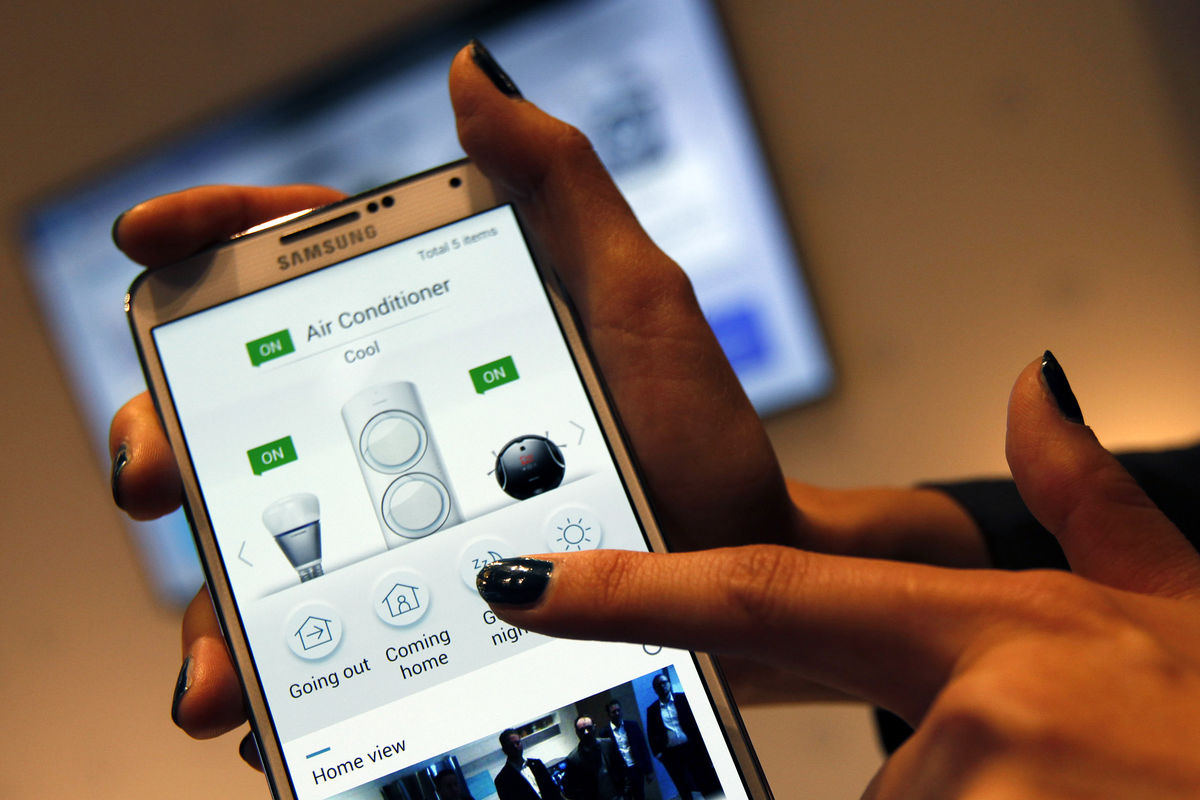
As Samsung Electronics Co. and General Electric Co. make refrigerators that can tell you’re out of milk and ovens that can be switched on with a mobile phone, Eva Chen warns such advances may also let hackers into your home.
The president of Trend Micro Inc., the Tokyo-based developer of security software, said threats from hacking will spread as appliances, cameras and other devices connect to the Web. She’s betting that protection for the so-called Internet of things will be among the main reasons her company will more than double its number of users in three years.
“You’ll feel like you’re living in a glass house,” Chen, 55, said in a recent interview in Tokyo. “The consumer doesn’t even know that their device is hooking up to the Internet and sending all this information out.”
Shares rose 0.7 percent to 3,605 yen in Tokyo trading today, narrowing the decline for the year to 2 percent.
As Samsung, GE, Apple Inc. and Google Inc. race to infuse more technology into everyday devices, potential risks are beginning to emerge. Already, there’s been a reported case of a hacker who terrorized a family in Houston by remotely hijacking a baby monitor. This year, the European Cybercrime Centre warned that Web-connected appliances could lead to new types of targeted attacks, theft and possibly physical injuries.
Household Hacking
“Some of these appliances are being shipped with the same flimsy security as Web cameras,” said Motohiro Nakanishi, a security analyst at Tokyo-based IPA Japan. “If you know the default password, you can get access.”
While the majority of incidents of hackings into the home have been limited to Web camera intrusions, researchers have found ways to tamper with everything from cars to toilets.
The market for the Internet of things will probably almost quadruple to $7.1 trillion by 2020, according to International Data Corp. That’s enough to lure major tech companies such as Samsung Electronics, which has released remotely controlled lights and washing machines. Google purchased Nest Labs, a maker of connected thermostats and smoke detectors, earlier this year for $3.2 billion.
Makers of household goods say they’re aware of the risks and are taking steps to protect their products. Japan’s Toshiba Corp., which makes refrigerators with internal cameras and remotely controlled vacuum cleaners, secures its connected appliances through a system that requires encrypted passwords, said Yuichiro Honda, an official at the company’s planning department.
Insufficient Precautions
Panasonic Corp. encrypts all communication to and from connected home appliances, as well as passwords at multiple levels, a spokeswoman, Chieko Gyobu, said.
Security experts are skeptical that manufacturers of household appliances have taken sufficient precautions give the sophistication of today’s hackers.
“Anyone that thinks that your appliance maker is technology- and security-astute is sadly misinformed,” said Ron Culler, chief technology officer at Secure Designs Inc. in Greensboro, North Carolina. “Video, audio, environmental controls, security devices, etc. have the potential to expose us to new threats.”
According to Trend Micro’s Chen, the key to protecting the home is to stop cyber intruders at the Internet router, the device that directs traffic from the Internet and within homes. In most houses, the router accesses the Web through a cable plugged into a wall and then communicates with household devices wirelessly, typically over Wi-Fi.
Doubling Users
Trend Micro is releasing software designed to protect the home as household hacking risks rise, Chen said. The company, ranked by Gartner Inc. as the world’s fourth-largest security software provider, has already teamed up with a major consumer electronics brand, Chen said, declining to name the partner.
The company estimates its user base could grow to 63 million in 2016 from 25.5 million as of the end of last year, largely because of the proliferation of Web-connected household products.
“Just as there will always be disease, there will always be doctors,” Chen said. “All we need to make sure is that the good guys stay together and put the best effort together with the best infrastructure.”
Here we are to serve you with news right now. It does not cost much, but worth your attention.
Choose to support open, independent, quality journalism and subscribe on a monthly basis.
By subscribing to our online newspaper, you can have full digital access to all news, analysis, and much more.
You can also follow AzerNEWS on Twitter @AzerNewsAz or Facebook @AzerNewsNewspaper
Thank you!