
Making enemies faster than we can kill them
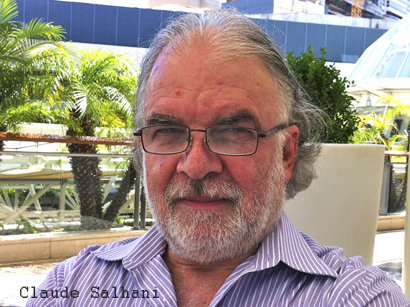
By Claude Salhani
Senior editor of the English service of Trend Agency
Recent history of Middle East conflicts shows that there is only one success story but many failures.
In all the wars -civil and otherwise - all the insurgencies,
uprisings, revolutions and counter-revolutions that have taken
place in the Middle East since the end of colonialism, only one
Arab leader - Sultan Qaboos of Omani -- had the foresight to
address the issue in a comprehensive and positive manner. Rather
than relying solely on the military option, the Omani leader also
addressed the social issues that were at the root of the
insurgency.
As Egypt faces a mounting insurgency in the Sinai from pro-al-Qaida
Islamists, it would benefit the Egyptian military and government to
take a closer look at the Arab world's sole success story and
hopefully benefit from it rather than embark upon a road that will
lead towards greater strife and offer no viable solution.
It would also benefit the US military and the Obama administration and hopefully teach them a thing or two about dealing with insurgencies, particularly now as the United States plans to resume arms delivery to Egypt as soon as the US Congress approves the move expected to take place early this week.
Under existing US law the United States is banned from providing weapons to countries where legitimately elected governments were removed by the military. Although the Obama administration pussy footed around this issue, avoiding to call the forceful removal of President Mohammad Morsi a military coup, it nevertheless was a military coup.
Al-Qaida is on the offensive and on the rise in a number of countries across the region. They are certainly gaining ground in the Egyptian Sinai, where about 350 members of the security forces and the military were killed since the July 2013 reversal of Morsi's election. And in an unprecedented move in Egypt, terrorists used a car bomb to kill the Egyptian Interior minister. In Egypt the Interior minister is responsible for the country's internal security.
There has also been a daring attack against a ship crossing the Suez Canal by jihadi militants using rocket-propelled grenades. Thankfully the attack failed and the ship sailed on. A serious attack on the Suez Canal would be disastrous for Egypt, which receives 10 percent of its foreign currency income from ships crossing the waterway. The canal is a major source of income for Egypt. During the first six months of 2013, from January to June, the Canal brought in $2.436 billion for Egypt, according to the Suez Canal authority.
Egypt's reply to the crisis has been to turn the problem over to the military. They are going about it in a heavy-handed manner, arresting and killing suspected terrorists. The Egyptians are using their weapon of choice, the Apache attack helicopter.
The Egyptian army is to receive ten more Apaches from the United States in the next few weeks. The Apache is the next generation of the Cobra helicopter. It can fire 16 laser-guided precision Hellfire missiles, 70mm rockets and 30mm automatic cannon with up to 1,200 high-explosive dual-purpose ammunition rounds. It comes equipped with laser, infrared, and target acquisition designation sight/pilot night vision sensor to locate, track, and attack targets. In other words the sight sensor and machine guns turns automatically as the pilot turns his head and aims where the pilot is looking.
There are two potential problems in so doing. First, in killing
the targeted terrorist the Egyptian armed forces usually end up
killing innocent bystanders as well. Collateral damage in military
parlance. But who do you think will be blamed when the families and
friends of those killed by the Apaches see this amazing flying
machine made in the USA?
The second problem is that in turning to the military option alone
the core issues are not addressed and the problems are
accentuated.
Again, let's turn look at more to Oman in the early 1970s. Along
with the throne he had forcibly grabbed from his father before
exiling the old man to England, Sultan Qaboos had inherited an
insurgency in the southern province of Dhofar. The manner in which
the young sultan handled that crisis was exemplary.
In the years leading up to the overthrow of the old sultan, there
were few miles of paved roads in a country the size of the state of
Kansas. Eyeglasses were banned. Girls could not obtain an education
and there was as single hospital in the country. The old city gates
were closed shut at sunset and reopened only after sunrise the next
morning and security forces were under orders to shoot anyone
caught out after dark without a lantern held up to his face.
By relying solely on the military and without a plan on how to
address the social issues in the country the Egyptian government is
further alienating more residents of the Sinai and pushing them in
to the arms of Islamist groups. And of course the U.S. will be
blamed once more for providing the means that is helping an
authoritative regime.
While confronting the military challenge head-on the new sultan
addressed the root causes of the conflict. With oil money starting
to pour into the country, Qaboos built hospitals, schools for boys
and girls, constructed roads and turned Oman into a modern, vibrant
country.
Rather than jail and torture surrendering rebels he offered them
amnesty, financial rewards and a position in the "firkats,'" the
newly created militias patrolling in the Dhofar so that the
residents would not feel occupied by the presence of the army,
which was commanded from the capital, Muscat. Within a short while
the revolt dried up and died.
This can be an important lesson for Egypt and for the United States who is about to give the Egyptians the weapons they need to combat the terrorist threat. They need to understand that weapons alone are not going to solve the problem at hand because no matter how fast and how many they kill at the end of the day there will always be others ready to replace them and then some more to avenge them, and all the more so if they have nothing left to lose in a social economic crisis with no visible end in sight.
Here we are to serve you with news right now. It does not cost much, but worth your attention.
Choose to support open, independent, quality journalism and subscribe on a monthly basis.
By subscribing to our online newspaper, you can have full digital access to all news, analysis, and much more.
You can also follow AzerNEWS on Twitter @AzerNewsAz or Facebook @AzerNewsNewspaper
Thank you!