
Baku wants to turn its geography into new economic asset [ANALYSIS]
![Baku wants to turn its geography into new economic asset [ANALYSIS]](https://www.azernews.az/media/2026/09/25/dcbtxcfgmzi8yhhsj1i19nmvdnbcffpdfoqx0fcc.png)
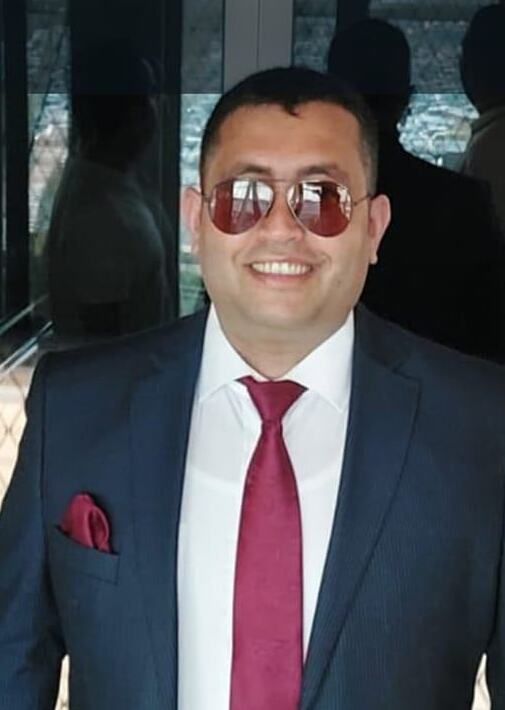
Qabil Ashirov
Read moreThe 2nd Azerbaijan International Investment Forum held in Baku has become an important platform for discussing Azerbaijan’s economic priorities within a broader framework. Held on September 25-26, the forum is being held under the auspices of the President of Azerbaijan, organized by the Ministry of Economy and AZPROMO, with The European House – Ambrosetti as its strategic partner. The theme of this year’s event was also chosen deliberately: “Rebuilding Trust in a Fragmented World: The South Caucasus as a Pillar of Global Connectivity and Investment Stability.”
The forum’s agenda also, to a certain extent, reflects how Azerbaijan views its own economy and its role in the region. The discussion of such topics as the Middle Corridor, energy and the green transition, artificial intelligence and digital transformation, industry, free economic zones, critical raw materials, agribusiness, financial cooperation, tourism and human capital on the same platform shows that the investment agenda has expanded considerably beyond the traditional oil and gas framework.
The inaugural Azerbaijan International Investment Forum, held in 2025, brought together more than 1,000 participants and saw investment agreements worth over $10 billion signed. More than $7 billion of those agreements were related to the non-oil sector. This year’s forum, meanwhile, is focused on concrete projects and longer-term economic partnerships.
President Ilham Aliyev’s address to the forum participants also explains this changing approach. The key themes of his speech are Azerbaijan’s economic diversification, the growth of the non-oil sector, the country’s expanding role in transport and energy connectivity, and turning foreign capital into greater added value for the economy.
The figures presented by President Aliyev highlight the scale of this transformation. Since 2020, real GDP growth in the non-oil sector has averaged 5% annually, while the non-oil industry has grown 1.5-fold and non-oil exports have nearly doubled. As a result, the non-oil sector’s share of GDP reached 72% in 2025.
These figures point to a significant structural change in Azerbaijan’s economic model: preserving the economic and financial opportunities created by the oil and gas sector while enabling other areas of the economy to grow faster.
In his address, the President presents Azerbaijan’s advantages for investors within this broader framework. The country’s geographic location, transport and logistics capabilities, infrastructure in economic zones, tax and customs incentives, public-private partnership mechanisms, and joint investment funds established with partner countries are highlighted as opportunities for foreign capital.
However, one of the most notable points in the address is the emphasis that Azerbaijan’s approach to investment goes beyond simply attracting financial capital.
As President Aliyev said: "Our approach to investment goes beyond attracting capital. We value technology, expertise, innovation and access to new markets, and seek partnerships that create sustainable value for investors, while strengthening the modernisation and competitiveness of Azerbaijan's economy."
This approach is particularly important for Azerbaijan’s next stage of economic development. The impact of foreign investment on the economy is not measured only by the amount of capital invested. The key issue is what technology that capital brings, what production capacity it creates, how much it increases productivity, and how it expands Azerbaijani companies’ access to new markets.
In other words, Azerbaijan’s investment model is entering a more advanced stage: alongside capital itself, the technology, management expertise, knowledge and international market connections behind that capital are also becoming economic assets.
This approach is also linked to Azerbaijan’s goal of deeper integration into global value chains. The President’s address specifically highlights manufacturing, trade, energy, digital transformation, artificial intelligence and advanced technologies, demonstrating the intention to develop Azerbaijan’s economy as part of regional production and service chains.
Another important direction is turning Azerbaijan’s geographic position into an investment opportunity. Azerbaijan is located at the intersection of the East-West and North-South routes. The development of the Middle Corridor, connections linking Central Asia with the South Caucasus and Europe across the Caspian Sea, as well as prospects related to the TRIPP route, could further strengthen the country’s role as a regional logistics hub. The forum’s agenda also includes a dedicated discussion of the Middle Corridor’s trade, industrial and connectivity potential, underscoring its importance on the investment agenda.
Energy is also being approached from a broader perspective. Azerbaijan is now presented not only as a traditional energy supplier, but also as a participant in green energy connectivity.
Highlighting the views of various countries that regard Azerbaijan as a reliable partner, the President of Azerbaijan also outlined the country’s approach to diversifying its economy: "Our vision increasingly extends beyond energy supply to the development of green energy corridors, enabling the integration of renewable energy into regional markets and strengthening connectivity between Azerbaijan, the wider South Caucasus, Central Asia and Europe."
This reflects the expanding geographic scope of Azerbaijan’s energy strategy. Alongside traditional oil and gas infrastructure, bringing renewable energy potential to regional markets could create new investment opportunities. The energy sector is therefore increasingly focused on regional connectivity and the development of new economic value chains alongside energy exports.
At the same time, industry and manufacturing are gaining a greater role in Azerbaijan’s investment agenda. Modern infrastructure, industrial parks, the Alat Free Economic Zone and public-private partnership mechanisms are presented as tools for attracting long-term projects. Critical raw materials and mining are also gaining importance, reflected in the forum’s dedicated session on “Critical Raw Materials and Global Economic Security.”
President Ilham Aliyev’s address also identifies reconstruction and development projects in Azerbaijan’s liberated territories as potential areas for investment, which is important for expanding investment opportunities across different regions of the country.
Against this backdrop, the significance of the 2nd Azerbaijan International Investment Forum should not be measured solely by the value of new documents and agreements to be signed. More important is how Azerbaijan presents itself to international investors.
In this presentation, Azerbaijan is not simply an economy seeking capital. The country is seeking to build a broader economic platform by linking its energy resources, transport infrastructure, geographic position, non-oil sector growth, green energy potential and regional connectivity opportunities.
Another important message of Ilham Aliyev’s address is precisely this:
As the President of Azerbaijan, Ilham Aliyev said: "The emerging peace in the South Caucasus is creating new opportunities for regional cooperation, connectivity, trade and investment, while supporting deeper economic integration and diversification."
As a result, the 2nd Azerbaijan International Investment Forum raises a broader question for Azerbaijan’s next stage of economic development: how much capital will enter the country? This is important, but the bigger question is what added value that capital will create for the Azerbaijani economy.
Technology, productivity, new production facilities, skilled jobs, export opportunities and access to new markets are becoming key factors determining the long-term impact of investment. Azerbaijan’s current investment policy appears to be moving toward this broader objective.
In this sense, the forum in Baku is more than a two-day investment event. It is a platform demonstrating how Azerbaijan seeks to shape its economic future: preserving the strength of the energy sector, expanding the non-oil economy, turning its geographic position into an economic advantage, and bringing foreign capital together with technology, knowledge and access to new markets into the Azerbaijani economy.
Here we are to serve you with news right now. It does not cost much, but worth your attention.
Choose to support open, independent, quality journalism and subscribe on a monthly basis.
By subscribing to our online newspaper, you can have full digital access to all news, analysis, and much more.
You can also follow AzerNEWS on Twitter @AzerNewsAz or Facebook @AzerNewsNewspaper
Thank you!