
Turkey takes step forward to warm ties with Russia
By Aynur Karimova
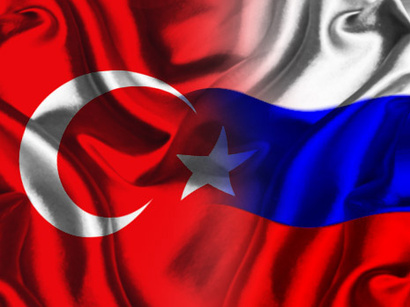
Many expect the recent arrest of Alparslan Celik, who shot at the second Russian pilot who catapulted after the destruction of the Russian Su-24 bomber, as a step towards warming relations with Russia.
The relations between Russia and Turkey have deteriorated consdierably last November over the Su-24 incident, which took a life of a Russian soldier.
Celik, who shot at the second Russian pilot who catapulted after the destruction of the Russian Su-24 bomber, has been arrested in Turkey’s Izmir province, Hurriyet newspaper reported on March 31.
This positive sign was accompanied by Turkish President Recep Tayyip Erdogan's speech in Washington, who voiced the importance of resuming the bilateral cooperation between the two countries.
While speaking at the Brookings Institution as part of his visit to the U.S., Erdogan stressed the importance to resume the Russian-Turkish cooperation to resolve the regional problems, RIA Novosti reported.
"Unfortunately, after November 24 [2015], we are experiencing a difficult period in relations with Russia," he noted. "After the collapse of the Soviet Union, they have successfully developed, but began to deteriorate even before the jet incident due to the policy pursued by the Russian leaders in recent years. Despite the sharp reaction of Moscow, which is difficult for us to understand, regional problems necessitate resuming our cooperation, as the Russian Federation and Turkey are important countries in our geography. We expect that the Russian colleagues will understand this and appreciate this necessity."
Following the jet crisis in December 2015, Russian President Vladimir Putin signed a decree on measures to ensure national security and on special economic measures with regard to Turkey.
Russia also imposed an embargo on visas on Turkish travelers, as well as banned the sale of tour packages and charter flights to Turkey.
The sanctions include a ban on Russian firms importing a range of Turkish foodstuffs, as well as canceling a visa-free regime and restricting Turkish companies from working in certain business sectors in Russia, including tourism.
Meanwhile, Russia plans to adopt a new decision to ban the supply of plant products from Turkey.
Sergey Dankvert, the head of the Russian agriculture watchdog Rosselkhoznadzor, has announced that Rosselkhoznadzor can make a decision on banning the supply of plant products from Turkey within two to three weeks, RIA Novostri reported on March 29.
Since January 1, 2016, Russia banned the import of following fruits and vegetables from Turkey: citrus fruits, grapes, apples, pears, apricots, peaches, including nectarines, plums and sloes, wild strawberries and strawberries, tomatoes, onions and shallots, cauliflower, broccoli, cucumbers and gherkins. The carcass and offal of chickens and turkeys, salt and cloves are also under embargo.
Earlier in March, the Rosselkhoznadzor applied temporary restrictions on import of pepper and pomegranate due to systematic supplies of quarantine products from Turkey to Russia, In February, Rosselkhoznadzor threatened to ban the import of all plant products from Turkey. The agency indicated that the Russian Federation continues to receive contaminated Turkish plant products, and the Turkish authorities do not take steps to comply with the Russian legislation in the field of plant quarantine.
--
Aynur Karimova is AzerNews’ staff journalist, follow her on Twitter: @Aynur_Karimova
Follow us on Twitter @AzerNewsAz
Here we are to serve you with news right now. It does not cost much, but worth your attention.
Choose to support open, independent, quality journalism and subscribe on a monthly basis.
By subscribing to our online newspaper, you can have full digital access to all news, analysis, and much more.
You can also follow AzerNEWS on Twitter @AzerNewsAz or Facebook @AzerNewsNewspaper
Thank you!