
Foreign companies don't want to lose opportunity to do business with Iran: expert
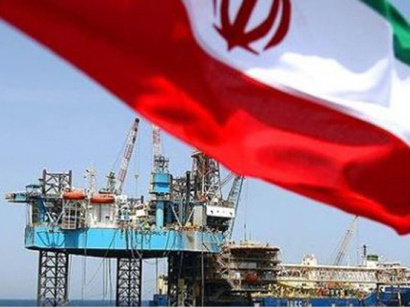
Iran enjoys great oil and gas resources, therefore Western and
indeed all international companies do not want to lose the
opportunity to do business with Iran, professor of economics at
U.S. Northeastern University, Kamran Dadkhah told Trend Agency.
"This is of course, if the country's nuclear issue is resolved and
sanctions are lifted," he added.
Iran and the P5+1 group on Jan. 20 have started to implement an
agreement that was reached on Nov. 24, 2013, regarding Iran's
nuclear program. While Iran has agreed to significantly cut down
its uranium enrichment, while in return it would be getting a
relief from sanctions for a six-month period.
According to BP statistics, Iran holds world's largest gas
reserves, while being 4th in terms of proven oil reserves.
Kamran Dadkhah said that given the uncertainty about a final deal
between P5+1 and Iran, many companies do not want to reach a
definite deal with Iran.
He further said that in addition to the nuclear dispute and
sanctions, the Iranian laws and it business environment are
obstacles to foreign investment in oil and gas sectors.
"To begin with, the buy-back arrangement for investment in oil is
unacceptable to oil companies," he said. "Under this arrangement a
company invests in a field but does not own the field or the
petroleum. But as the production starts the company receives a
portion of the output as compensation for its investment and its
return. The companies would like to own the field or at least the
extracted petroleum."
"It seems that the current oil minister, Mr. Zangeneh is open to
such deals," Dadkhah said.
On Jan. 17, Iran's oil minister Bijan Namdar Zanganeh has formally
invited giant British oil companies, Royal Dutch Shell and British
Petroleum, to take part in the country's oil and gas projects.
On Dec. 4, 2013 Iran named seven Western oil companies (Total of
France, Royal Dutch Shell, Italy's ENI, Norway's Statoil, Britain's
BP and U.S. companies Exxon Mobil and ConocoPhillips) it wants back
in its vast oil and gas fields if international sanctions are
lifted and said it would outline investment terms in April of
2014.
Kamran Dadkhah said that according to the Heritage Foundation, in
terms of economic freedom Iran ranks 173 among 178 countries
ranked.
"Aside from the eight countries not ranked, only Eritrea,
Venezuela, Zimbabwe, Cuba, and North Korea are worse than Iran.
Thus, the oil companies can only be cautiously optimistic," he
said. "They don't want to be left behind so they sent
representatives to Kish energy exhibition held in early
January."
"On the other hand, they won't make any serious commitments until
the sanctions are lifted, terms of participation clarified, and
they are assured of the safety of investment and non-intervention
by the IRGC," he underscored.
On Jan. 20, the EU has agreed to suspend some economic sanctions
against Iran as part of a ground-breaking nuclear deal under which
Tehran has scaled back its nuclear work. The decision included
softening restrictions on trade in petrochemicals and precious
metals and on the provision of insurance for oil shipments, among
other measures.
The same day, Reuters reported citing the U.S. Treasury Department
that the country eased some sanctions on Iran, pausing efforts to
reduce Iranian crude oil exports, as part of a nuclear deal.
The Treasury Department said that now that Iran has fulfilled its
initial nuclear commitments under the deal, "the administration has
taken the necessary steps to pause efforts to further reduce
Iranian crude oil exports."
Here we are to serve you with news right now. It does not cost much, but worth your attention.
Choose to support open, independent, quality journalism and subscribe on a monthly basis.
By subscribing to our online newspaper, you can have full digital access to all news, analysis, and much more.
You can also follow AzerNEWS on Twitter @AzerNewsAz or Facebook @AzerNewsNewspaper
Thank you!