
Fresh row over Turkey-Armenia accord
Turkey has revealed pre-conditions in the top
Armenian court’s decision to approve the 2009 agreement on
normalizing the two countries’ strained relations that are
inconsistent with the document, the Turkish Foreign Ministry said
in a statement.
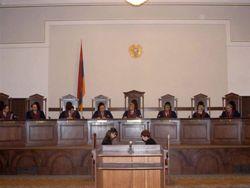
Armenia’s Constitutional Court on January 12 declared the October 2009 accord complied with the main law of the land, saying the ruling was final and could not be challenged. The court then disclosed the decision in brief. Further, on Monday, it was announced in full.
"The decision in question contains pre-conditions and restrictive provisions that run counter to the text and spirit of the protocols," the ministry said. "This decision undermines the gist of negotiations on these protocols as well as their main goals. We can’t accept this approach."
The statement said further that Turkey, in keeping with the commitments it had assumed, remains committed to the provisions of the protocols and expects the same attitude from Armenia.
Following decades of hostility, the Armenian and Turkish governments signed two protocols to establish diplomatic relations and reopen the two countries’ shared border on October 10 in Zurich, in a bid to normalize ties. The documents also envision setting up a commission of historians to research the alleged World War I-era mass killings of Armenians in the Ottoman Empire.
Turkey and Armenia do not have diplomatic relations and the border between the two countries has been closed since 1993. Armenia's occupation of the territories of Azerbaijan, Turkey’s ally, and Yerevan’s claims on the 1915 genocide have been obstacles to normal relations between the two countries.
Though the reconciliation papers have been sent to the Turkish parliament, Ankara has ruled out their approval until progress is made in settling the Armenia-Azerbaijan conflict.
Turkish media reported that according to the Armenian Constitutional Court’s decision, the commitments assumed under the protocols will be allegedly valid after two pre-conditions have been met, namely, the border is re-opened and diplomatic ties have been established. Moreover, the protocols explicitly indicate that the 1915 events that Armenians claim amounted to genocide will not be discussed, but the court’s ruling alleges that the commission of history experts that will be researching the issue aims to achieve international recognition of the alleged genocide.
The issue represents great importance to Turkey, as Ankara was the initator of establishing a commission of historians. Yerevan earlier opposed the proposal, but it was later reflected in the protocols.
Armenians claim Ottoman Turks killed 1.5 million people in the Ottoman Empire in the early 20th century. Armenians residing in the Anatolia region started riots in 1890, which intensified during the war, and fought against the Ottoman army in support of Russia. In an effort to end stand-off, the Ottoman government decided in 1915 to resettle the Armenians to other parts of the country. Armenians claim their forefathers were subjected to "genocide" in the process.
Turkey’s response to the Armenian court’s ruling has angered Armenia. Armenian Foreign Minister Eduard Nalbandian has decided to contact his Turkish counterpart Ahmet Davutoglu to voice Yerevan’s protests. Nalbandian also intends to hold talks with the Turkish minister to clarify which pre-conditions Ankara deems to have been laid out in the ruling and look into the extent of its compliance with the premise of the signed protocols on mending bilateral ties, Armenian media reported.
Eduard Sharmazanov, the spokesman for the Armenian ruling Republic Party, termed the Turkish Foreign Ministry’s statement as an attempt to drag out parliamentary approval of the protocols. He told Novosti Armenii news agency that Turkey is allegedly looking for pretexts to defend its non-constructive stance, which "is making it look ridiculous."
"I would like to inform my Turkish counterparts that the introductory part of Armenia’s Constitution contains a statement on independence and clearly says that Armenia should support recognition of the Armenian genocide on the world stage," claimed Sharmazanov.*
Here we are to serve you with news right now. It does not cost much, but worth your attention.
Choose to support open, independent, quality journalism and subscribe on a monthly basis.
By subscribing to our online newspaper, you can have full digital access to all news, analysis, and much more.
Subscribe
You can also follow AzerNEWS on Twitter @AzerNewsAz or Facebook @AzerNewsNewspaper
Thank you!