
IPC - Iran’s Gordian knot
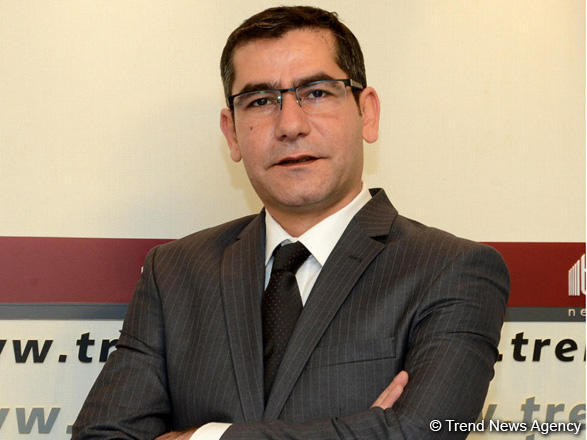
By Dalga Khatinoglu
Since November 2015, when Iran introduced its newly designed oil
and gas agreement model, called Iran Petroleum Contract (IPC), the
country hasn’t issued any tender yet due to domestic challenges and
criticism.
Iran had planned to offer 49 oil and gas projects worth $100
billion (80% of which projected to be attracted from foreign
funding) to foreign companies based on IPC.
Meanwhile, IPC is yet to be approved by the National Supreme
Security Council.
According to IPC, foreign companies can become the projects’
operators and own a percentage of produced oil as far as the field
is active.
IPC is very similar to Iraq’s oil agreements, which pay cash money
per an extracted barrel for foreign company as far as the field
produces oil.
During 2007-2017, Iraq’s oil output increased by 2.5 times to 4.4
million barrels per day (mb/d) thanks to new oil contract model,
while Iran’s output remained the same at 3.85 mb/d.
The most complicated issue for Iran is that about 80 percent of its
active fields are in their second half-life and lose 0.3 mb/d of
their productivity annually. On the other hand, the recovery rate
of Iran’s oil fields is about 25 percent.
Iran needs foreign investment and technology to maintain the
production level or increase it in the coming years.
According to the statistics of International Energy Agency, the
global oil discoveries fell to a record low in 2016 as companies
continued to cut spending. On the other hand, the global oil and
gas investment in 2015 decreased by 25 percent year-in-year to $585
billion.
In this situation, it is very hard for Iran to attract foreign
investment based on old buy-back contract model, though the cost of
oil extraction in Iran is very low.
The problem is not limited to Iran’s oil sector. The country has
invested $70 billion in South Pars gas field and further $20
billion is needed for full completion of the project to increase
the output from the current 500 mcm/d to 720 mcm/d.
However, in 2022, the pressure of reservoir would decrease and the
production volume would fall by 25-30 percent. Iran needs $30
billion more to replace the current 1500-ton platforms with
15,000-20,000-ton ones, as each can carry 2-3 compressors to
compensate 70 percent of production fall.
Iran's another gas project - the Kish field, is far behind
schedule, despite being in development since last decade.
Iran should have invested $2.5 billion in this project to produce
28 mcm/d of gas from the first phase in 2016, but it has invested
only $250 million. The project may become operational by 2022.
Iran’s gross gas output stands at 285 bcm/y and is expected to
increase by 90-100 bcm/yr by 2020. But it will fall after 2020,
while the gas demand growth would be significant in the next five
years.
Iran has no choice but to issue tenders based on IPC to develop its
49 oil and gas fields in coming years to prevent oil and gas output
drop.
---
Follow us on Twitter @AzerNewsAz
Here we are to serve you with news right now. It does not cost much, but worth your attention.
Choose to support open, independent, quality journalism and subscribe on a monthly basis.
By subscribing to our online newspaper, you can have full digital access to all news, analysis, and much more.
You can also follow AzerNEWS on Twitter @AzerNewsAz or Facebook @AzerNewsNewspaper
Thank you!