
Iran plans to triple gas condensate exports in coming years
By Sara Rajabova
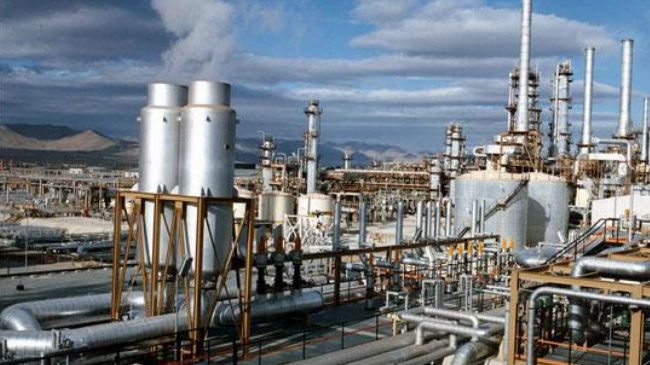
Managing Director of Iranian Oil Terminals Company (IOTC) Seyyed Pirouz Mousavi said the country will roughly triple its gas condensate exports in less than two years, Press TV reported.
He said that in less than two years, Iran will increase its export of gas condensate from the current level of 450,000 barrels per day (bpd) to 1.2 million pbd.
The IOTC chief said Iran currently exports condensate from the southern port of Asalouyeh, adding that the country plans to further boost condensate exports by building new facilities near the city of Kangan in Bushehr Province, south Iran.
Earlier in April it is reported that Iran has exported $9.119 billion worth of various gas condensates from Pars Special Energy Economic Zone in Assaluyeh in the southern province of Bushehr.
Managing director of the customs office of the Pars Special Energy Economic Zone (PSEEZ), Ahmad Pourheidari, said that Iran exported about 12 million tons of various gas condensates during the previous Iranian calendar year, which ended on March 19, 2012.
He noted that the figure indicates a 16-percent increase in weight and a 43-percent increase in value compared with the corresponding figure of an earlier year.
Pourheidari added that light and heavy polyethylene, gas condensates, propane, butane, benzene, and paraxylene were among major products exported during the mentioned time span.
Countries such as China, Japan, UAE, India, Indonesia, the Netherlands, Belgium, Spain, Turkey, Romania, Taiwan, Thailand, Malaysia, Vietnam, and Afghanistan are the main destinations for the exported goods from PSEEZ.
PSEEZ is a special economic zone, which was established in 1998 to utilize South Pars oil and gas resources. Goods can be brought in duty free, but cannot leave the PSEEZ and enter the rest of Iran. This is to encourage construction within and development of the PSEEZ.
The PSEEZ as it is known has been allocated 100 square kilometers of land at Asaluyeh for the various complexes and facilities. The site is a collection of different plants and refineries (known as "phases") and is administered by the PSEEZ agency onsite.
Iran, which sits on the world's second largest natural gas reserves after Russia, has been trying to enhance its gas production by increasing foreign and domestic investments, especially in its South Pars gas field.
Iran's South Pars, divided into 24 phases, is part of a larger gas field shared with Qatar which holds about 14 trillion cubic meters of gas, or about eight percent of the total world reserves, and more than 18 billion barrels of liquefied natural gas resources.
Here we are to serve you with news right now. It does not cost much, but worth your attention.
Choose to support open, independent, quality journalism and subscribe on a monthly basis.
By subscribing to our online newspaper, you can have full digital access to all news, analysis, and much more.
You can also follow AzerNEWS on Twitter @AzerNewsAz or Facebook @AzerNewsNewspaper
Thank you!