
Official unveils electoral law changes
A bill on changes to Azerbaijan's election laws has been submitted
to parliament after over a year-long discussions between officials
and the Council of Europe Venice Commission.
Head of the President's Office department on legislation and legal expertise, Shahin Aliyev, said the government and CE experts had agreed the particularly important addenda and changes to the Election Code.
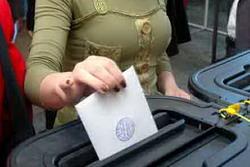
Aliyev said that according to the mostly technical changes, the envelopes used to insert ballot papers into boxes at the polls may be abolished. He said the use of envelopes causes serious problems during the polling, complicates protocols and causes mistakes during their fill-out. Another change proposed for the Election Code concerns exit polls. It stipulates that the Central Election Commission (CEC) will be in charge of accreditation of the organizations conducting such surveys.
The Code is also to be supplemented with an article aiming to prevent illicit interference in the electoral process by officials, legal and natural entities.
As for finger-inking, the procedure is currently carried out by the CEC, but the process will be regulated by legislation after the changes are adopted.
The bill also envisages increasing the limit for election funds, which was proposed at 500,000 manats ($602,000) for would-be lawmakers and 5 million manats ($6.02 million) for presidential hopefuls.
Aliyev said the only issue that remains to be agreed is changing the composition of election commissions.
"I would not call this an unresolved problem because it had been agreed beforehand with the Venice Commission and other international organizations that the state would not meddle in the issue of altering the make-up of the commissions. Last December, all political parties had been invited to a roundtable on changing their format. The government had initially agreed that whatever the parties agree upon will be the basis for introducing changes to the Election Code. But most opposition parties refused to attend the discussions then, and no common ground was struck on the matter."
18 seats in the commissions are currently equally split among pro-government, opposition and independent members, but the opposition claims that independent members tend to favor the government.
Here we are to serve you with news right now. It does not cost much, but worth your attention.
Choose to support open, independent, quality journalism and subscribe on a monthly basis.
By subscribing to our online newspaper, you can have full digital access to all news, analysis, and much more.
Subscribe
You can also follow AzerNEWS on Twitter @AzerNewsAz or Facebook @AzerNewsNewspaper
Thank you!