
New agreement to shed light on fate of missing
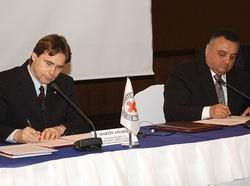
The Azerbaijani government and the International Committee of the
Red Cross (ICRC) on Monday signed an important new agreement to
help clarify the fate of thousands of people who went missing
during the armed conflict with Armenia.
"Fourteen years have gone by since the ceasefire was announced between Armenia and Azerbaijan, yet it remains unclear what happened to over 4,000 people who are still missing," said the head of the ICRC's delegation in Azerbaijan, Martin Amacher. "Without news about the fate of their loved ones, these families will continue to remain stuck between hope and despair. It's a source of endless pain for them."
The Framework Agreement on Missing Persons in Relation to the Upper (Nagorno) Garabagh Conflict will enable detailed data to be collected from the families of missing persons. The aim is to help identify their missing relatives. The data will be collected by trained volunteers from the Red Crescent Society of Azerbaijan and will then be handed over to the authorities to assist with future identifications.
The agreement was signed by Amacher and Eldar Makhmudov, Azerbaijan's Minister of National Security and chairman of the State Commission on Prisoners of War, Hostages and Missing Persons, the body mandated to deal with the issue.
Mahmudov said the agreement envisaged both individual and collective rehabilitation as well as rendering moral and psychological support to the family members of missing persons.
A total of 4,360 Azerbaijani citizens are currently registered as missing. 783 of them have been captured and taken hostage by the Armenian military, according to witness testimonies.
The ICRC has long supported the authorities in ascertaining the fate of people who went missing during the conflict. Over the past few years, the ICRC has strongly encouraged the governments of Armenia and Azerbaijan to take concrete action to obtain information on people who remain unaccounted for, as well as to support their families, who have a right to know what happened to their loved ones, the ICRC said.
"This agreement is a significant step forward in addressing some of the conflict's long-term consequences from a humanitarian perspective," said Susana Lopez, the ICRC's protection coordinator in Azerbaijan. "The next step is to work with the Red Crescent to start gathering the detailed information and to help the authorities in the identification process."
Here we are to serve you with news right now. It does not cost much, but worth your attention.
Choose to support open, independent, quality journalism and subscribe on a monthly basis.
By subscribing to our online newspaper, you can have full digital access to all news, analysis, and much more.
Subscribe
You can also follow AzerNEWS on Twitter @AzerNewsAz or Facebook @AzerNewsNewspaper
Thank you!