
Azerbaijan would crush Armenia in months: Georgian diplomat
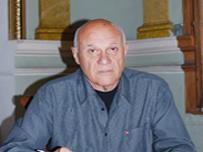
Azerbaijan is capable of crushing Armenia in months to regain its
territories occupied for over a decade, Georgia’s former
presidential aide has said.
Soso Sintsadze, the rector of Georgia’s Diplomacy Academy, who served as political affairs adviser under the country’s three presidents, said in an interview with the Novosti Azerbaijan news agency that he "had not heard of a possibility of regaining the lost land while sitting at the negotiating table".
"To my mind, an example of returning its territory is France, which in 1870 lost Elsas and Lotharingia for almost 50 years as a result of a war with Prussia. Throughout this half a century, French diplomacy had done exhaustive and thorough work to regain those lands. The French realized all too well that they wouldn’t be able to cope with Germany one on one. Likewise, Georgia will never be able to defeat Russia on its own, and Azerbaijan will never be left alone to face Armenia – Russia will never let this happen, though I have no doubt that today Azerbaijan would crush Armenia in a couple of months at the most and regain its territory."
The Georgian diplomat explained that French negotiators therefore carried out subtle work, putting together the resources needed to regain their country’s land. "The intellectual potential of the whole society came into play here. It’s what we all lack today, though Georgia and Azerbaijan’s intellectual potential is high."
Sintsadze said further that the French diplomacy was aimed at internationally isolating Germany. The diplomats were seeking to sever the tight bonds, even kinship ties, between Berlin and Petersburg, i.e., setting cousins Wilhelm and Nikolay against each other. Moreover, then French diplomacy’s tremendous success was that it had managed to reconcile its interests with England and to foster a reconciliation between England and Russia. As a result, France managed to get Russia embroiled in World War I, which Russia did not need at all. Nonetheless, France had to regain Elsas and Lotharingia through military action, having paid a costly price for those territories. But the goal justifies the means, as well as the losses, Sintsadze said.
"Thus, I believe that our countries should proceed based on France’s experience, while adjusting to the fact that it is the 21st century now, and it is no longer necessary to wage a war to liberate territory," the analyst said.
Sintsadze said Armenians presently have a great chance to settle the Garabagh conflict: they can liberate occupied Azerbaijani districts stage by stage in exchange of holding a referendum ten years later in Upper Garabagh proper, which will be predominantly populated by Armenians.
"At first glance, the problem will be solved in favor of joining Armenia. But this is not that obvious, given that over those ten years Azerbaijan may create such living conditions for Garabagh Armenians that they won’t even be willing to turn to Yerevan and will themselves seek to be part of Azerbaijan with autonomy rights. In my view, this is the most optimal way out of the situation that has shaped up."
Azerbaijan and Armenia have been locked in conflict for nearly two decades. Though the separatist regime in Upper Garabagh declared so-called independence at the time of the Soviet collapse in 1991, this "independence", which blatantly tramples on international law, has not been recognized by the world community. Armenia continues to occupy Upper Garabagh and seven other Azerbaijani districts in defiance of international law. OSCE-brokered peace talks have so far been fruitless and refugees remain stranded. Baku says the occupied districts must be freed and IDPs returned home, and only after that could the status of Upper Garabagh be determined within Azerbaijan’s territorial integrity.*
Here we are to serve you with news right now. It does not cost much, but worth your attention.
Choose to support open, independent, quality journalism and subscribe on a monthly basis.
By subscribing to our online newspaper, you can have full digital access to all news, analysis, and much more.
Subscribe
You can also follow AzerNEWS on Twitter @AzerNewsAz or Facebook @AzerNewsNewspaper
Thank you!