
Turkey’s Islamic banks lured to ringgit sukuk for cost savings
By Bloomberg
Turkey’s Islamic banks are turning to Malaysia to cut costs, as stubbornly high interest rates and slow trading hamper development of their domestic sukuk market.
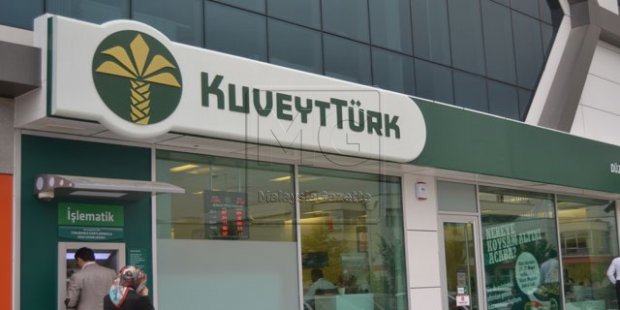
Kuveyt Turk Katilim Bankasi AS, the nation’s largest Shariah-compliant lender by assets, plans to offer a five-year bond this week via private placement from a 2 billion ringgit ($539 million) sukuk program, according to people familiar. Turkiye Finans Katilim Bankasi AS was the first Turkish bank to sell the debt in Malaysia last year, issuing five-year securities at a coupon of 6 percent. It paid 15.2 percent for a 2017 lira-denominated sukuk.
President Recep Tayyip Erdogan faces a challenge in spurring Islamic banking growth amid the third-highest funding costs of 19 emerging markets tracked by Bloomberg and a currency that’s slumped 10 percent in 2015. Shariah-compliant assets accounted for 5 percent of Turkey’s industry total last year, below the 26 percent in Malaysia. The Participation Banks Association of Turkey representing Islamic lenders sees the share rising to 15 percent by 2023.
“It’s about pricing,” Cagdas Dogan, a bank analyst at BGC Partners Inc. in Istanbul, said by e-mail Monday. “There seems to be a mismatch between supply and demand for sukuk products, pushing costs down to more attractive levels compared to conventional bonds” globally, he said.
Ahmet Albayrak, head of Kuveyt Turk’s international banking division in Istanbul, said by e-mail that the lender aimed to diversify its funding and expand its investor base, and the cost was more attractive than dollar sukuk, even after ringgit swap costs.
“The main motivation is diversification,” he said.
Tax Incentives
Turkiye Finans Katilim Bankasi is planning another offering of Islamic notes, more than two years after the government sold its first international sukuk. Muslims account for more than 99 percent of the nation’s 82 million population.
One-year deposits in Turkey pay 9.6 percent, trailing only the 46 percent in Argentina and Russia’s 14.4 percent, the highest among the emerging markets tracked.
Malaysia pioneered Islamic finance in the 1980s and doesn’t charge taxes on capital gains or those on the underlying assets used to back the sukuk to comply with Islam’s ban on interest. Turkey has 102.5 billion liras ($39.3 billion) of banking assets complying with Shariah law out of the total 1.93 trillion liras, Turkish Participation Banks Association data show.
Kuveyt Turk Katilim Bankasi’s sukuk was assigned an AA3 rating from RAM Rating Services Bhd., the fourth-highest investment grade. Average yields on Malaysia’s five-year corporate conventional bonds are 4.84 percent, a central bank index shows.
Turkiye Finans
Turkiye Finans Katilim Bankasi, which is 66.3 percent-owned by Saudi Arabia’s largest lender National Commercial Bank, was also assigned AA3 by RAM. It sold 800 million ringgit of five- year sukuk at a yield of 6 percent in June and 150 million ringgit of similar-maturity securities at 5.9 percent in February via its unit TF Varlik Kiralama AS. The 2019 notes yielded 5.75 percent when last traded on March 25 and the 2020 securities were paying 5.70 percent, according to prices compiled by Bursa Malaysia.
There’s no reason why Turkey’s ambition to develop its sukuk market cannot co-exist with plans by their companies to tap funding in Kuala Lumpur, Thomas Meow, head of credit markets and banking in Malaysia’s capital at CIMB Group Holdings Bhd., last year’s biggest sukuk arranger, said by e-mail March 26.
International Issuers
“The successful establishment of Turkiye Finans’ ringgit sukuk program caught the attention of Turkish companies,” Leon Koay, managing director and head of financial markets in Kuala Lumpur at Standard Chartered Bank Malaysia Bhd., said by e-mail March 27. “As investors become more familiar with Turkish credits, and provided market conditions continue to be favorable, we believe there will more Turkish companies tapping the ringgit market.”
Overseas issuers are providing the market with a welcome boost. Sales of corporate sukuk were 8.3 billion ringgit in 2015, the weakest start to a year since 2010, data compiled by Bloomberg show. Offerings totaled 64.7 billion ringgit in 2014 and 63.8 billion ringgit the previous year.
The Bloomberg-AIBIM Bursa Malaysia Corporate Sukuk Index, a benchmark that tracks the most-traded local-currency notes, climbed 1.2 percent this year and reached a record on March 26. It rose 3.2 percent in 2014.
“Tapping the Malaysian markets allows Turkish companies to widen their sources of Islamic funds,” said Kuala Lumpur-based Meow at CIMB Group. “We expect further interest from corporates and institutions from Turkey.”
Here we are to serve you with news right now. It does not cost much, but worth your attention.
Choose to support open, independent, quality journalism and subscribe on a monthly basis.
By subscribing to our online newspaper, you can have full digital access to all news, analysis, and much more.
You can also follow AzerNEWS on Twitter @AzerNewsAz or Facebook @AzerNewsNewspaper
Thank you!