
Yen climbs with Asian stocks as oil near 2010 levels before OPEC
Bloomberg
The yen headed for its first back- to-back gain this month and Australian stocks led Asia’s regional index higher. Crude oil traded near the lowest level since 2010 on concern OPEC members won’t cut output when they meet this week.
The yen strengthened 0.2 percent by 3:22 p.m. in Tokyo, while other currencies in the region gained against the dollar. The MSCI Asia Pacific Index rose 0.2 percent, led by a rebound in Australian equities after the local dollar hit a four-year low. Standard & Poor’s 500 Index futures added 0.1 percent after the gauge retreated from a record high. West Texas Intermediate crude was little changed at $74.13 a barrel
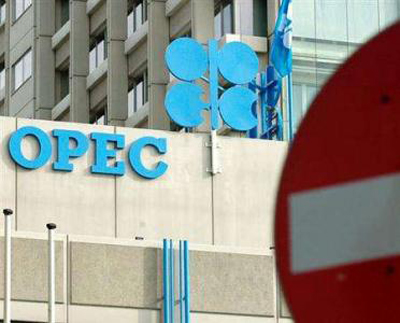
The Organization of Petroleum Exporting Countries meets in Vienna tomorrow, after Venezuela, Saudi Arabia, Mexico and Russia decided not to reduce supplies. Japanese small business confidence rose more than estimated, data today showed, while the U.K. updates on gross domestic product. U.S. durable goods are due after a surprise drop in consumer confidence offset data showing the economy capped its strongest six months in a decade last quarter.
“There’s no initial driver to lift the dollar versus the yen in the short run,” said Shinji Kureda, Tokyo-based head of FX trading at Sumitomo Mitsui Banking Corp. “With the U.S. holidays this week, trading could be somewhat subdued. Month-end flows seem to be favoring USD sales.”
The yen traded at 117.72 per dollar and was stronger against 14 of 16 major peers. Japan’s currency strengthened as much as 0.5 percent yesterday after sliding to 118.98 Nov. 20, its weakest level since August 2007.
‘Mr. Yen’
The 14 percent plunge in Japan’s currency since mid-year has about run its course, according to the former Ministry of Finance official known as “Mr. Yen.” Eisuke Sakakibara, who got his nickname in the 1990s for his influence over the exchange rate, said the yen is unlikely to match its low of 124.14 per dollar on the eve of the financial crisis in June 2007.
The Bloomberg Dollar Spot Index, which tracks the greenback against 10 major peers, was little changed today after retreating 0.2 percent in New York.
China’s yuan traded in Hong Kong rose as much as 0.2 percent, the most in two weeks, to 6.1380 per dollar as the central bank set the reference rate at an eight-month high after a report said the exchange rate will remain stable.
The People’s Bank of China strengthened the fixing by 0.06 percent to 6.1354 per dollar, the strongest level since March 19. The yuan is unlikely to enter a depreciation trend because it could intensify trade friction and lead to capital outflows, Financial News reported today, without saying where it got the information. Financial News is a publication of the nation’s central bank.
Aussie Low
China’s Shanghai Composite Index advanced 0.8 percent and is heading for its highest close since Aug. 26, 2011. The gauge is up 4.3 percent this week after China’s central bank cut interest rates for the first time since 2012.
China’s market capitalization has increased 29 percent this year to $4.3 trillion as of Nov. 24, versus a 3.3 percent drop in Japan to $4.5 trillion. China was briefly the second-biggest market, behind the U.S., in March 2011 after an earthquake in Japan sent shares tumbling in Tokyo.
Hong Kong’s Hang Seng Index climbed 0.3 percent and a gauge of Chinese stocks in the city added 0.6 percent.
Australia’s S&P/ASX 200 Index climbed 1.2 percent, with all 10 industry groups advancing. The so-called Aussie fell to 85.14 U.S. cents yesterday, the lowest level since July 2010. The currency was 0.3 percent stronger today.
The MSCI Asia Pacific Index is rising a fourth straight day, with seven of 10 groups advancing. A subindex of energy producers fell 0.6 percent for the biggest drop on the gauge.
OPEC Outlook
Venezuelan foreign minister Rafael Ramirez said all parties at yesterday’s talks were worried about oil prices, with WTI and Brent crude in bear markets as the fastest rate of U.S. production in more than 30 years outstrips demand. New York oil touched $73.25 on Nov. 14, the lowest level since September 2010.
“Some investors could be concerned about deflation with the fall in oil prices as the global economy looks rather negative at this time,” Hong Sung Ki, an analyst at Samsung Futures Co., said by phone from Seoul. “It could also be positive as manufacturing costs may be cut with declining prices in the longer term.”
Brent was little changed at $78.27 a barrel in London after dropping 32 percent from a June 19 closing high of $115.06 through yesterday. OPEC is unlikely to make a reduction large enough to remove market oversupply at the meeting, Citigroup Inc. analysts wrote in a report. A coordinated cut in oil production is inevitable, according to Deutsche Bank AG.
Gold slipped 0.1 percent to $1,200.38 per ounce, while silver for immediate delivery retreated 0.3 percent to $16.6425.
Here we are to serve you with news right now. It does not cost much, but worth your attention.
Choose to support open, independent, quality journalism and subscribe on a monthly basis.
By subscribing to our online newspaper, you can have full digital access to all news, analysis, and much more.
You can also follow AzerNEWS on Twitter @AzerNewsAz or Facebook @AzerNewsNewspaper
Thank you!