
The Brexit Muddle
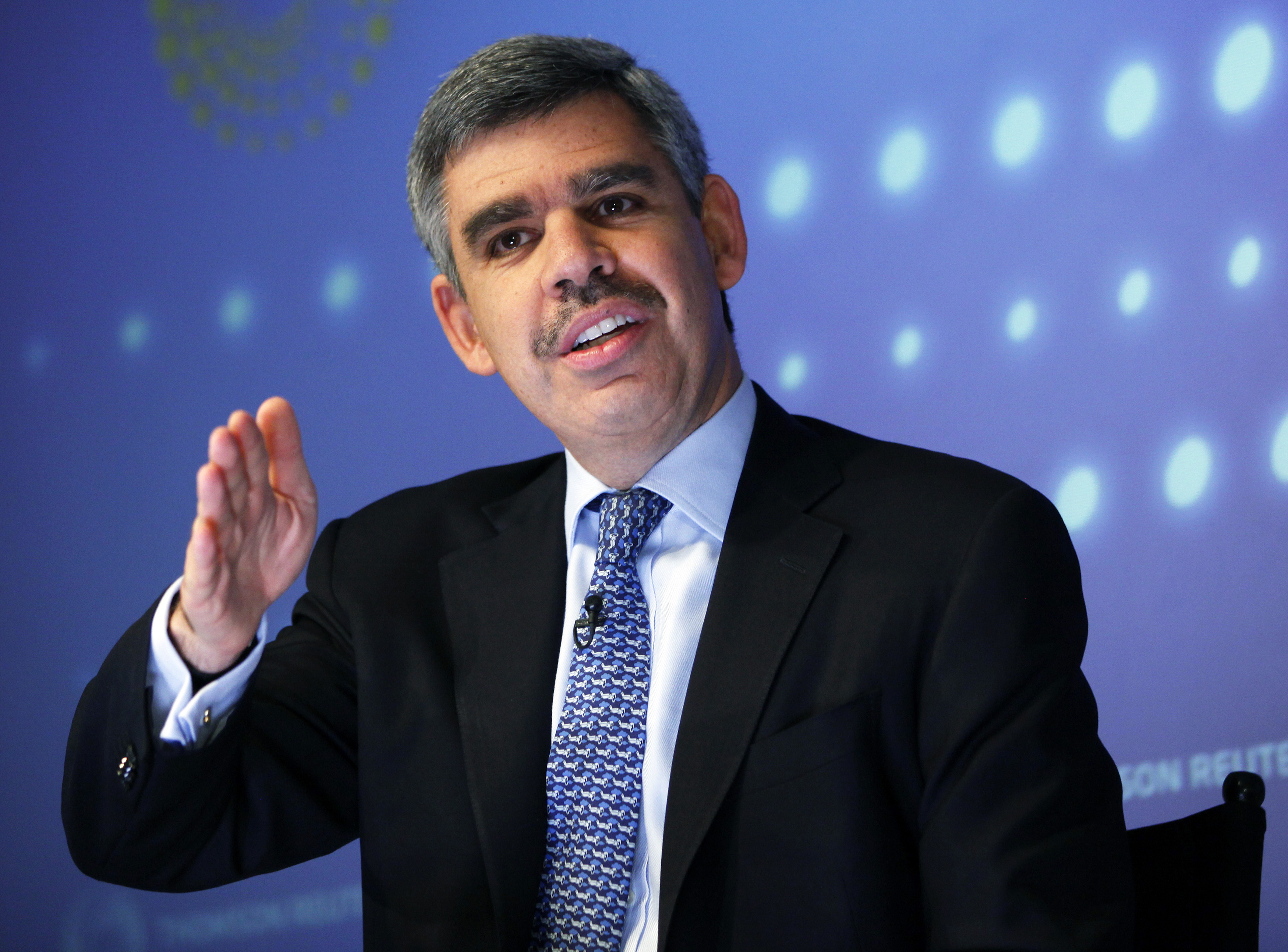
By Mohamed A. El-Erian
During a recent visit to the United Kingdom, I was struck by the
extent to which the question of whether the country should remain
in the European Union is dominating the media, boardroom
discussions, and dinner conversations. While slogans and sound
bites capture most of the attention, deeper issues in play leave
the outcome of the June 23 referendum subject to a high degree of
uncertainty – so much so that a single event could end up hijacking
the decision.
Of course, the most cited arguments on both sides tend to be the
most reductive. On one side are those who caution that departure
from the EU would cause trade to collapse, discourage investment,
push the UK into recession, and trigger the demise of the City of
London as a global financial center. They point to the pound’s
recent depreciation as a leading indicator of the financial
instability that would accompany a British exit (or “Brexit”).
On the other side are those who argue that Brexit would unshackle
the UK from the grip of EU bureaucracy and stop the flow of British
taxpayer funds to other countries. The pro-Brexit camp also
positions itself as fighting to protect Britain from an
uncontrollable influx of immigrants, from imported terrorism, and
from laws formulated by foreigners who lack sufficient
understanding and appreciation of British culture.
In a noisy and rough campaign – one that has already divided the
Conservatives and contributed to the unease within Labour over the
party’s leadership – the appeal of such simplistic arguments is
obvious. But Brexit is far more complex than the sound bites
suggest. And, in fact, many of the underlying issues that should
shape the referendum’s outcome are still subject to a high degree
of uncertainty. Not only does that explain the inability of the
British intellegentsia to reach consensus about the issue; it also
leaves the Brexit question at the mercy of last-minute
developments.
At the most fundamental level, Britain’s interest in the EU has
centered on its status as a kind of supercharged free-trade area
and an enabler of a “common passport” for financial services. But
while Britons support the free movement of goods and services, they
are not particularly keen on the free movement of labor. And they
have little interest in “ever-closer union,” characterized by
comprehensive political and economic integration.
This contrasts sharply with the vision upheld by many other EU
members, including core countries like France and Germany, which
view the EU’s single market as a stepping stone toward deeper
integration, not an end in itself. Traumatized by past wars and
supportive of regionalization as a way to succeed in a fluid global
economy, ever-closer union seems like the key to ensuring continued
peace and prosperity.
But the situation is far more complicated than just reconciling two
clear but competing visions. Given widespread disagreement –
including, as the referendum makes plain, within the UK itself –
over what the “right” arrangement should look like, finding a
solution that works for everyone seems all but impossible.
While British Prime Minister David Cameron has managed, in tricky
negotiations, to secure concessions from his fellow European
leaders regarding what would happen if the UK stayed in the EU,
nobody really knows what would happen if British citizens vote to
leave. Without knowing what specific regional arrangements would
follow Brexit, the pro-EU camp cannot make a decisive economic and
financial case for remaining. After all, following what admittedly
would be a period of dislocation, the UK could end up with some
type of association arrangement that preserves some of its current
privileges, thereby limiting longer-term disruption.
The anti-EU camp is no better off. It is difficult to prove that
membership in the EU – which opponents portray as meddlesome and
disruptive – has made Britain materially worse off. And the
ever-closer union that Brexit advocates so adamantly oppose is far
from a sure thing. In fact, the EU has been struggling to tackle
collectively the challenges it faces – in particular, the refugee
crisis, which has already strained passport-free travel within the
Schengen Area (one of the most visible, celebrated, and appreciated
achievements of European integration).
In the face of so much uncertainty, British voters would ultimately
have to make their decision on the basis of pragmatic, not
strategic, considerations. And perhaps the most pragmatic choice
would be to remain in the EU, at least for now, thereby preserving
the option of changing their collective mind later, should new
information warrant it.
Some are inclined to push harder. They believe that a better
version of this de facto “muddled middle” can be achieved through a
game of “chicken.” The UK votes to leave now, in the hopes that a
panicked EU would not only grant further concessions, but also
alter its own vision of ever-closer union. With this high-risk
strategy, the UK could end up decisively reshaping the EU according
to its preferences. But, given the other challenges currently
facing the EU, this is not a likely outcome.
That is why remaining in the EU would be Britain’s best bet. Such
an approach would enable the UK to avoid the near-certainty of
short-term disruptions, bank the concessions that Cameron has
already secured, and keep their future options open, particularly
as the EU itself evolves. But that does not mean it is not a
gamble. After all, pragmatism does not always bring about the
desired outcome.
Without a solid strategic vision, British citizens could end up
ignoring analytical pragmatism, and instead decide how to vote in
the referendum in response to a sudden event. Given the horrific
terrorist attacks in Paris in November and in Brussels last week,
one must not ignore the possibility that the deplorable actions of
disruptive non-state actors could become the pivotal factor
determining the outcome of a referendum on the historic
interactions of nation-states. Should this awful possibility
materialize, it would be a tragedy in more ways than one.
Mohamed A. El-Erian, Chief Economic Adviser at Allianz, is Chairman
of US President Barack Obama’s Global Development Council and
author of The Only Game in Town: Central Banks, Instability, and
Avoiding the Next Collapse.
Copyright: Project Syndicate:The Brexit Muddle
---
Follow us on Twitter @AzerNewsAz
Here we are to serve you with news right now. It does not cost much, but worth your attention.
Choose to support open, independent, quality journalism and subscribe on a monthly basis.
By subscribing to our online newspaper, you can have full digital access to all news, analysis, and much more.
You can also follow AzerNEWS on Twitter @AzerNewsAz or Facebook @AzerNewsNewspaper
Thank you!