
Iran and Azerbaijan, two regional transportation hubs
By Mohsen Pak-Aein
Iran's Ambassador to Republic of Azerbaijan
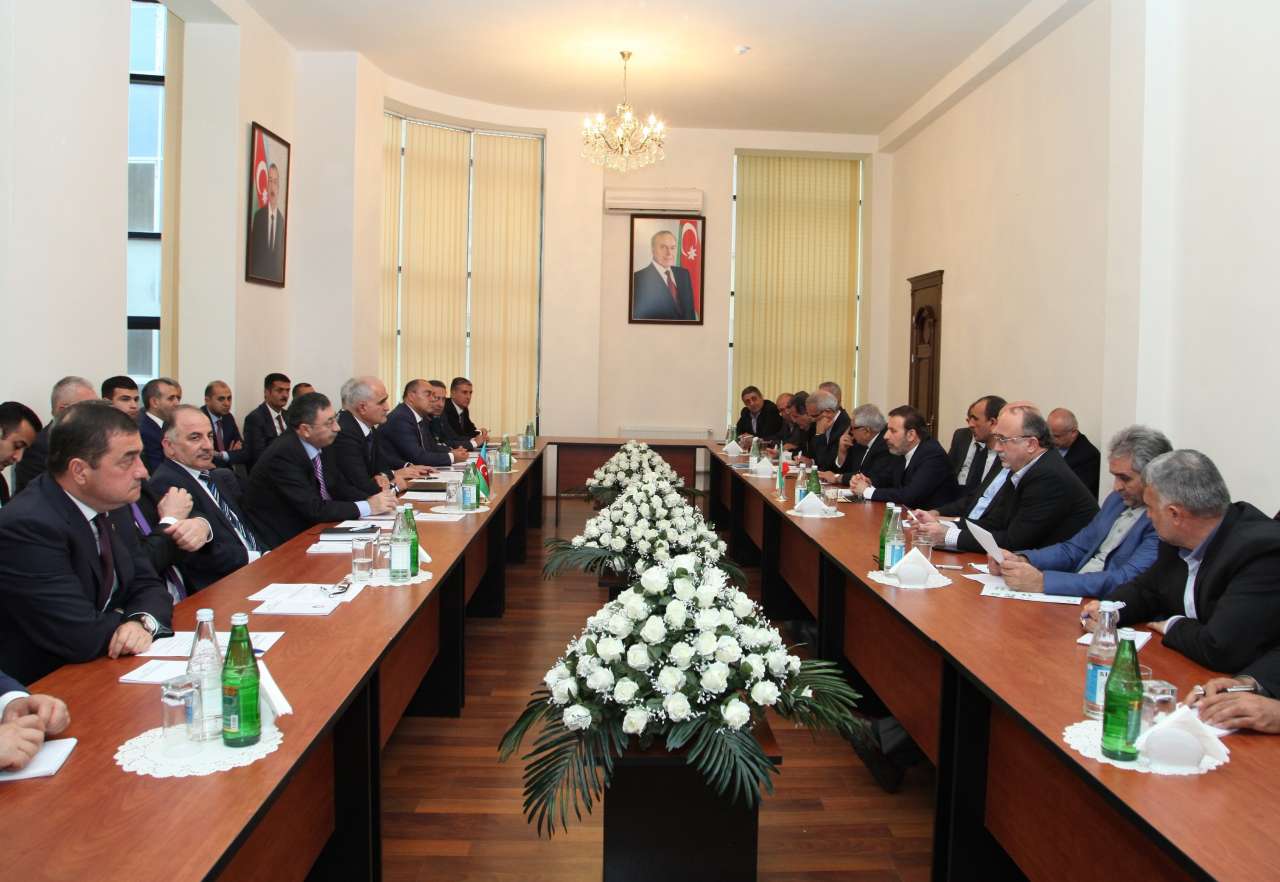
On Saturday, October 10, a memorandum of understanding for connecting the railroad of the Republic of Azerbaijan to Iran was signed in Astara-Astara meeting, as a result of which the project for connecting the railroad of the Republic of Azerbaijan to Iran got underway in a bid to revive the North-South Corridor, or the same ancient Silk Road.
The document was signed in presence of Iran's Minister of Information and Communications Technology Mahmoud Vaezi, and the Republic of Azerbaijan's Minister of Economy and Industry Shahin Mustafayev, after two days of intense negotiations. The signatories were head of the Republic of Azerbaijan's railroad company and the managing director of the Islamic Republic of Iran Railways.
At present, oil and gas producing countries seek to diversify their economies in order to reduce dependence on oil revenues. By pursuing this goal and in view of their geographical situation, Iran and the Republic of Azerbaijan have made turning into active players in the field of regional transportation, one of their major goals. At the moment, Iran and Azerbaijan must invest in big transportation projects before a new stage of the global economic crisis begins, and in an optimal situation, play the role of transportation hubs for other regional countries. The political will of the two countries for the development of their relations in addition to the positive trend that exists in bilateral relations are important advantages, which provide Iran and the Republic of Azerbaijan with great potential in order to pursue their joint economic goals in the field of transit.
Historical records show that implementing large-scale projects for the establishment of a diverse transportation infrastructure started at least 15 years ago in the Republic of Azerbaijan. As a gateway to Caucasus, this country has been initiator and a partner to Baku-Tbilisi-Kars railway; is going through final stage of building an international commercial port in the municipality of Alat; has made operational a new terminal at Heydar Aliyev International Airport; has launched the region's largest ferry terminal in the newly built international seaport of Yeni Baki; has built or repaired about 11,000 kilometers of highways and 300 bridges over the past decade; has commissioned six modern airports; and has allocated more than USD 20 billion to be invested in turning the country into a key hub for regional transportation.
Iran, on the other hand, is like a geographical bridge connecting Russia and Caucasus to free waters of the Persian Gulf and the Sea of Oman, and the Iran route is the safest, the closest and the most economic transportation route for neighboring countries. Launching the Astara-Rasht railroad and transportation of commodities through the Persian Gulf and the Sea of Oman at suitable tariff rates, facilitation of formalities related to issuing transit visas, and speeding up the process of cargo transport will help Azerbaijan to really turn into an active player in the field of transportation and also get close to its objective for reducing dependence on oil and gas revenues. The Republic of Azerbaijan, being located at the junction of Europe and Asia, can provide grounds for the transport of goods and passengers from Asia to Europe and vice versa through Rasht-Astara railroad, and can also connect Iran to Russia via railroad.
The document, which was signed in Astara, is to be implemented in two stages, according to which Azerbaijan's national rail network will continue up to the border with Iran. After that, a terminal with the capacity to handle five million tons of goods will be built in Iran's Astara city in addition to a bridge crossing the two countries’ border river with a 50-percent share for each country in its construction. These measures are planned to be taken over the next year in which case, they will increase the volume of trade exchanges between Iran and the Republic of Azerbaijan by four times its current state. The Islamic Republic of Iran has also continued to complete Rasht-Astara railroad on its soil at a suitable speed in order to connect it to the railroad network in the Republic of Azerbaijan. In fact, by taking these measures, the two countries will create a combination of railroad, port facilities and road transportation for shipment of goods and this development will also provide an opportunity for transfer of goods to Azerbaijan and Russia through the Persian Gulf and therefrom to Europe and the Black Sea region through railroad.
Other instances, which were agreed upon during Astara negotiations, were construction of a new bridge in addition to the existing road transport bridge, activation of Astara customs office, increasing the speed of customs operations through electronic means, and launching a plan according to which border customs offices will work around the clock.
The two countries believe that Rasht-Astara railroad, as the missing link of north-south rail corridor, is one of the transit routes, which can be used to transfer goods and also to connect Russia and the countries in Caucasus to the Indian Ocean and the littoral countries of the Persian Gulf. This railroad is among the most important rail lines under construction in the country, which will connect the countries in Caucasus, including the Republic of Azerbaijan and Russia, to southern Iranian port cities and from there to the Indian Ocean and the littoral states of the Persian Gulf. Construction of this railroad and taking advantage of it will create new jobs, reduce transportation costs, prevent production of environmental pollutants, lead to growth of regional transportation, reduce fuel consumption and also decrease motor traffic and resultant accidents while facilitating transportation. This rail route will continue north to connect to Anzali Port city and Astara, on the Iranian side, before going on toward the Republic of Azerbaijan and Eastern Europe, which makes it a secure route for transfer of passengers and goods in the region, while providing both countries with a very good source of revenue.
On the whole, the contents of the memorandum of understanding signed in Astara aim to meet the national interests of the two countries and can be construed within framework of win-win diplomacy. Let’s hope that through perseverance of the two countries this important transportation link will be connected to the North-South Corridor as soon as possible, helping both countries to meet their national interests.
iranreview.org
---
Follow us on Twitter @AzerNewsAz
Here we are to serve you with news right now. It does not cost much, but worth your attention.
Choose to support open, independent, quality journalism and subscribe on a monthly basis.
By subscribing to our online newspaper, you can have full digital access to all news, analysis, and much more.
You can also follow AzerNEWS on Twitter @AzerNewsAz or Facebook @AzerNewsNewspaper
Thank you!