
Inequality disaster prevention
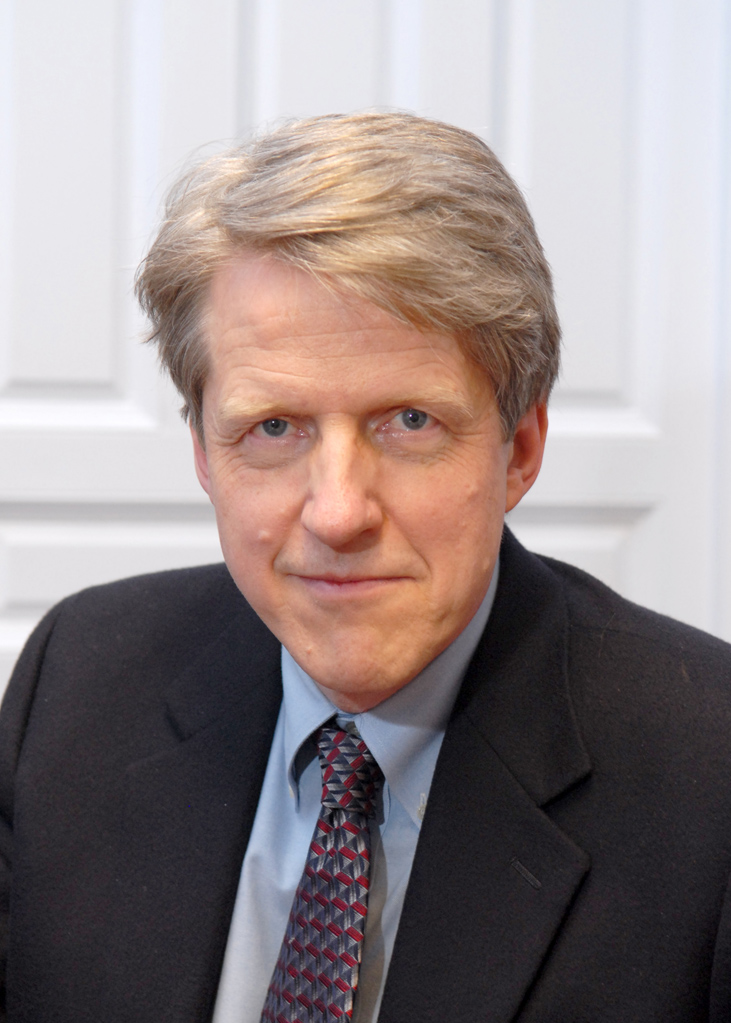
By Robert J. Shiller
A 2013 Nobel laureate in economics and Professor of Economics at
Yale University, co-author, with George Akerlof, of Animal Spirits:
How Human Psychology Drives the Economy and Why It Matters for
Global Capitalism.
Thomas Piketty's impressive and much-discussed book Capital in
the Twenty-First Century has brought considerable attention to the
problem of rising economic inequality. But it is not strong on
solutions. As Piketty admits, his proposal - a progressive global
tax on capital (or wealth) - "would require a very high and no
doubt unrealistic level of international cooperation."
We should not be focusing on quick solutions. The really important
concern for policymakers everywhere is to prevent disasters - that
is, the outlier events that matter the most. And, because
inequality tends to change slowly, any disaster probably lies
decades in the future.
That disaster - a return to levels of inequality not seen since the
late nineteenth to early twentieth century - is amply described in
Piketty's book. In this scenario, a tiny minority becomes
super-rich - not, for the most part, because they are smarter or
work harder than everyone else, but because fundamental economic
forces capriciously redistribute incomes.
In The New Financial Order: Risk in the 21st Century, I proposed
"inequality insurance" as a way to avert disaster. Despite the
similarity of their titles, my book is very different from
Piketty's. Mine openly advocates innovative scientific finance and
insurance, both private and public, to reduce inequality, by
quantitatively managing all of the risks that contribute to it. And
I am more optimistic about my plan to prevent disastrous inequality
than Piketty is about his.
Inequality insurance would require governments to establish very
long-term plans to make income-tax rates automatically higher for
high-income people in the future if inequality worsens
significantly, with no change in taxes otherwise. I called it
inequality insurance because, like any insurance policy, it
addresses risks beforehand. Just as one must buy fire insurance
before, not after, one's house burns down, we have to deal with the
risk of inequality before it becomes much worse and creates a
powerful new class of entitled rich people who use their power to
consolidate their gains.
In 2006, I co-authored a draft paper with Leonard Burman and
Jeffrey Rohaly of the Urban Institute and Brookings Institution's
Tax Policy Center that analyzed variations on such a plan. In 2011,
Ian Ayres and Aaron Edlin proposed a similar idea.
Underlying such plans is the assumption that some substantial
degree of inequality is economically healthy. The prospect of
becoming rich clearly drives many people to work hard. But massive
inequality is intolerable.
Of course, there is no guarantee that an inequality-insurance plan
will actually be carried out by governments. But they are more
likely to follow such plans if they are already legislated and take
effect gradually, according to a formula known in advance, rather
than suddenly in some revolutionary departure from past
practice.
To be truly effective, increases in wealth taxes - which fall more
on highly mobile retired or other affluent people - would have to
include a global component; otherwise, the rich would simply
emigrate to whichever country has the lowest tax rates. And the
unpopularity of wealth taxes has impeded global cooperation.
Finland had a wealth tax but dropped it. So did Austria, Denmark,
Germany, Sweden, and Spain.
Increasing wealth taxes now, as Piketty proposes, would strike many
people as unfair, because it would amount to imposing a retroactive
levy on the work carried out to accumulate that wealth in the past
- a change to the rules of the game, and its outcome, after the
game is over. Older people who worked hard to accumulate wealth
over the course of their lifetime would be taxed on their frugality
to benefit people who didn't even try to save. If they had been
told that the tax was coming, maybe they would not have saved so
much; maybe they would have paid the income tax and consumed the
rest, like everybody else.
Moreover, once the reality of a Piketty-type wealth tax was
understood, the rich might procreate more, because wealth in the
form of children cannot be taxed away - which is why it would
probably be better to tax income and maintain a deduction for
philanthropic contributions outside of the family. And, if there
are to be wealth taxes, instituting them now to take effect only in
the future - and only if inequality becomes much worse - would
preempt the perception that the rules had been changed after the
game had ended.
The advantage of income-tax increases is that they could be based
not just on current income, but on some average of income over the
course of years, and could allow deductions for investments, thus
sharing some features with wealth taxes without penalizing those
who saved more to accumulate more wealth. Moreover, a long-term
plan legislated by one or a few countries today, before any
substantial impact on actual tax payments occurs, could help to
promote an international dialogue about appropriate future policy
toward inequality. That would create room for a more uniform tax
response among countries, thus reducing the ability of the
super-rich to evade taxation by switching location.
Piketty's book makes an invaluable contribution to our
understanding of the dynamics of contemporary inequality. He has
identified a serious risk to our society. Policymakers have a
responsibility to implement a workable way to insure against
it.
Copyright: Project Syndicate
Here we are to serve you with news right now. It does not cost much, but worth your attention.
Choose to support open, independent, quality journalism and subscribe on a monthly basis.
By subscribing to our online newspaper, you can have full digital access to all news, analysis, and much more.
You can also follow AzerNEWS on Twitter @AzerNewsAz or Facebook @AzerNewsNewspaper
Thank you!