
From poverty to empowerment
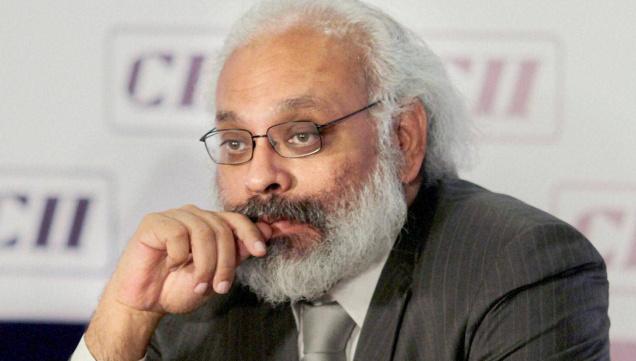
By Subir Gokarn
Former deputy governor of the Reserve Bank of India, is Director of Research at Brookings India. Anu Madgavkar is a senior fellow at the McKinsey Global Institute.
As India gears up for its general election next month, it has
some cause to celebrate: extreme poverty is finally in retreat. In
2012 - two decades after the government launched a series of
economic reforms aimed at opening up the economy - the official
poverty rate had reached 22%, less than half the rate in 1994. But
it is time for India to raise its aspirations. Escaping abject
destitution, though an important milestone, is not the same as
achieving a decent standard of living and sense of economic
security. To that end, there is still much to be done.
Indeed, the extent of the task is reflected in a new McKinsey
Global Institute report, "From Poverty to Empowerment," which uses
an innovative analytical framework, the "empowerment line," to
estimate the cost to the average citizen of fulfilling eight basic
needs: food, energy, housing, potable water, sanitation, health
care, education, and social security. According to this metric, 56%
of Indians in 2012 "lacked the means to meet essential needs."
Remarkably, this number is more than 2.5 times larger than the
number of people still living below the poverty line in India. Even
more striking is that the "empowerment gap" - that is, the
additional consumption required to bring these 680 million people
to the empowerment line - is seven times larger than the cost of
eliminating extreme poverty.
Furthermore, while the empowerment line is a measure of individual
consumption, a household's ability or willingness to spend is not
sufficient to guarantee a decent life. People also need access to
community-level infrastructure like health clinics, schools, power
grids, and sanitation systems. But the average Indian household
lacks access to 46% of basic services, with the severity of the
gaps varying widely across districts.
What can India's government do to provide its citizens with the
dignity, comfort, and security that they deserve? Given that
roughly half of current public spending on social programs fails to
deliver better outcomes for the poor, simply directing more funds
through existing channels is unlikely to have much of an
impact.
Instead, policymakers should focus on supporting employment and
productivity gains - historically the most potent weapons against
poverty. Of course, this will not be easy. India's economy has
slowed in recent years. If economic growth remains on its current
trajectory, with no major reforms, more than one-third of the
population will remain below the empowerment line in 2022, with 12%
still trapped in extreme poverty.
To avoid such an outcome, India's government should pursue a set of
bold reforms that boost growth by encouraging businesses to invest,
scale up, and hire. The reform agenda should be based on four key
priorities:
The addition of 115 million non-agricultural jobs over the next
decade to absorb the growing pool of workers and accelerate the
shift toward more modern industries.
A doubling of agricultural productivity growth, in order to raise
India's farm yields to the levels achieved in other emerging Asian
countries.
A doubling of real (inflation-adjusted) public spending on social
services over ten years, with much of the increase allocated to
fill gaps in health care, the provision of clean drinking water,
and sanitation.
An overhaul of social-service delivery.
With the right set of measures, more than half a billion people
could cross the threshold of consumption required for an
economically empowered life, and Indians could gain access to more
than 80% of the basic services they need by 2022. Jobs and
productivity growth could contribute 75% of the potential gains,
while increased public spending alone, without measures to improve
its effectiveness, would contribute less than 10%.
To realize this potential, policymakers should eliminate arcane
regulations that handcuff businesses; accelerate infrastructure
projects; make the labor market more flexible; remove market
distortions; and expand vocational training for the poor and
uneducated. At the same time, they should work to place the
efficiency of all public spending on par with that in India's
best-performing states.
All of this demands a strong commitment to better governance and a
relentless focus on outcomes. Common-sense strategies - such as
improving coordination among the plethora of ministries and
departments that comprise the bureaucracy, and establishing
accountable and empowered agencies to deliver results in
high-priority areas - could go a long way toward meeting this
demand. Moreover, technology could be used to streamline government
services and render them more transparent. Finally, closer
engagement with private- and social-sector actors and local
communities could help to increase efficiency, while reducing the
burden on the public sector.
India's young and dynamic population is demanding a better quality
of life. With strong and sustained political will and
results-oriented policies, India's government can deliver it.
Here we are to serve you with news right now. It does not cost much, but worth your attention.
Choose to support open, independent, quality journalism and subscribe on a monthly basis.
By subscribing to our online newspaper, you can have full digital access to all news, analysis, and much more.
You can also follow AzerNEWS on Twitter @AzerNewsAz or Facebook @AzerNewsNewspaper
Thank you!