
Putting education first
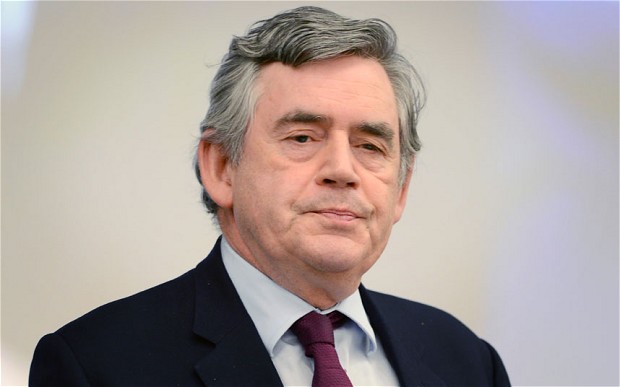
By Gordon Brown
Former Prime Minister and Chancellor of the Exchequer of the United Kingdom, United Nations Special Envoy for Global Education
For far too long, the cause of universal education has taken a
back seat to other great international movements for change. Now,
for two new reasons that lie at the heart of UN Secretary-General
Ban Ki-moon's launch of the "Education First" initiative, education
has returned to its rightful place atop the global policy
agenda.
First and foremost, young people have themselves become the biggest
advocates of universal education for girls and boys. Refusing to
remain silent while denied opportunity, young people - particularly
girls - have launched one of the great civil-rights struggles of
our time.
Few could remain unmoved by the brave fight of the young Pakistani
girl Malala Yousafzai after the Taliban shot her in the head
because she insisted on the right of young girls to an education.
Few have failed to notice the massive public outpouring of support
in Pakistan and elsewhere for the cause that she is
championing.
Likewise, we have also seen in recent months the creation by
schoolgirls in Bangladesh of child-marriage-free zones, aimed at
defending the right of girls to stay in school instead of being
married off as teenage brides against their will. In India, the
Global March Against Child Labor, led by the children's rights
advocate Kailash Satyarthi, has rescued thousands of young boys and
girls from a life of slavery in factories, workshops, and domestic
service, and has ensured that they return to school.
These demonstrations by girls and boys demanding their right to
education have made the fight for basic schooling impossible to
ignore. Consequently, every government now feels under even greater
pressure to deliver the second of the global Millennium Development
Goals ("achieve universal primary education") by the end of
2015.
But a second worldwide force also has propelled education to the
center of the policy agenda in most countries: the increased
recognition of the importance of education by those who examine why
countries succeed or fail. For years, academics have debated
whether culture, institutions, ideology, or resources cause some
countries to lag behind. Today, a growing number of writers,
researchers, and policymakers see the crucial link between
education and national economic success.
The deployment of human capital has become an important factor in
explaining why some countries remain stuck in a "middle-income
trap" and why others cannot break out of low-income status. And
research assessing a country's human capital now focuses on the
quantity and quality of basic skills, qualified graduate manpower,
and expertise in research and development.
Putting education first is urgent in view of the scale of wasted
talent and potential worldwide. Some 57 million children still do
not go to school, 500 million girls will never finish the secondary
education to which they are entitled, and 750 million adults remain
illiterate.
The link between education and economic success makes the delivery
of quality schooling and training a hugely important issue for
business as well. By 2020, according to the McKinsey Global
Institute, we will face the twin problems of a shortfall of up to
40 million high-skill workers and a surplus of up to 95 million
low-skill workers. By 2030, the global workforce of 3.5 billion
will include an estimated one billion workers who lack a secondary
education, significantly hindering their countries' economic
prospects.
As a result, without urgent action, businesses are likely to face a
huge skills shortage, especially in emerging markets and developing
countries, where most economic activity will be concentrated.
Indeed, the adult illiteracy rate in Somalia is 63%, and 39% in
Nigeria; in South Sudan, more girls die during childbirth than
complete primary school.
Unless we act, by mid-century the global economy will be
characterized by massive waste of talent and unequal opportunities.
According to new figures from the Wittgenstein Center's forthcoming
book World Population and Human Capital in the 21st Century, only
3% of young adults in Mali and Mozambique are projected to have a
tertiary education in 2050; the expected proportion is just 4% in
Niger, Liberia, Rwanda, and Chad, and only 5% in Malawi and
Madagascar. While the projection for North America as a whole is
60%, the forecast for Sub-Saharan Africa is 16%.
Such figures reveal a world divided between those who have and
those who lack educational opportunity, with huge potential
repercussions not only in terms of skill shortages and economic
waste, but also in terms of social stability. The late US Supreme
Court Chief Justice Earl Warren's words in Brown v. Board of
Education, which struck down the legal basis for racial segregation
in America's public schools, remain no less relevant today: "It is
doubtful that any child may reasonably be expected to succeed in
life if he is denied the opportunity of an education." As Warren
put it, "Such an opportunity...is a right which must be made
available to all on equal terms."
We have little more than two years to turn basic education from a
privilege for some into a right for all. Secretary-General Ban and
I are determined that every day until that deadline in December
2015, we will work as hard as possible to ensure every child is in
school.
Copyright: Project Syndicate
Here we are to serve you with news right now. It does not cost much, but worth your attention.
Choose to support open, independent, quality journalism and subscribe on a monthly basis.
By subscribing to our online newspaper, you can have full digital access to all news, analysis, and much more.
You can also follow AzerNEWS on Twitter @AzerNewsAz or Facebook @AzerNewsNewspaper
Thank you!