
Europe’s Procrustean nightmare
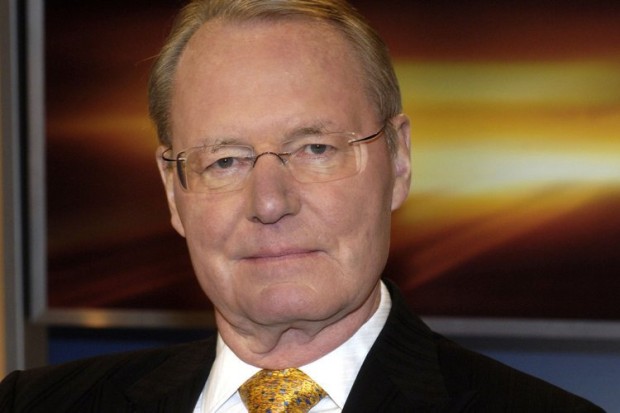
By Hans-Olaf Henkel
Former president of the Federation of German Industries, Honorary Professor of Economics at the University of Mannheim
The European Union's policy of saving the euro at all costs is
enough to guarantee the euro's survival. But is preserving the
"one-size-fits-all" euro really worth sacrificing the eurozone's
competitiveness and, ultimately, European solidarity?
It was the single market's establishment in 1992 - not the euro's
introduction seven years later - that brought free trade, increased
competitiveness, and new wealth to Europe. In fact, the monetary
union has become a political and economic nightmare, plagued by
recession, record-high unemployment, social unrest, and rising
distrust among member states.
But, even as politicians and economists run out of arguments in
favor of the euro, few dare to challenge its fundamental structure,
let alone propose alternatives. To escape the crisis, EU leaders
must recognize the shortcomings of the eurozone's one-dimensional
framework, and develop a system better suited to managing a
multi-faceted monetary union.
Excessive centralization and harmonization are decimating the
subsidiarity and competition needed to drive Europe's economies, as
the socialization of debt undermines weaker economies'
accountability. Furthermore, closing competitiveness gaps -
essential to saving the euro - would not only require weaker
economies to become more productive; strong economies, like
Germany, would face pressure to become less efficient, diminishing
Europe's overall competitiveness vis-à-vis the rest of the
world.
At the same time, the euro crisis is inciting suspicion,
antagonism, and new divisions in the eurozone. German-French
relations, once the cornerstone of European integration, are at
their lowest point in decades. And unemployed young people in
Greece, Portugal, and Spain routinely protest against "German
dictates."
Likewise, the rift between the eurozone's 17 members and the other
ten EU countries is widening. Most notably, the United Kingdom is
seeking to renegotiate the terms of its EU membership, with a
referendum on the outcome that will determine whether it leaves the
EU altogether.
Historical precedents indicate that forcing disparate nations and
states to unite under a single idea - whether communism in the
Soviet Union, socialism in Yugoslavia, or a shared currency in the
eurozone - generates centrifugal forces that can trigger the
union's collapse. A one-size-fits-all approach to integration is
simply unsustainable.
But the eurozone is not only replicating other unions' mistakes; it
is repeating its own. While 25 of the EU's 27 governments agreed to
the "fiscal compact," aimed at imposing fiscal discipline on member
states, there is no guarantee that governments will not violate the
rules, just as they violated those established by the Maastricht
Treaty.
Similarly, although the one-size-fits-all monetary policy
contributed to Greece's excessive indebtedness, and to Spain's
real-estate bubble, eurozone leaders have consistently sought to
re-align interest rates, for example, by compelling holders of
Greek debt to accept "haircuts" (write-downs on principal). But the
impact is severely limited without external devaluation, which is
impossible within a monetary union.
While Greece's eurozone partners may be able to carry it for
decades this way, and even to bail out Spain, the system would
surely collapse under the weight of a larger economy. And such an
economy - France - is in serious jeopardy.
In 2011, France's ratio of new debt to GDP was three times higher
than Germany's, with the public sector accounting for more than 56%
of national income. Currently, 9% of French citizens are employed
by the government, compared to 5% in Germany. And unemployment
hovers above 10%, with youth unemployment far higher, at roughly
25%.
While some of France's largest companies - like Michelin, LVMH, and
Air Liquide - remain successful, they cannot offset the economy's
lack of a solid base of small and medium-size enterprises. As a
result, France's competitiveness is deteriorating. Indeed, its
ranking on the World Economic Forum's Global Competitiveness Index
fell from 18th last year to 21st this year (Germany ranked sixth
both years).
Recent actions taken by President François Hollande's government -
including raising the minimum wage, increasing taxes on business,
and lowering the retirement age for some workers - threaten to
exacerbate the situation. Given this, it is no surprise that
Moody's downgraded France's credit rating last year.
But, like the struggling countries of southern Europe, France has
few options. Austerity programs have been largely
counterproductive, generating vicious cycles of slow or no growth,
business closures, skyrocketing unemployment, and tax-base erosion.
As a result, the eurozone's fiscally sound countries are being
asked repeatedly to compromise their prudent policies in order to
finance endless bailouts.
This situation is untenable. Europe's leaders must pursue a
controlled segmentation of the eurozone, in which the most
competitive countries - Austria, Finland, Germany, and the
Netherlands - adopt a new currency, the "northern euro." This new
monetary union would be managed according to the original
Maastricht Treaty, with a truly independent central bank
responsible for regulating the northern euro's exchange rate
against the euro, which less competitive countries would
retain.
The rump euro's weakened exchange rate would lead to renewed
economic growth, job creation, and a stronger tax base in southern
European countries. Initially, to facilitate debt reduction,
bondholders would face another haircut. Countries departing for the
northern euro should make a one-time contribution to these
debt-reduction efforts. A flexible membership system would enable
countries to join the northern euro when their economic and fiscal
conditions became strong enough.
Europe's leaders must stop treating the eurozone as a homogeneous
entity, imposing one-size-fits-all policies on vastly different
countries. The euro's framework should be adjusted to suit current
fiscal and economic realities - not the other way around.
Copyrights: Project Syndicate
Here we are to serve you with news right now. It does not cost much, but worth your attention.
Choose to support open, independent, quality journalism and subscribe on a monthly basis.
By subscribing to our online newspaper, you can have full digital access to all news, analysis, and much more.
You can also follow AzerNEWS on Twitter @AzerNewsAz or Facebook @AzerNewsNewspaper
Thank you!